
Apple Patents a Headset Frame That Lights Up Differently Depending on What You're Looking At
The frame of a headset is usually just structure. Apple's new patent turns it into a second screen, using lights around the rim to signal information based on whatever object you're currently looking at.
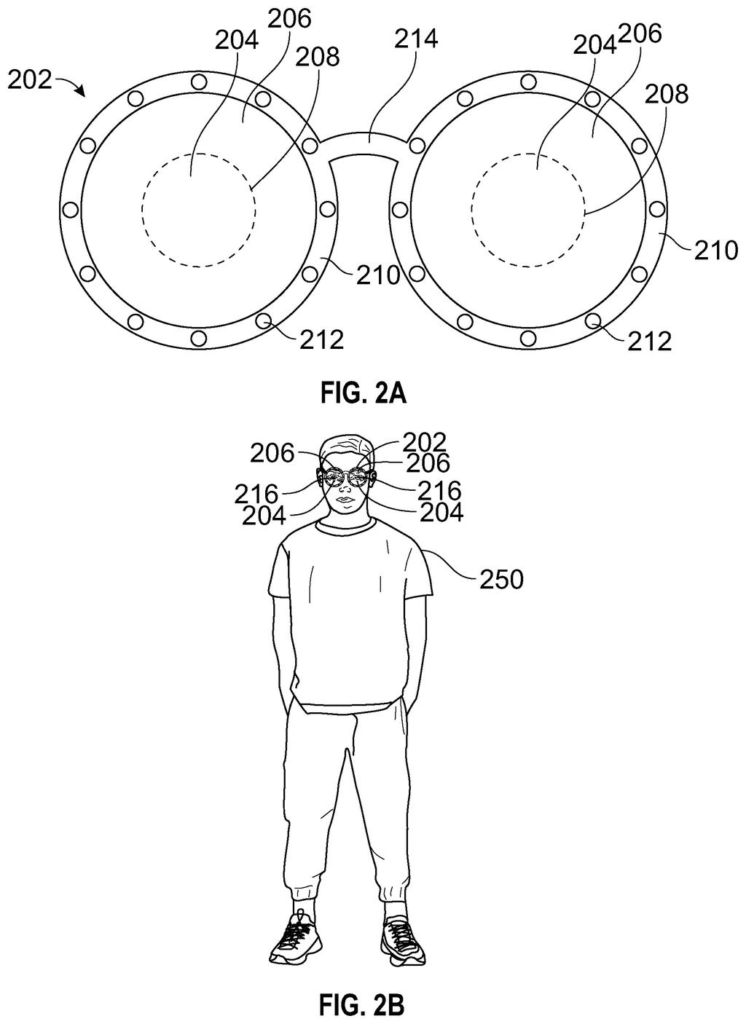
What Apple's frame-light display actually shows you
A person puts on a headset and glances at a door. The ring of lights around the frame glows one color. They look at a locked cabinet, and the lights shift to something different. That's the core idea here, and it applies to you the moment you put one of these devices on your face.
Apple is patenting a system where small lights positioned around the edge of a head-mounted display (the frame itself, not the main screen) change their pattern or color based on the state of objects in your view. If an object is in one condition, you see one visual. If that object changes state, the lights change too.
The practical use cases are wide open. Think of it as a status indicator that lives at the edge of your vision constantly, without cluttering the main display. It's a subtle way to communicate information without forcing you to look away or navigate a menu.
receiving information corresponding to a respective state of an object in the field of view of the user …
Translation: The headset tracks what you are looking at and notices changes in the object.
How the HMD picks which light pattern to show
The patent describes a head-mounted display with two sets of lights arranged around the frame itself. A physical divider (a raised surface on the frame) separates the two sets, but both sit inside the wearer's field of view at the same time.
The system works like this:
- The device receives information about the current state of an object the user can see.
- If that state matches a first set of conditions, the frame lights display one specific pattern or representation.
- If the object's state changes to something different, the lights switch to a second distinct representation.
"State of an object" is the key phrase. It's deliberately broad in the patent language, meaning it could refer to whether a door is open or closed, whether a device is on or charging, whether a person is recognized or unknown, or any number of real-world conditions the headset's sensors can detect.
The two light sets being separated by a physical ridge suggests Apple wants a clear visual distinction between the two groups, giving the system more expressive range than a single strip of lights would allow.
One or more techniques for displaying a representation based on the state of an object are described.
Translation: The patent covers changing the headset's lights depending on the object's condition.
What reactive frame lights mean for AR headset users
For anyone wearing a mixed-reality headset throughout a day, the main display is already busy with overlays, apps, and virtual objects. A secondary indicator on the frame itself means you can get ambient status updates without a pop-up stealing your attention. It's similar to the way a phone's notification LED once let you glance at a device without picking it up.
The design question Apple is answering here is about where to put information when the screen is already crowded. If this ends up in a shipping product, you'd notice it most in hands-on environments like a warehouse, a kitchen, or a workshop, where knowing an object's status quickly matters and tapping through menus is impractical.
Apple's 57th filing we've tracked in our AR glasses work since May builds on ideas like eye-tracked sharpening and group gesture control.
The frame of a headset sitting on someone's face is real estate that's never worked for anyone except the person wearing it. Apple's idea is simple: put a light or display on the outside so that people nearby can see something meaningful about what's happening, without asking.
For the person wearing it, the benefit is social. Right now, putting on a headset is a small act of disappearance. A visible signal on the outside, tied to whatever the wearer is doing or tracking, gives the people around them something to read. A partner at home, a colleague on a floor, a nurse in a hallway all get a cue without needing to interrupt.
Whether that cue becomes useful or just odd depends on how clearly it communicates. A light that could mean almost anything is a light people will learn to ignore. The patent leaves that design question open, which means the idea has real promise but nothing close to a guarantee.
There are more where this came from
We read every patent application Big Tech publishes and send you the ones worth knowing. Plain English, free, every week.
The drawings
29 drawing sheets from US 2026/0277318 A1 · click any drawing to enlarge


Want this weekly breakdown for a company we don't cover? Patentlyze Pro →