
Apple Patents a Display System That Grabs the Sharpest Frame Piece Available
When your phone's display processor is racing to keep up, Apple wants a backup plan: a second image buffer standing by to fill in whichever chunk of the screen has the best-quality data at that moment.
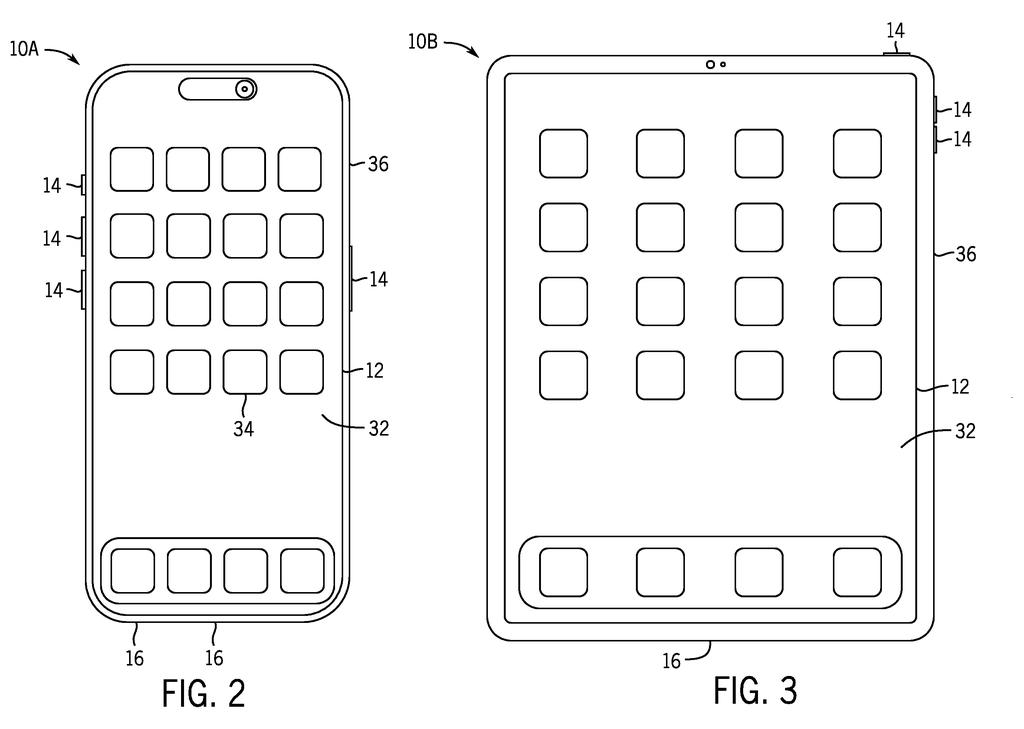
How Apple's fallback buffer cuts screen lag
Imagine your screen is drawing an image in little rectangular patches, like floor tiles. Normally, all those patches come from a single prepared image. But if that image isn't ready in time, you either wait or get a blurry result.
Apple's patent describes a system with two of those image stores running at once. Before drawing each patch, the system quickly checks which store holds the sharper version of that patch, then pulls from whichever one wins. You get a better-looking image sooner, rather than a delayed or uniformly degraded one.
The goal is to cut the visible delay between when your device processes an image and when it actually appears on screen. That matters for anything where speed and visual quality collide: scrolling, gaming, video playback, or augmented reality overlays.
instructing image processing circuitry to read a first tile of image data from a first framebuffer; determining whether the first framebuffer or a second framebuffer has a higher-quality second tile after the first tile …
Translation: The system checks two memory sources to find the best image piece.
How the tile-picker compares two frame buffers
A display pipeline typically works with a framebuffer (a block of memory holding a fully rendered image ready to be sent to the screen). This patent introduces a two-framebuffer setup and a decision layer between them.
The system divides each frame into tiles (small rectangular regions of the image). For each tile, before the image processor reads it, a comparison step checks both framebuffers and identifies which holds the higher-quality version of that specific tile. The image processor is then directed to the winning source.
The practical effect: when a freshly rendered, high-quality frame is only partially complete, the system can mix tiles from the new frame (where ready) with tiles from an older but complete frame (where the new one isn't ready yet). Rather than waiting for everything to finish or falling back to a uniformly lower-quality image, it builds the best composite it can from available data.
- First framebuffer: typically the newest rendered image, possibly incomplete
- Second framebuffer: a prior frame or lower-resolution version, fully available
- Tile-level comparison: quality check runs per patch, not per full frame
- Dynamic routing: image processing circuitry is steered to the best source for each tile independently
What faster frame delivery means for Apple screens
Display latency is one of those problems that's invisible when solved and obvious when it isn't. Dropped frames, stutter, and blurry transitions during fast scrolling or gaming all trace back to the display pipeline not having good data in time. Apple's approach here attacks that gap at a granular level, patch by patch, rather than making an all-or-nothing decision about an entire frame.
For you, this could translate to smoother visuals under load, particularly on devices where the display refresh rate is pushing ahead of what the GPU can always deliver. It's especially relevant for high-refresh-rate displays (like those on recent iPads and iPhones) and for augmented reality applications where any lag between the real world and an overlay is immediately noticeable.
Apple's 48th filing in the cell phone work we've tracked since May adds to a run that includes a self-flattening foldable hinge and a water-sensing touchscreen.
The gain here is speed: instead of waiting for a complete, polished image, the display can pull the best available piece from whichever of two memory stores has it ready. But that comparison happens tile by tile, dozens of times per frame, and at 120 frames per second there is almost no slack in the schedule for a slow decision.
The deeper risk is visible patchwork. Pulling some tiles from one snapshot in time and others from an earlier one means adjacent sections of the screen may have subtly different quality levels. If the difference is large enough, a viewer notices seams, and a seam is worse than a uniform image that simply loaded a moment late.
Whether the trade is worth it depends on how well Apple can keep those quality gaps narrow. If the two memory stores stay close in sharpness, the mixing becomes invisible and the speed benefit is real. If they drift apart, the fix creates its own problem.
Get our take in your Top Stories
Liked this breakdown? Add Patentlyze as a preferred source on Google, and our plain-English take shows up more often in your Top Stories the next time Apple patent news breaks.
There are more where this came from
We read every patent application Big Tech publishes and send you the ones worth knowing. Plain English, free, every week.
The drawings
11 drawing sheets from US 2026/0289720 A1 · click any drawing to enlarge


Show the other 3 sheets


Want this weekly breakdown for a company we don't cover? Patentlyze Pro →
Be the first to weigh in