
Apple Patents a Fix for the Garbled Data Hidden Inside Wireless Charging
Every wireless charger is secretly running a two-way conversation between your phone and the charging pad, and that conversation can get garbled. Apple has patented a way to compensate for the distortion before it causes problems.
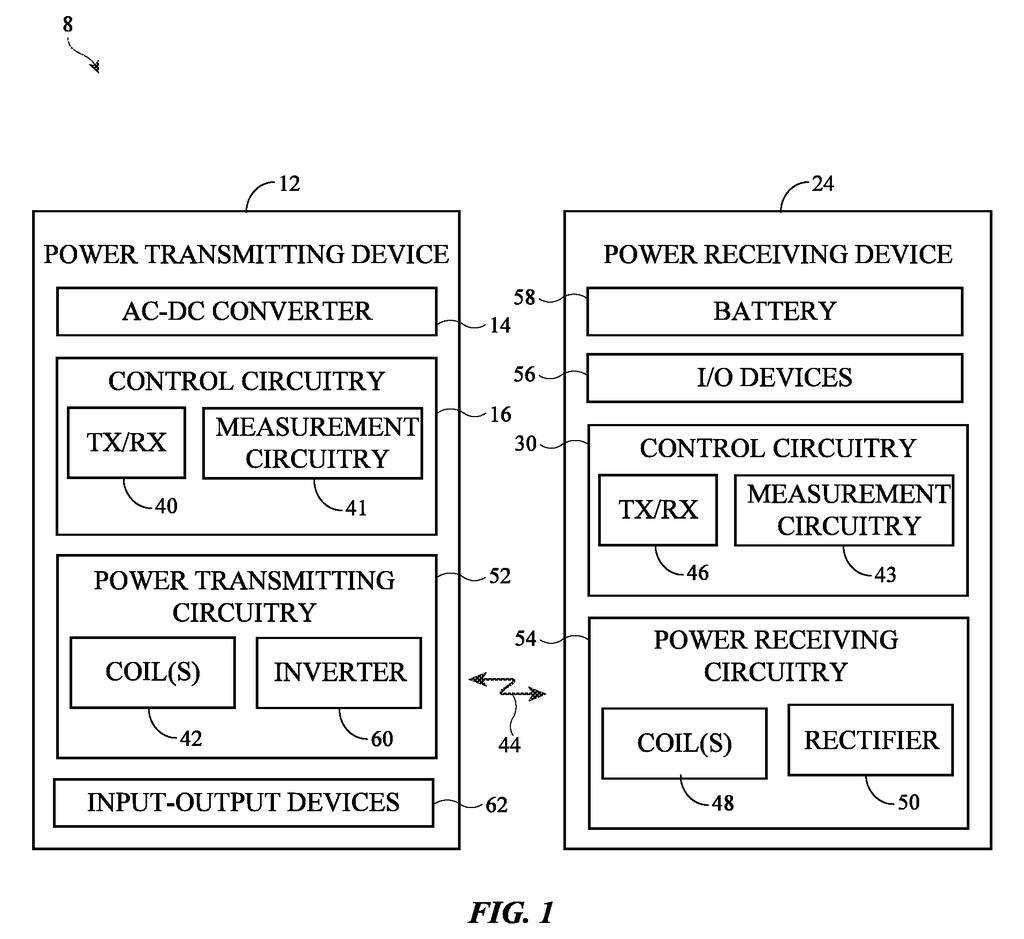
What Apple's wireless charging signal fix actually does
When your phone sits on a wireless charging pad, it doesn't just soak up power. It also sends small data signals back to the charger over the same magnetic connection, telling it things like how much power to deliver. The problem is that the coil distorts those signals in a predictable but uneven way: the signal for a digital "1" gets amplified differently than the signal for a digital "0."
That imbalance can make the charger misread what your phone is saying, which can slow charging or trigger error conditions. Apple's patent describes a straightforward correction: send the "0" and the "1" at different initial power levels so that after the coil does its distorting, both arrive at the charger looking roughly equal. It's the same idea as turning up one speaker to compensate for a room that absorbs bass.
The fix lives inside the phone itself, not the charger, so it doesn't require any hardware change on the pad's side.
Data transmission across the inductive coupling can experience variable gain corresponding to a signal frequency of the data transmission. Data transmission across the inductive coupling can be adjusted to accommodate the differences in gain.
Translation: Signal frequencies change the transmission strength, so the system adjusts to fix the distortion.
How the transmitter balances 0s and 1s across the coil
The patent covers a power receiving device (your phone, earbuds case, or watch) that uses a wireless charging coil to do two things at once: absorb power and send data back to the charger through the same inductive link.
The core problem is variable gain across the coil. In electronics, "gain" means how much a signal gets amplified or attenuated as it travels through a system. Because the coil behaves differently at different signal frequencies, the bit representing a digital "1" and the bit representing a digital "0" end up being amplified by different amounts. That asymmetry is the bug.
The patent's solution is pre-compensation at the transmitter. Instead of sending both bits at the same amplitude (volume, essentially), the device's data transmitter intentionally sends them at different amplitudes chosen to cancel out the known distortion:
- "0" bits are sent at a first signal amplitude
- "1" bits are sent at a second, different signal amplitude
After traveling through the coil and experiencing their respective gain values, the two arrive at the charger at balanced levels that the charger can read cleanly.
The approach fits within existing amplitude modulation schemes (a method of encoding data by varying signal strength, already used in wireless charging standards like Qi), so it doesn't require a new protocol.
What this means for your iPhone's charging reliability
Wireless charging communication errors are usually invisible to you, but they have real consequences: your phone drops to a lower charging rate, or the pad resets the session entirely. A more reliable back-channel means faster, more consistent charging without the charger second-guessing what your device is asking for.
The claim covers any power receiving device using inductive coupling with amplitude modulation, which is broad enough to include phones, smartwatches, and wireless earbuds. If granted, it would give Apple a patent on a specific pre-compensation technique that could apply to the entire MagSafe and Qi2 ecosystem of Apple accessories.
Apple's 44th filing in the cell phone coverage we've tracked since May adds to a run that includes one on sealing rear cameras and one on keeping idle parts current.
Claim 1 covers any charging receiver that uses wireless inductive power transfer with amplitude modulation and adjusts how loudly it transmits each bit value based on the different signal distortion each value experiences. That scope is wide enough to reach nearly every modern wireless charger in use today.
What it actually blocks is specific: a device manufacturer cannot add the compensation trick of sending different bit values at different amplitudes to correct for frequency-dependent signal loss without entering this claim's territory.
The practical weight of the patent rests on whether that compensation step was already an obvious or documented solution to a known problem in wireless charging protocols. The claim describes real engineering with a concrete, testable requirement, and that gives it more substance than a broad placeholder.
There are more where this came from
We read every patent application Big Tech publishes and send you the ones worth knowing. Plain English, free, every week.
The drawings
9 drawing sheets from US 2026/0280358 A1 · click any drawing to enlarge


Want this weekly breakdown for a company we don't cover? Patentlyze Pro →