
Apple Patents a System for Catching When Its AI Location Tech Goes Wrong
AI can drift. Apple is patenting a system that watches over its own AI-based location models and flags them when they start going off the rails.
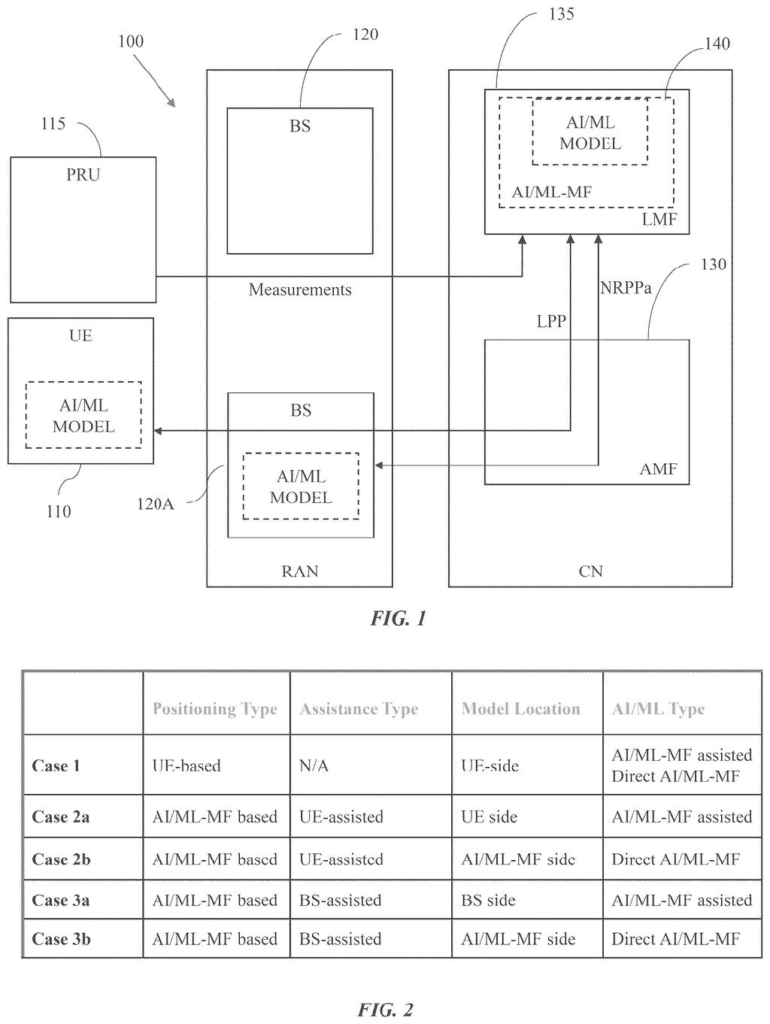
What Apple's AI positioning watchdog actually does
Imagine your phone's navigation app starts giving you directions that are slightly, then increasingly, off. The AI underneath it has drifted, but nothing has told it to course-correct.
Apple's new patent is about building a watchdog for exactly that scenario. The system continuously checks how well an AI model used for location tracking is actually performing, compares its outputs against a known-good baseline, and takes action if something looks wrong. Think of it as a quality-control inspector sitting inside your phone, checking the AI's homework.
This is less about how the AI figures out where you are and more about making sure it stays accurate over time. AI models can degrade as the real world changes around them, and this patent tackles the infrastructure to catch that before it affects your experience.
cause a measurement entity to generate, based on measurement of a reference signal, measurement data for use in monitoring an artificial intelligence/machine learning (AI/ML) model used for AI-assisted positioning; and monitor a performance of the AI/ML model based on the measurement data.
Translation: The device checks signal measurements to see how well its AI location tools are performing.
How the monitor compares live signals to a reference baseline
The patent describes a device (think a phone or a network node) that receives what it calls a monitoring KPI (Key Performance Indicator, basically a score card for how well the AI is doing). That score is derived from measurement data collected by a separate measurement entity, which observes reference signals in the wireless environment.
Those reference signals are standard radio signals already present in cellular and Wi-Fi networks. The measurement entity uses them to generate data that reflects how the AI positioning model is performing in the field, then compares that data against a reference KPI, a pre-established benchmark for what "good" looks like.
Based on that comparison, the system can trigger one or more monitoring actions. The patent does not prescribe exactly what those actions are, but the framing suggests options like logging a warning, triggering a model update, or switching to a fallback positioning method.
- Measurement entity reads reference signals from the radio environment
- Those readings feed into a performance score for the AI model
- The score is compared to a healthy baseline
- If it falls short, the system acts
… receive a monitoring KPI derived from AI/ML data associated with an AI/ML model used for AI-assisted positioning; compare the monitoring KPI to a reference KPI; and based on the comparison, perform one or more monitoring actions.
Translation: It compares AI performance data against a standard benchmark to decide if it needs to take corrective action.
What this means for GPS and indoor location on iPhones
AI-based positioning is already working its way into 5G standards, and phones are beginning to use machine learning to triangulate location when GPS is weak, such as inside malls, airports, or dense city blocks. The catch is that AI models are not static: they can degrade as network conditions, building layouts, or radio environments change. Without a monitoring layer, you would not necessarily know the AI had gone stale.
Apple has been filing around AI-assisted positioning since at least 2024, and this patent fills in an important gap. A self-monitoring system means the AI does not have to be perfect forever, just good enough to recognize when it is not, which is a more realistic and maintainable design goal for a feature that will live on hundreds of millions of devices.
Apple's second filing we've tracked in our AI guardrails race since July follows its copyright marker patent.
The monitoring system this patent describes runs entirely on software and existing radio signals, with no new hardware required. That makes the distance to a real product shorter than most patent filings suggest.
The document is thin on what the system actually does once it spots a problem. A watchdog that can detect a struggling AI model but has no clear power to correct it is only half an answer, and the surrounding architecture would need to exist first.
For everyday users, the reward is simple: location that stays accurate longer, without waiting for a manual update every time the AI degrades. That is a quiet improvement, but it compounds in products people rely on every day.
There are more where this came from
We read every patent application Big Tech publishes and send you the ones worth knowing. Plain English, free, every week.
The drawings
11 drawing sheets from US 2026/0304380 A1 · click any drawing to enlarge


Want this weekly breakdown for a company we don't cover? Patentlyze Pro →
Be the first to weigh in