
Apple Patent Seeks to Restrict AI 3D Model Creation Using Copyright Markers
Apple is working on a way to attach digital permission slips to ordinary photos, so that when someone tries to turn those images into 3D models using AI, the system checks whether they're actually allowed to do that first.
What Apple's 3D-generation restriction system actually does
Imagine someone takes a photo of a Nike sneaker, feeds it into an AI tool on an Apple device, and asks the tool to generate a 3D model of it. Under this patent, Nike could have already attached invisible rules to that image (or tied rules to photos taken of its products) that say: no 3D generation allowed without authorization. The AI sees those rules and stops before it ever makes the model.
The system works through what Apple calls a "marker", a separate piece of data attached to or associated with a 2D image. That marker can encode a range of restrictions: outright blocking 3D generation, limiting where the model can be used geographically, preventing the model from being shared or exported, or requiring the user to get explicit permission first.
This is essentially digital rights management (DRM) for 3D objects, applied at the moment of AI generation rather than after the fact. It's aimed at giving brands, artists, and rights holders a technical lever to control how their physical or 2D designs get converted into spatial computing assets.
How the marker encodes and enforces 3D generation rules
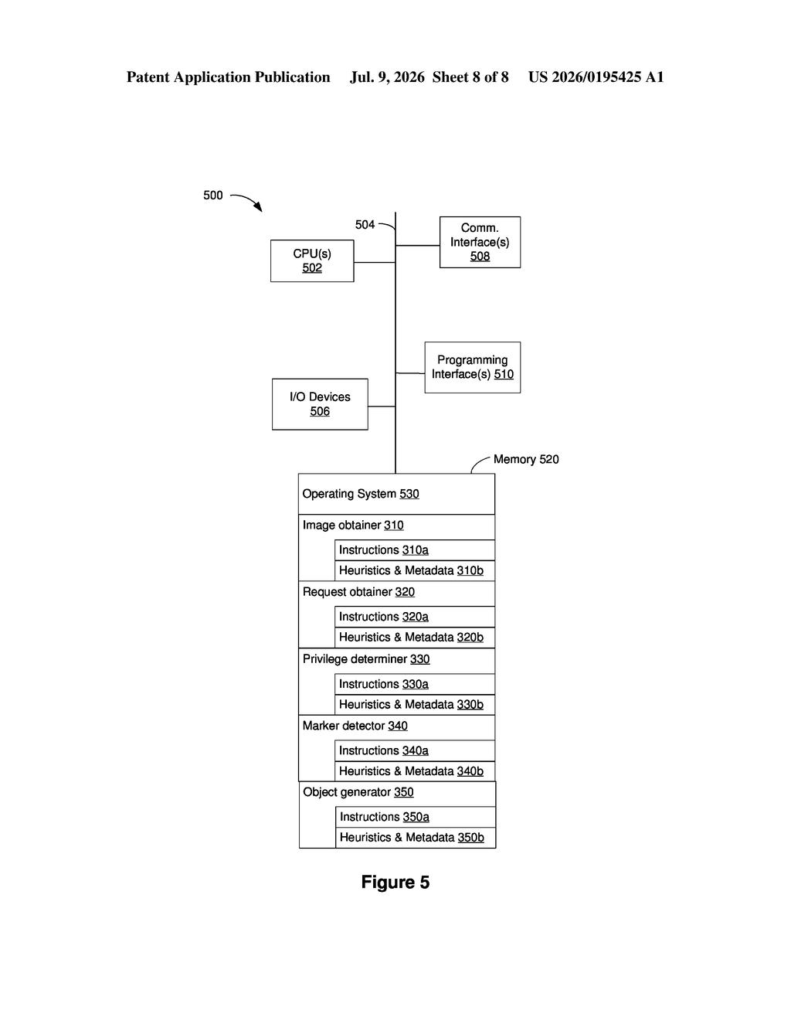
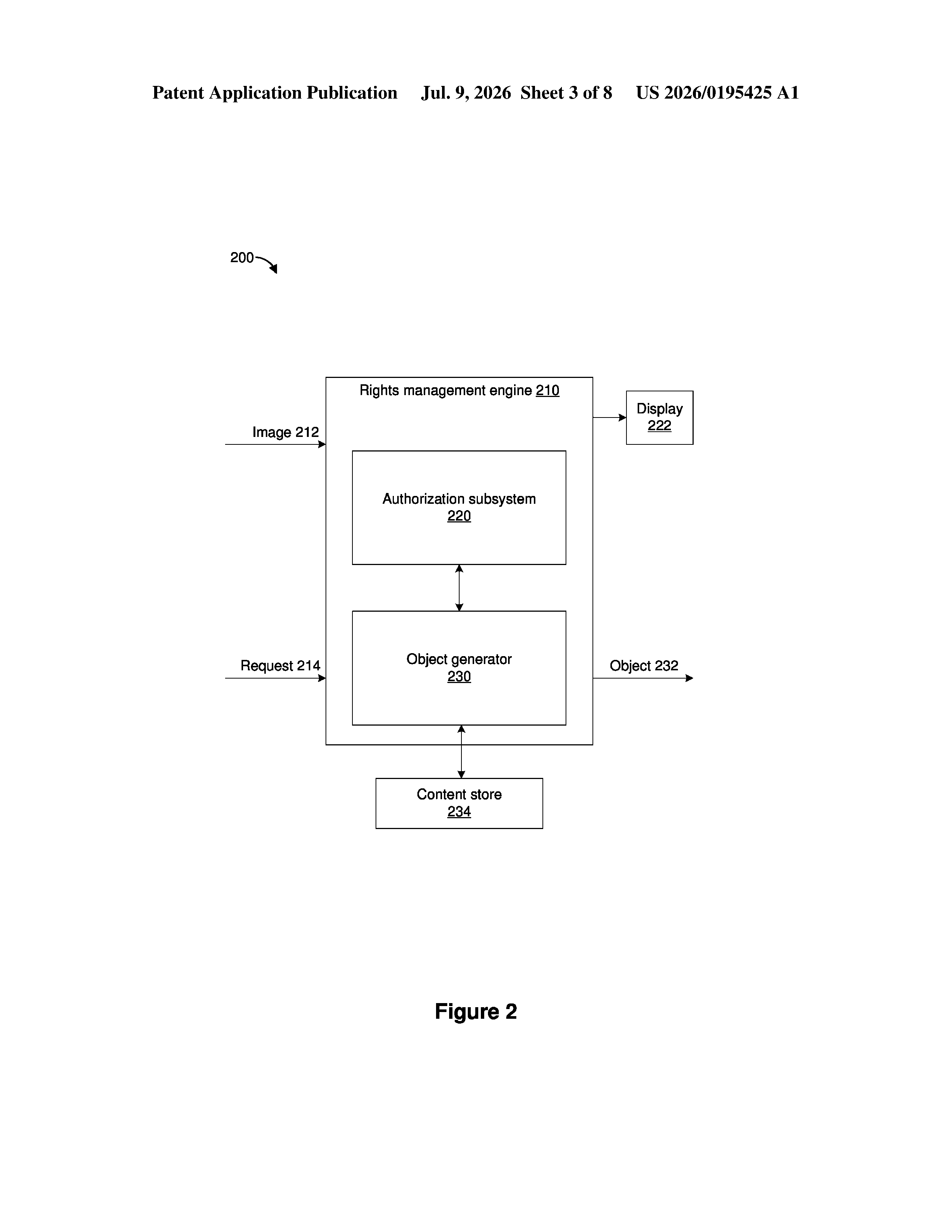
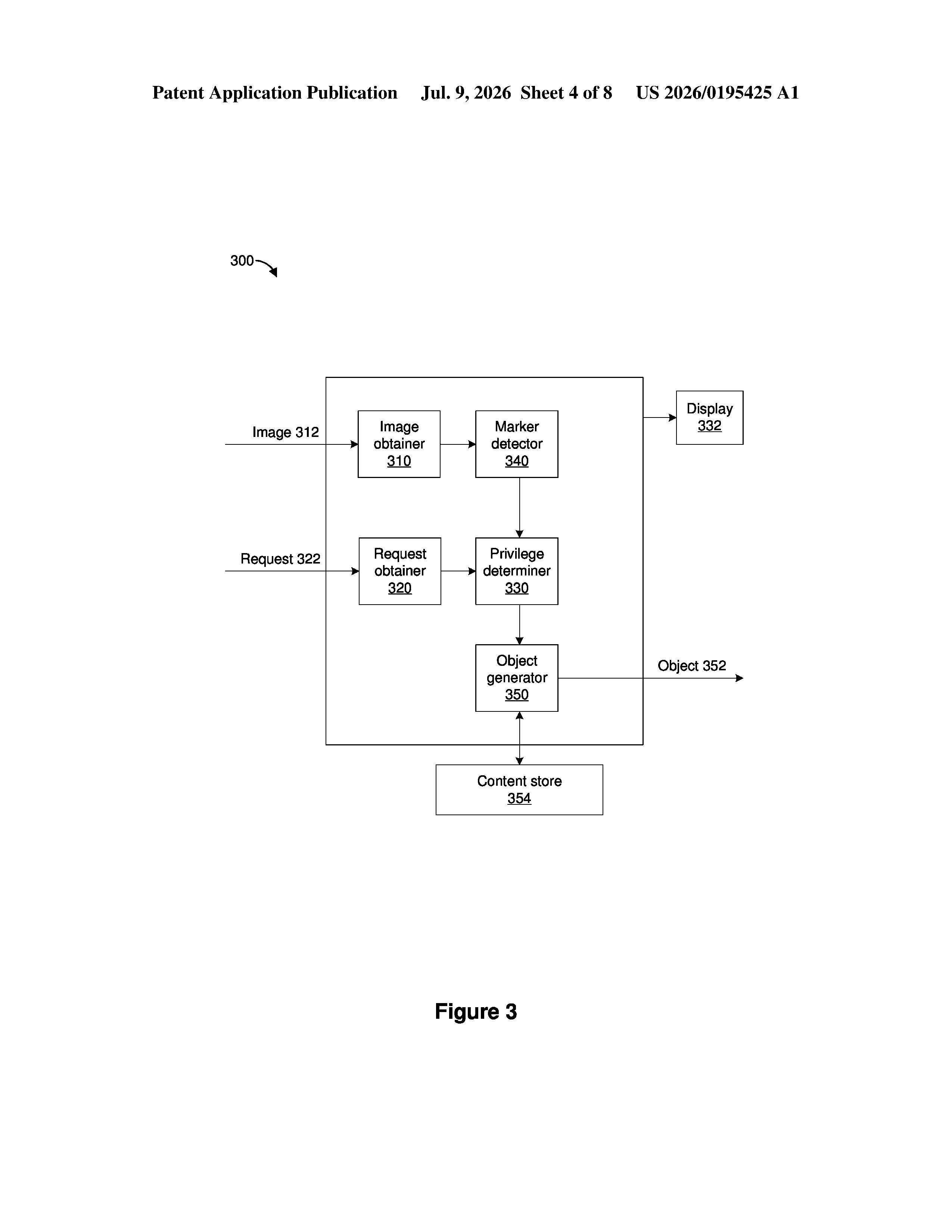
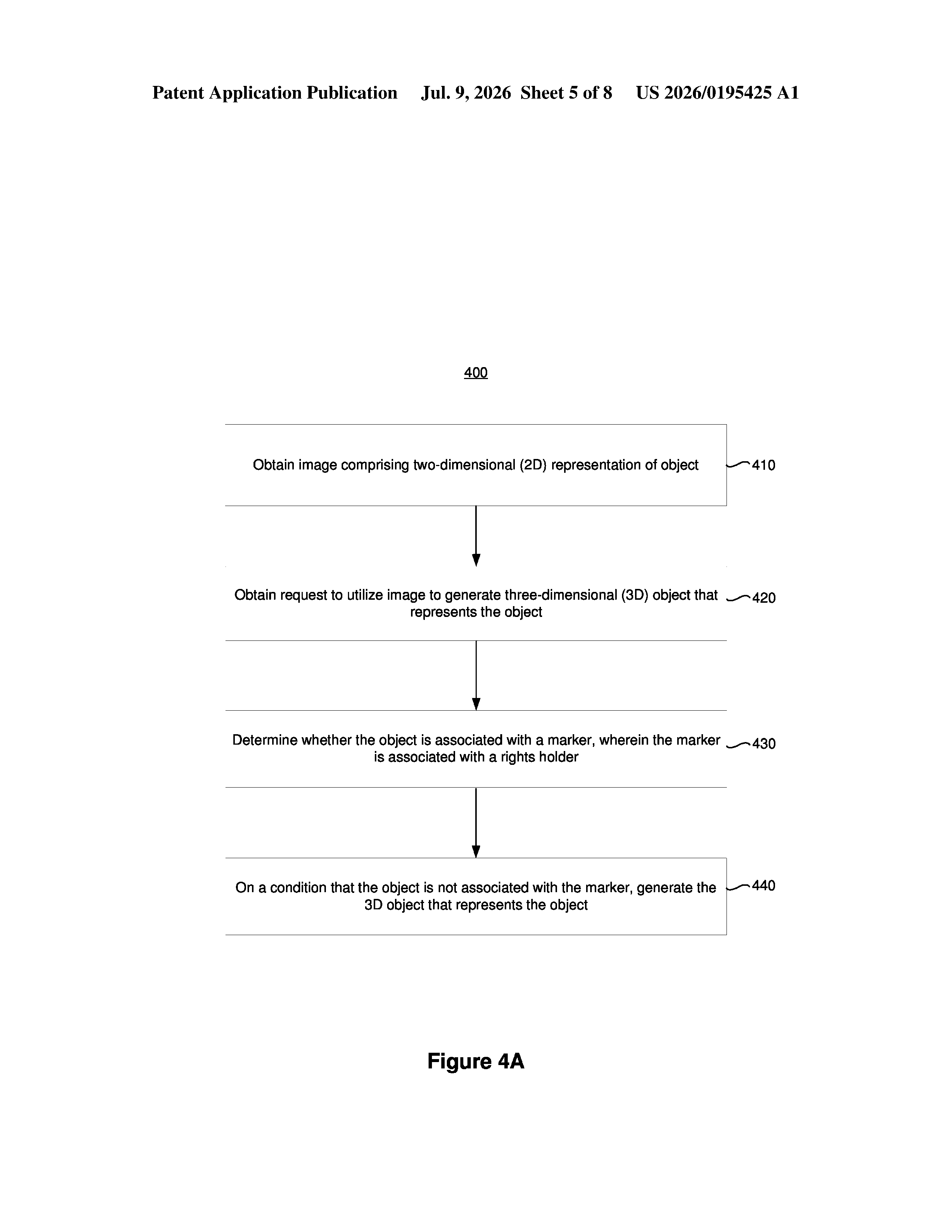
The patent describes a pipeline in which a device receives two inputs: a 2D image of an object (say, a product photo or a scanned drawing) and a separate "marker" that is distinct from the image itself. The marker is the key piece, it encodes one or more usage restrictions tied to generating a 3D version of whatever is depicted.
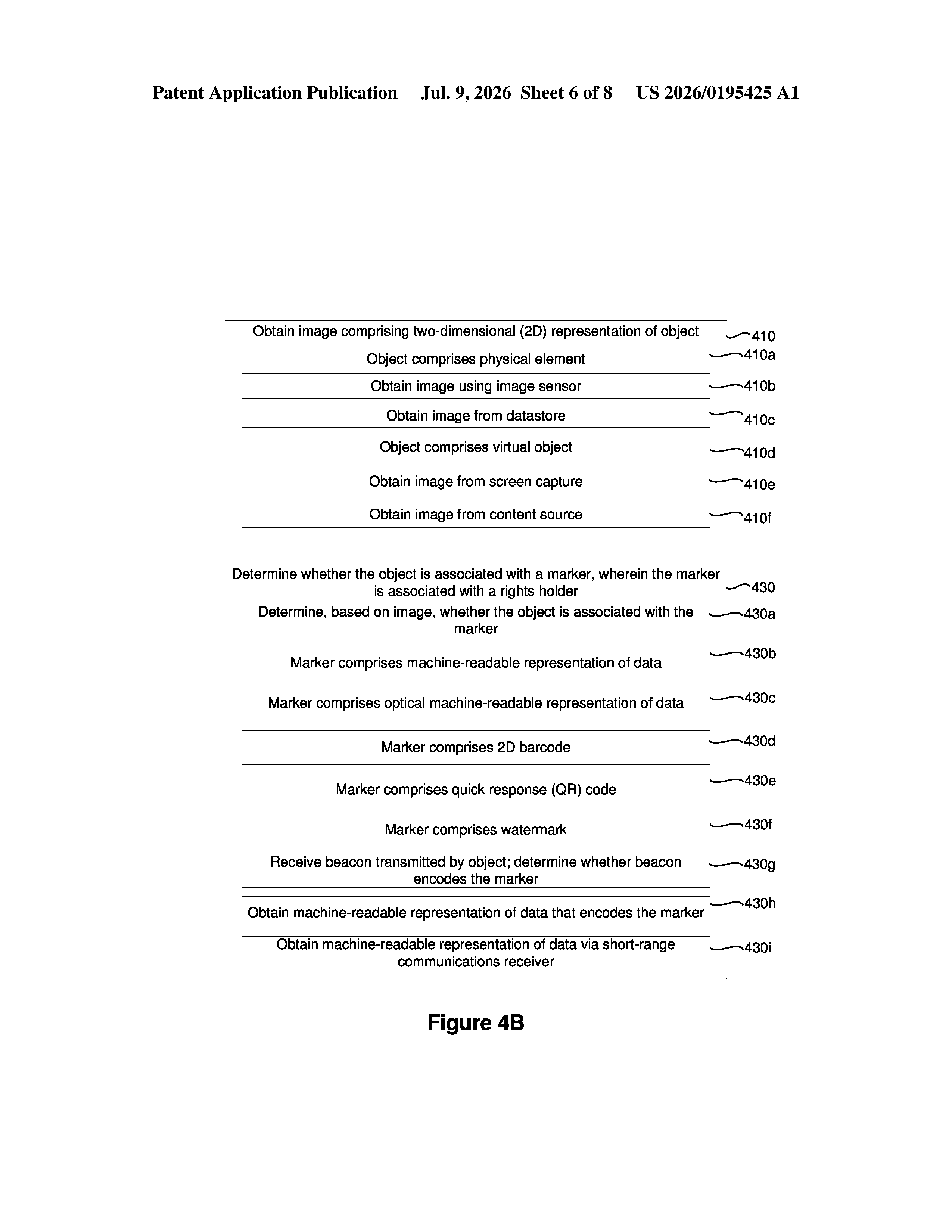
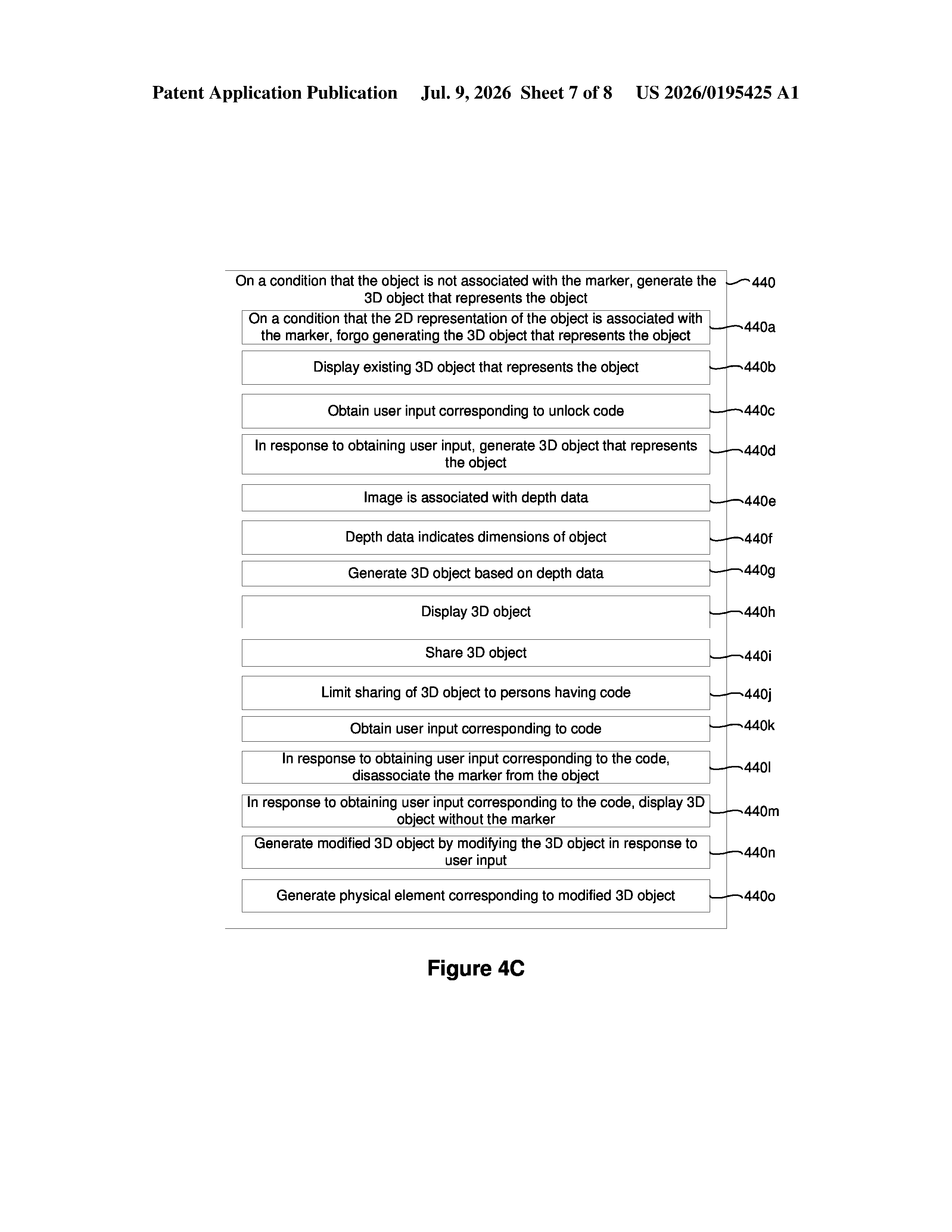
When a user requests 3D generation, the system first checks whether a marker is associated with that image. If it finds one, it reads the restrictions and decides how to handle the request. The patent outlines several possible enforcement modes:
- Gating generation, blocking the 3D object from being created at all
- Export and sharing restrictions, allowing generation but preventing the result from leaving the device or being sent to others
- Geofencing, permitting generation only in certain geographic locations
- Authorization requirements, requiring the user to obtain explicit permission before the model is built
The marker is described as "distinct from the 2D representation", meaning it isn't embedded invisibly in the image pixels (like a watermark) but exists as a separate data object that the system knows to look up and associate with the image. This keeps the restriction layer independent from the image itself, which makes it easier to update or transfer rights without altering the original file.
What this means for AR, spatial computing, and creators
Apple's Vision Pro and the broader push toward spatial computing depend on a steady supply of 3D content. One obvious shortcut is generating 3D models automatically from photos, which AI tools are increasingly capable of doing. But that capability creates a real intellectual property problem: anyone with a camera and an AI tool could theoretically reconstruct a 3D version of a protected product, artwork, or design without permission.
This patent positions Apple to offer rights holders a technical enforcement layer baked into the generation pipeline itself, rather than relying on legal action after the fact. For you as a user, it means your device might refuse to generate a 3D model of something even if the AI could technically do it. For brands and creators, it's a potential tool to protect their designs in a world where physical objects are increasingly becoming raw material for AI-generated digital assets.
This is a genuinely forward-looking patent in the context of spatial computing and AI generation pipelines. The IP problem it's solving is real and growing: as 3D-from-2D generation gets better, existing copyright frameworks have no clean technical hook to enforce restrictions at the moment of creation. Apple is essentially proposing DRM for the generative AI era, and attaching it to the device layer rather than the cloud. Whether rights holders will actually be able to get their markers into the system reliably is the hard practical question, but the technical framing is solid.
Get our take in your Top Stories
Liked this breakdown? Add Patentlyze as a preferred source on Google, and our plain-English take shows up more often in your Top Stories the next time Apple patent news breaks.
There are more where this came from
We read every patent application Big Tech publishes and send you the ones worth knowing. Plain English, free, every week.
The drawings
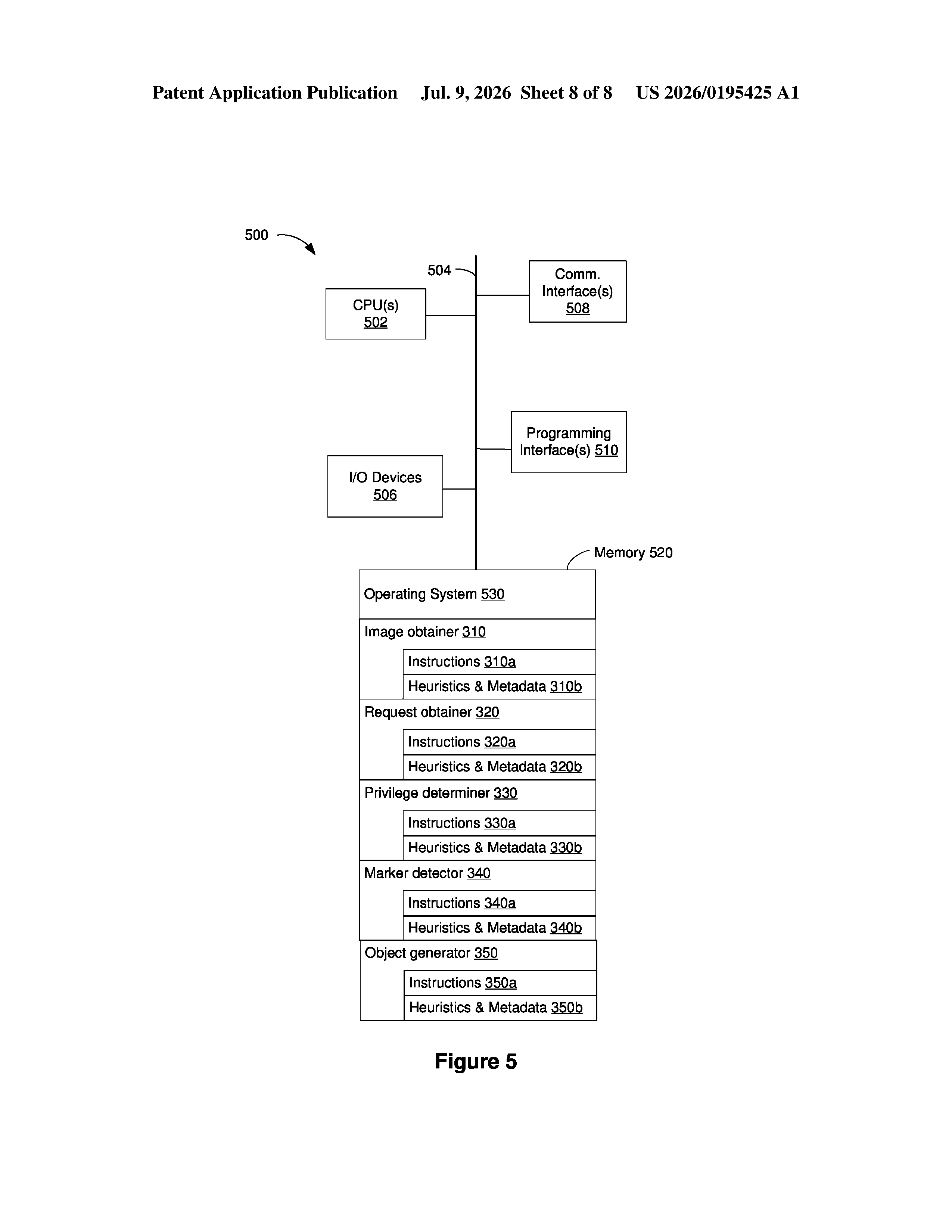
8 drawing sheets from US 2026/0195425 A1 · click any drawing to enlarge
Want this weekly breakdown for a company we don't cover? Patentlyze Pro →