
Google Patents a Lightweight Filter That Catches Harmful AI Responses Faster
Running a massive AI model to check the outputs of another massive AI model is slow and expensive. Google's latest patent describes a much leaner safety filter that can flag harmful content before it ever reaches you, without making you wait.
What Google's fast AI safety check actually does
You ask an AI chatbot a question and, in the fraction of a second between your question and the answer, the system has to decide whether that answer is safe to show you. Right now, doing that check rigorously often means running another large, slow AI on top of the first one.
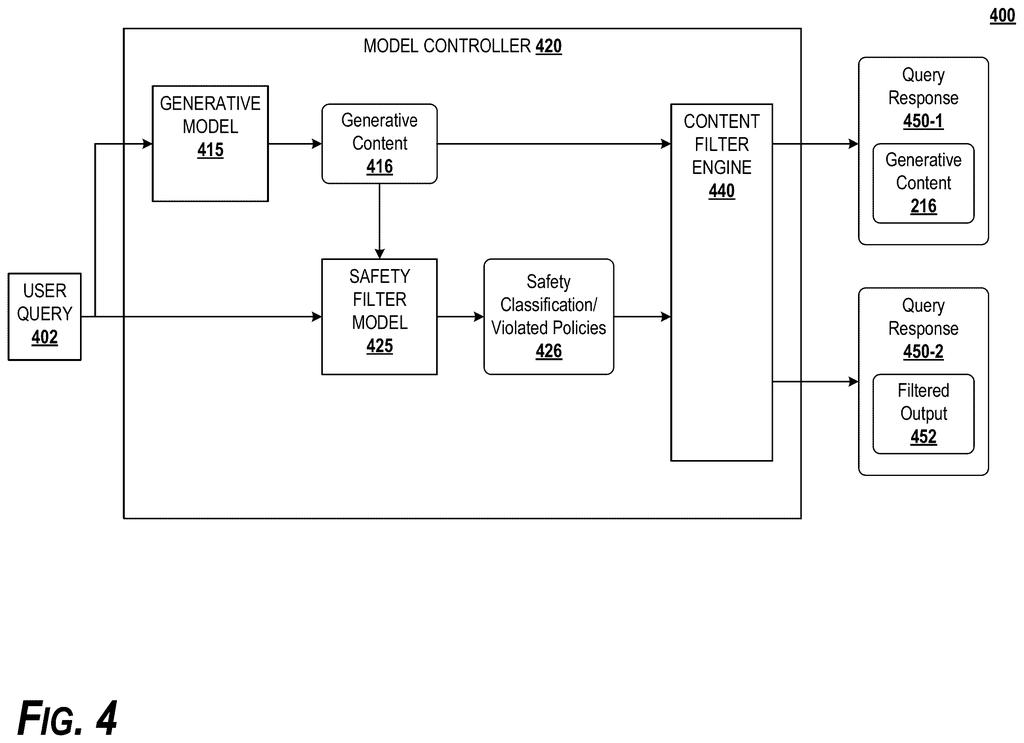
Google's patent describes a different approach: a small, purpose-built safety model that sits in front of the main AI. Because it has far fewer parameters (think of parameters as the knobs the model has learned to tune), it runs much faster. It was trained specifically to read AI-generated responses and label them as safe or not, so it doesn't need to be a general-purpose giant to do its job well.
If the safety check passes, your answer comes through normally. If it fails, the response is filtered out before you ever see it. The whole process is designed to happen fast enough that you probably won't notice any delay at all.
… determining, by the one or more processors with a machine-learned safety filter model in response to the user query, a safety classification for the user query, the machine-learned safety filter model including a transformer and having a number of parameters that is less than a number of parameters of the machine-learned generative model …
Translation: A smaller AI model checks the safety of the main AI model's output.
How the smaller model screens queries before the big one responds
The system involves two AI models working in sequence. The first is the main generative model, which produces a response to a user query. The second is a much smaller safety filter model built on a transformer architecture (the same foundational design behind most modern AI language systems, including GPT-style models).
The key design choice is size. The safety filter has deliberately fewer parameters than the generative model it is screening. Fewer parameters means less computation, which means lower latency (a faster response time). The filter was trained on a specific dataset of generative model outputs paired with safety labels, teaching it to recognize patterns associated with harmful, policy-violating, or otherwise problematic content.
The decision logic works like a gate:
- If the safety classification passes the defined criteria, the generated content is sent to the user normally.
- If the safety classification fails, the content is blocked and a filtered response is returned instead.
Importantly, the safety model evaluates the user query as its primary input, not just the generated output, which allows it to flag intent-based risks early in the pipeline.
The machine-learned safety filter model includes a transformer and has a number of parameters that is less than a number of parameters of the machine-learned content classification model.
Translation: The safety checker uses a compact design to run much faster than the generator.
What this means for how AI chatbots handle dangerous content
For anyone using an AI chatbot, faster safety filtering means fewer awkward pauses and less degraded performance from the guardrails running in the background. The tradeoff today is often between thorough safety checks and a snappy user experience. Google's interest in production-ready AI safety infrastructure suggests this is less about research novelty and more about making moderation practical at scale.
For the AI industry broadly, this patent points at a design pattern: rather than scaling safety checks to match the size of the models they police, build smaller specialists trained on the right data. Whether that holds up against more sophisticated attempts to extract harmful content is a harder question the patent doesn't answer.
Google's 24th filing we've tracked since May in the AI guardrails race follows AI critiquing its own answers and telling similar questions apart, adding another step to how the company checks its models.
The shortest path from this patent to a shippable feature is actually pretty short, which is what makes it interesting. There's no new hardware required, no exotic chip design, and no fundamental research gap to close. The approach is a software pipeline change: train a smaller transformer on labeled outputs, slot it in front of your existing model, and tune the threshold.
Google almost certainly has the labeled training data already, given how long Gemini and Bard before it have been in public use. The main engineering work is getting the latency math right so the filter adds minimal delay at production scale.
The honest read here is that this is an engineering patent, not a science patent. It's formalizing a sensible architectural choice rather than inventing something that didn't exist. That makes it less exciting as a filing, but more credible as something that could ship fast.
There are more where this came from
We read every patent application Big Tech publishes and send you the ones worth knowing. Plain English, free, every week.
The drawings
15 drawing sheets from US 2026/0289249 A1 · click any drawing to enlarge


Want this weekly breakdown for a company we don't cover? Patentlyze Pro →
Be the first to weigh in