
Meta Patents a Single-Beam System That Tracks Eyes and Scans the Room at Once
Most headsets need separate sensors to watch your eyes and map the room around you. Meta has filed a patent for a system that does both jobs with a single light source.
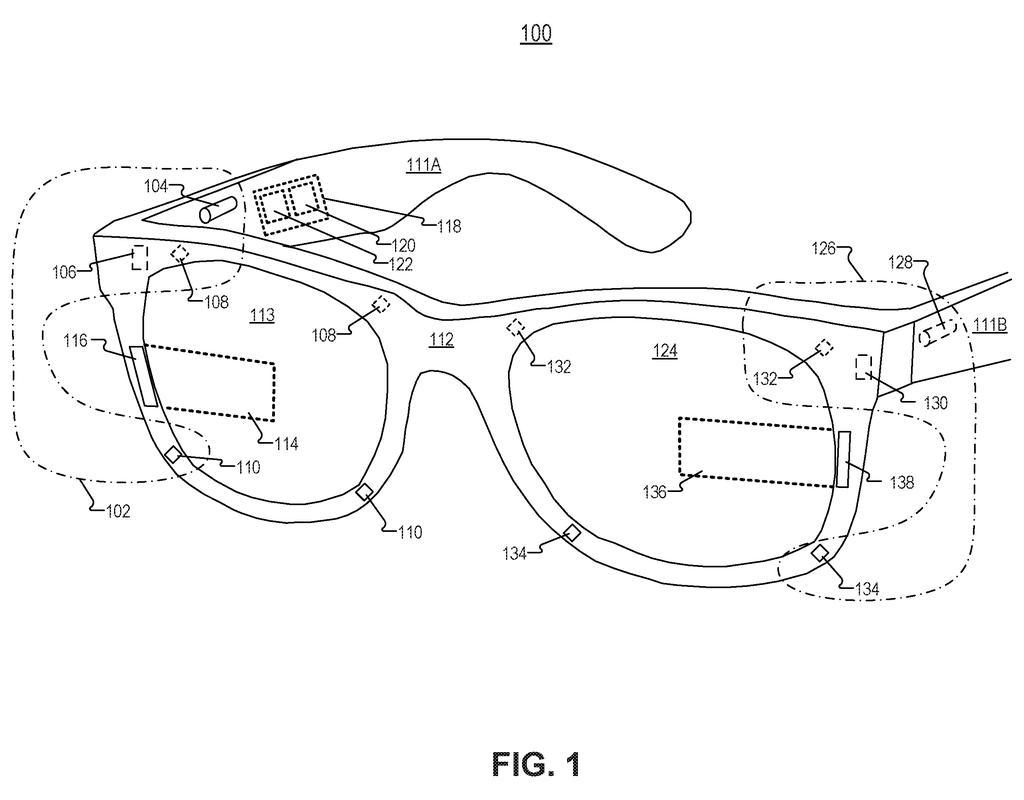
How Meta's shared light trick handles two jobs at once
Imagine you're wearing a pair of AR glasses and you glance at a coffee mug on your desk. The headset needs to know two things simultaneously: which direction your eyes are pointing, and how far away that mug actually is. Today's headsets typically use different hardware for each job, which adds bulk, cost, and power draw.
Meta's patent describes a cleverly recycled light beam. A single light source fires toward the area where your eyes sit. One sensor picks up the reflection off your eye to track where you're looking. But instead of stopping there, the leftover light that bounces past your eye exits the front of the headset and hits objects in the room. A second sensor catches those reflections and uses them to measure distances to things around you.
The result is two useful measurements from one light pulse. That's the kind of efficiency that matters when you're trying to pack a lot of sensing capability into a device light enough to wear all day.
How one beam bounces to feed two separate sensors
The system has four main components working together inside a head-mounted device:
- A single light source pointed at the eyebox region (the zone where your eye sits behind the lens).
- A first photodetector (a sensor that catches light) aimed inward, toward the eye, to capture reflections and measure eye position and orientation.
- A second photodetector aimed outward, toward the scene in front of the wearer, to catch whatever light bounced off the eye and continued forward into the environment.
- Processing logic that reads data from both sensors and computes two separate range measurements: how far a surface of the eye is from the sensor, and how far away objects in the environment are.
The key insight is that light reflecting off a curved eye surface doesn't all get absorbed by the inward-facing sensor. Some of it scatters forward through the optical system and out toward the world. Meta's design captures that otherwise-wasted light with the second sensor to do depth ranging (measuring distances to objects, like a simplified lidar).
Range is calculated using time-of-flight principles: the sensor measures how long light takes to travel out and return, and since light speed is constant, that time converts directly to a distance.
What this means for thinner, cheaper AR headsets
For AR headset makers, every extra sensor adds weight, battery drain, and manufacturing cost. A design that extracts two streams of useful data from one light source is a real engineering economy. If this approach works in practice, it could help Meta shrink the hardware footprint of devices like Ray-Ban smart glasses or future mixed-reality headsets without sacrificing tracking quality.
For you as a wearer, the downstream effect is a headset that is lighter and runs longer on a charge, while still knowing where your eyes are pointed and how far away your surroundings are. Both of those data streams matter for rendering virtual objects that feel anchored in the real world, and for features like automatic focus adjustment.
Meta's 73rd filing we've tracked since May in the AR glasses race builds on earlier applications like eye and hand selection and body-movement window control.
Claim 1 covers any head-mounted device that combines a single light source, one sensor aimed at the eye, one sensor aimed at the outside world, and software that extracts both eye position and object distance from the same data. The claim places no restrictions on the type of light, the timing, or the physical arrangement of parts, which keeps its boundaries deliberately wide.
That width has practical teeth. Any future headset using one shared light source to handle both eye-tracking and distance-sensing, through the same two-sensor-plus-software setup, would fall inside this claim regardless of how the internal hardware looks.
The commercial logic is straightforward: fewer parts means lighter frames, and lighter frames mean people might actually wear the device for hours. A single claim that locks up that entire engineering approach, across many possible physical designs, is a significant piece of territory to hold.
There are more where this came from
We read every patent application Big Tech publishes and send you the ones worth knowing. Plain English, free, every week.
The drawings
7 drawing sheets from US 2026/0299306 A1 · click any drawing to enlarge


Want this weekly breakdown for a company we don't cover? Patentlyze Pro →
Be the first to weigh in