
Qualcomm Patents a Way to Train AI Models Across Many Phones at Once
Training an AI model usually means sending huge amounts of data to a central server. Qualcomm's new patent sketches out a way to do that training across many phones at the same time, using the wireless signal itself to do part of the math.
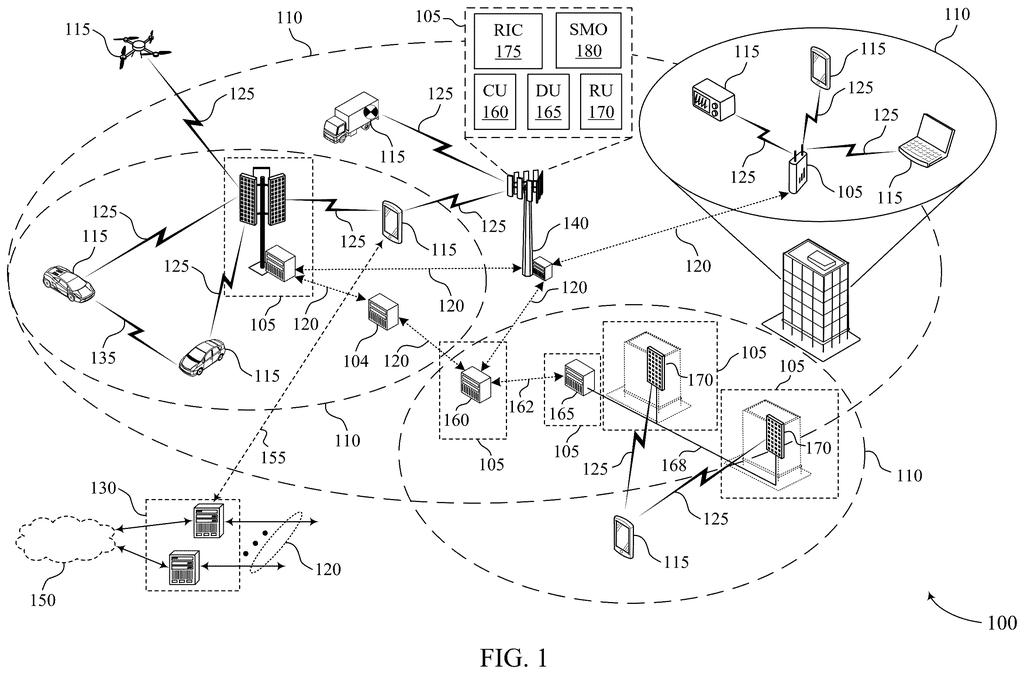
How Qualcomm trains AI across phones without clogging the network
Ever tried to stream a video while a hundred other people on your block are doing the same thing? The network buckles. Now imagine trying to train an AI model across thousands of phones simultaneously, each sending its own data back to a server. That's an even harder problem, and it's what this patent is trying to solve.
Qualcomm's approach lets a group of phones each do a small piece of the AI training work locally, compress the results, and then transmit those compressed results at the same time on the same wireless channel. The clever part: the signals from all those phones overlap in the air and automatically add up at the receiving end, which is the base station or network equipment. The network gets one combined result rather than thousands of separate messages.
This matters most for a style of AI training called federated learning, where your phone contributes to improving a shared model without ever sending your raw personal data to a central server. Your data stays on your device; only heavily compressed math summaries leave it.
… transmit, to the plurality of UEs, an indication of a wireless communication resource to be used by the plurality of UEs for concurrent transmission of compressed gradient data that is compressed using the linear compression matrix; …
Translation: The server tells multiple phones to send their compressed training data at the same time using specific radio channels.
How the linear compression matrix shrinks gradient traffic
The patent describes a system built around three moving parts: the network equipment (what the patent calls a network entity, think a cell tower's brain), a group of phones (user equipments or UEs), and a shared linear compression matrix.
Here is how a training round works:
- The network sends each phone the same compression matrix, essentially a set of math rules for shrinking data.
- Each phone runs a piece of the AI training locally, producing gradient data (the tiny nudges that tell a model which direction to improve).
- Each phone multiplies its gradient data by the compression matrix, making the payload much smaller, then transmits on a shared wireless slot simultaneously with every other phone in the group.
- Because the phones broadcast at the same time on the same channel, their signals stack up in the air. The base station receives one combined signal, an over-the-air (OTA) summation, which is mathematically equivalent to summing all the individual compressed gradients.
The network then either relays that summed result back to the phones or uses it to compute a model update and push that update out instead. The compression step is linear, meaning it uses straightforward matrix multiplication rather than a learned or nonlinear encoder, which keeps the math predictable and reversible.
The key efficiency gain is that over-the-air aggregation sidesteps the need to collect, store, and add up thousands of separate messages in software. The wireless channel does the addition for free, as a physical property of how radio waves combine.
… receive, via the wireless communication resource, a first signal including an over-the-air (OTA) summation of the compressed gradient data.
Translation: The system combines all the phones' training updates directly in the air as they are received simultaneously.
What this means for AI trained on your private phone data
For everyday users, federated learning is one of the more privacy-friendly ways to improve AI features on your phone, things like predictive text, on-device voice recognition, or photo tagging, without those improvements requiring your personal files to leave the device. This patent pushes that idea further by making the process fast enough to work inside a standard cellular network's timing and bandwidth constraints.
On the engineering side, the compression step is what makes this realistic. Gradient data is normally large, and sending it uncompressed from thousands of phones would eat up spectrum quickly. By agreeing on a shared compression matrix upfront, Qualcomm's system trades a small amount of accuracy for a large reduction in data volume, a tradeoff that wireless AI training almost always requires. Qualcomm's run of federated-learning filings suggests this is a sustained area of investment, not a one-off.
Qualcomm's 17th filing we've tracked since July in our on-device AI privacy watch builds on earlier ideas around cross-device identity checks and peer-to-peer AI training.
The gap between this patent and a shipping product is real and worth spelling out. Over-the-air aggregation requires phones to transmit in precise synchrony on the same frequency slot, which is a much tighter coordination problem than ordinary cellular communication. The network scheduling, the matrix distribution, the timing alignment: each piece needs to be built into future radio standards before any of this can work at scale.
That said, the compression approach itself is unusually practical. Linear matrix compression is not exotic research math; it is the kind of operation that existing chip hardware already handles efficiently. If the radio-coordination problem gets solved at the standards level (think 6G discussions), the compute side of this system slots in without needing new silicon.
So the honest read is: this is an early-stage systems patent for a world where AI training is a first-class cellular network function. That world is probably a decade away. The filing is technically coherent and not routine, but anyone expecting a software update to enable this on a current phone is going to be waiting a long time.
There are more where this came from
We read every patent application Big Tech publishes and send you the ones worth knowing. Plain English, free, every week.
The drawings
13 drawing sheets from US 2026/0304221 A1 · click any drawing to enlarge


Want this weekly breakdown for a company we don't cover? Patentlyze Pro →
Be the first to weigh in