
Amazon Patents a Way to Stop AI Models From Surfacing Data Users Aren't Allowed to See
Every time an AI assistant pulls in background information to answer your question, it has to decide what you're actually allowed to read. Amazon's new patent is about making that decision automatic and privacy-aware before the answer ever reaches you.
How Amazon keeps private data out of AI answers
Every time you ask an AI assistant a question at work, it often searches a company database for relevant background before writing its response. That background pull is called RAG (retrieval-augmented generation), and right now it can be a privacy blind spot: the AI grabs whatever looks relevant, without always checking whether you are cleared to see it.
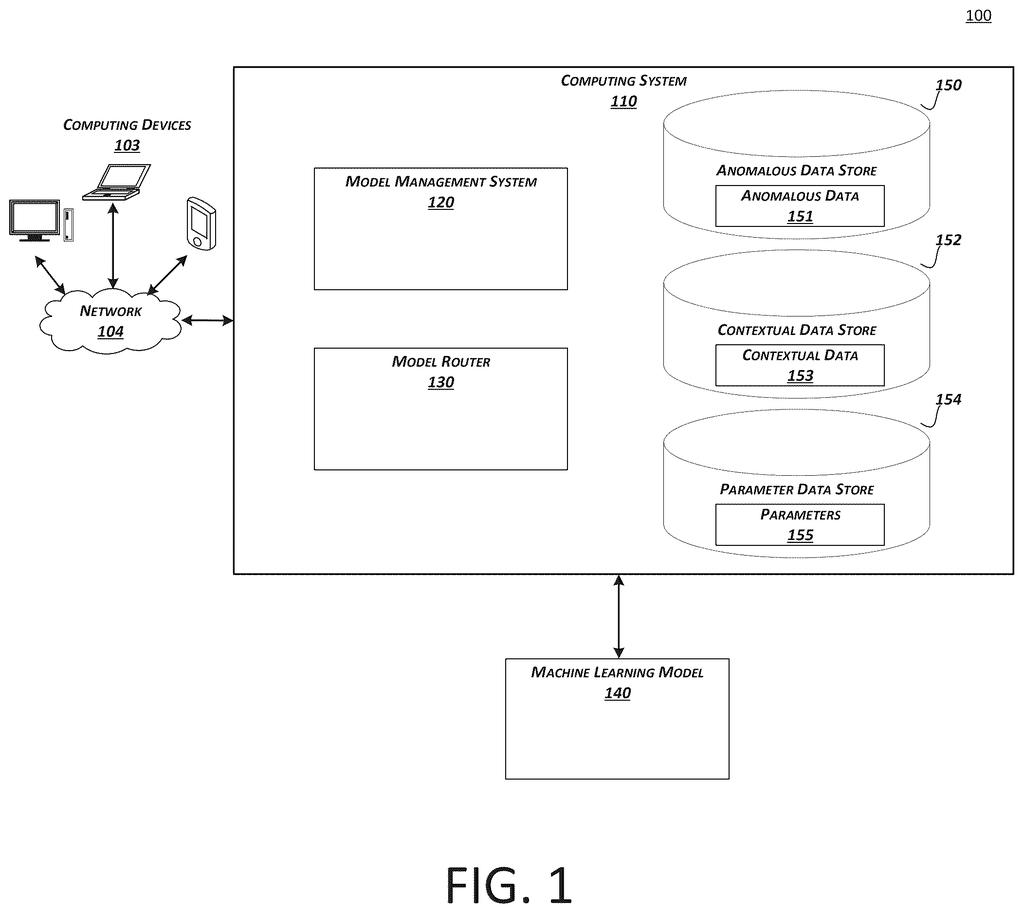
Amazon's filing describes a filtering layer that runs between the retrieval step and the AI's final answer. Before the model gets its background reading material, the system checks labels attached to both the incoming question and the retrieved documents. If those labels don't match up, the flagged documents get stripped out. The model only sees the material it's authorized to use.
Think of it like a mailroom that scans every envelope for a security clearance stamp before dropping it on your desk. The AI still gets useful context, just not the parts meant for someone else.
… filter the contextual data to remove the at least a portion of the contextual data and obtain filtered contextual data; and provide, to the machine learning model, the filtered contextual data …
Translation: The system strips out restricted information before handing data over to the AI.
How the tag-matching filter blocks unauthorized context
The patent describes a system that wraps privacy controls around the RAG pipeline, the workflow where an AI model fetches external documents to inform its response.
Here's the sequence the system follows:
- It watches the AI model's incoming questions and outgoing answers for tags, metadata labels that indicate what kind of user or session is active and what privacy rules apply.
- When it decides the model needs extra context (based on configurable parameters), it pulls candidate documents from an external data store.
- It compares the tags on those candidate documents against the tags tied to the current operation. Any document whose tags conflict with the user's authorization gets flagged for removal.
- The system filters out the flagged material and hands only the filtered contextual data to the model, which then generates its response from that cleaned set.
The claim specifically covers cases where the filtered-out data includes private data and where the document tags differ from the user-session tags. That mismatch is the signal that triggers the block, not a blanket rule, but a real-time comparison on each retrieval event.
What this means for AI tools handling sensitive records
AI tools that pull from internal company databases are already common inside large organizations, and they are spreading fast into healthcare, finance, and legal services, exactly the industries where one misrouted document can mean a compliance violation or a lawsuit. Today, controlling what the AI retrieves usually means maintaining separate databases for each access tier, an expensive and fragile approach.
This filing describes a single pipeline that handles multiple authorization levels dynamically. For you as an end user, the practical effect is an AI assistant that can draw on a richer shared knowledge base without accidentally surfacing a colleague's personnel file or a patient's medical history. Amazon's bet on enterprise AI infrastructure suggests this is less an academic exercise than a building block for business-grade services on its cloud platform.
Amazon's eighth filing we've tracked since July in the AI guardrails race follows one on blocking word-for-word copying and one on catching its own automation errors, adding another layer to how it looks to police its own AI.
When companies build AI assistants on top of their internal files and databases, those assistants tend to share whatever they find. Relevance is the only goal the retrieval system understands, so a contractor can end up reading an executive's compensation memo simply because it matched a search query. That failure costs organizations real money in legal exposure, regulatory fines, and broken trust.
Amazon's approach here is deliberate in its simplicity: attach labels to documents and users, then check whether those labels match before handing anything over. Simple rules are auditable in ways that sophisticated algorithms are not, and auditability is exactly what regulators and compliance officers need.
The honest limitation is that the labeling has to happen first, consistently, across every document in the system. In most large organizations, that upstream discipline is the hard part, and a gate with missing labels is no gate at all.
There are more where this came from
We read every patent application Big Tech publishes and send you the ones worth knowing. Plain English, free, every week.
The drawings
9 drawing sheets from US 2026/0300261 A1 · click any drawing to enlarge


Want this weekly breakdown for a company we don't cover? Patentlyze Pro →
Be the first to weigh in