
Microsoft Patents an AI That Scrubs Personal Details From Medical Audio Recordings
Every time a doctor dictates notes or records a patient visit, that audio is full of names, ID numbers, and other details that could expose someone if the recording leaked. Microsoft is now patenting a system that automatically finds and strips those details from both the audio and the written transcript.
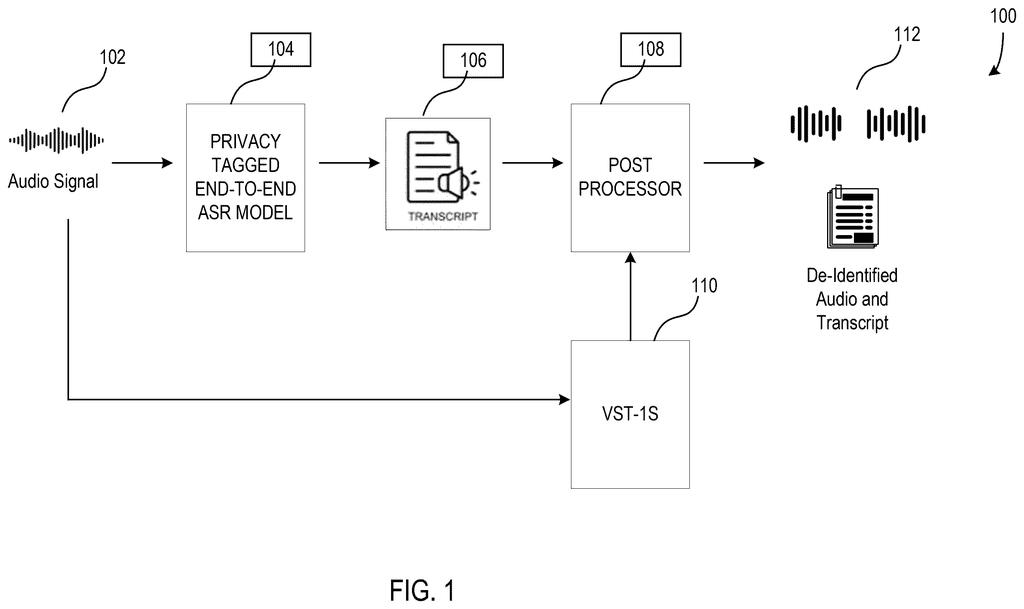
How Microsoft's audio privacy system works in plain terms
Imagine a recording of a doctor's appointment being processed by software that listens to the whole conversation, then surgically removes every moment where a patient's name or health ID number was spoken, leaving everything else intact.
That's the core idea here. Microsoft's system uses a speech-recognition model that has been trained to do two jobs at once: turn spoken words into text and label which parts of that text contain private information. Words or phrases flagged as private get a special marker, called a privacy tag, and anything carrying that tag gets cut from both the audio file and the written transcript.
The result is a version of the recording where a doctor's clinical observations survive untouched, but the patient's identifying details are gone. Hospitals, insurers, and medical software companies spend enormous effort complying with privacy laws around recorded conversations, and a system that handles this automatically rather than manually could save a lot of time and reduce human error.
… remove a first audio segment corresponding to the privacy tag encoding the first phrase in the audio signal and the transcript to generate de-identified audio signal and transcript …
Translation: It deletes the parts of the recording that contain private details from both the audio and the text.
How the ASR model tags and removes private speech segments
The patent describes a two-stage pipeline built around a modified automatic speech recognition (ASR) model, the same class of AI that powers voice-to-text tools.
The key modification is training this model on transcripts where certain words are wrapped in special markers, called privacy tags (for sensitive content) and non-privacy tags (for everything else). Because the model has seen thousands of examples of this labeled training data, it learns to output those same tags whenever it transcribes new audio. So instead of producing plain text, it produces structured output like: [non-private: 'blood pressure reading was'] [private: 'John Doe, ID number 48291'] [non-private: 'within normal range'].
Once the transcript is tagged, the system maps each privacy-tagged word back to the exact moment in the audio file where it was spoken. Those time-stamped audio segments are then removed or replaced, either with silence, a tone, or a generic placeholder phrase.
This happens to both outputs simultaneously: the audio file and the written transcript are de-identified together, so neither version is left holding sensitive information. The patent specifically calls out medical use cases, including patient names and health identification numbers from doctor-patient encounters.
Examples of the disclosure have practical applications in various fields for de-identifying private information (e.g., patient name, unique health identification number, etc.) in an audio signal and transcript, for example associated with a doctor-patient encounter.
Translation: This technology is meant to scrub patient names and medical IDs from doctor visits.
What this means for healthcare and recorded conversation privacy
Healthcare organizations are legally required to protect patient information, and recorded audio is one of the harder formats to scrub automatically. Manual review is slow and expensive; existing tools often strip too much (making recordings useless) or too little (leaving gaps that expose someone). A system that operates at the word level, cutting only what's flagged and preserving clinical content, is a more practical middle ground for the hospitals and software vendors who need these recordings for training AI models or quality audits.
The pattern in Microsoft's healthcare AI filings points toward the company building a stack of tools for ambient clinical documentation, where AI listens to visits and handles the paperwork. An audio de-identification layer is a natural piece of that stack, since any recorded data needs to be cleaned before it can be shared, stored long-term, or used to train future models.
Microsoft's tenth filing we've tracked since August connects to earlier work on live camera streaming and blocking private data leaks in our on-device AI privacy watchlist.
The system learns which words count as private by studying examples, which means it will miss anything it has not seen before: unusual name formats, regional accents, specialized medical terms, or ID structures from institutions outside its training set. That gap is not a footnote. It is the ceiling on how much anyone can actually trust the output.
The design also processes completed recordings rather than live speech, so private details do pass through storage before they are scrubbed. For many research or compliance teams reviewing archived files, that is a reasonable tradeoff.
For the most common use case, batch review of hours of old recordings, imperfect automation is still faster and more consistent than asking humans to listen through everything and hope they catch it all. The trade reads as worth it, with eyes open about what falls through.
There are more where this came from
We read every patent application Big Tech publishes and send you the ones worth knowing. Plain English, free, every week.
The drawings
5 drawing sheets from US 2026/0301754 A1 · click any drawing to enlarge


Want this weekly breakdown for a company we don't cover? Patentlyze Pro →
Be the first to weigh in