
Nvidia Patents a Speech-to-Text System That Routes Audio Through the Right Processor
Most speech-recognition systems run every audio clip through the same single processor. Nvidia's new patent describes a setup that keeps several specialized processors on standby and routes each audio clip to whichever one is best suited for it.
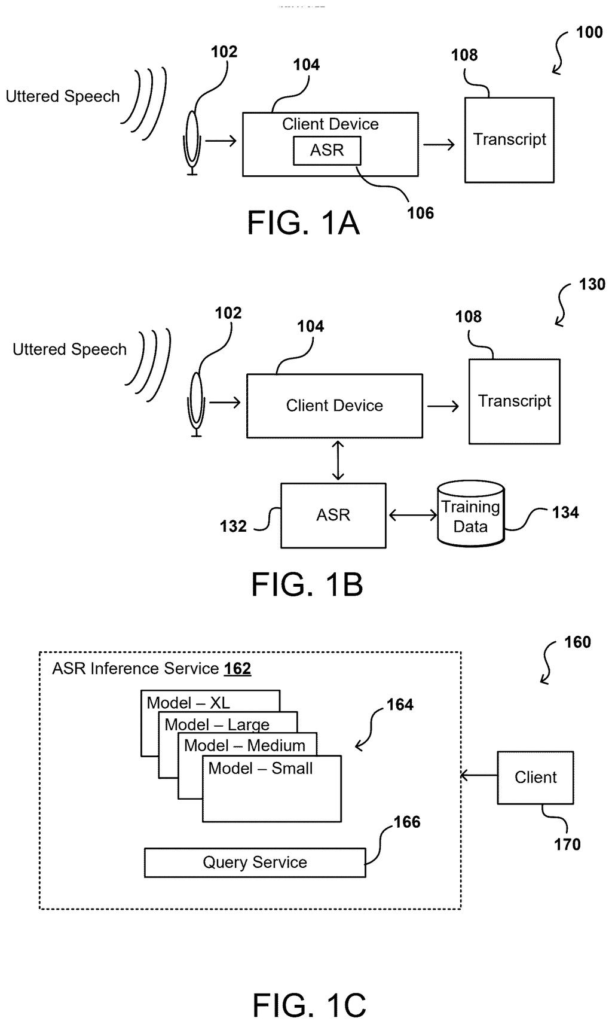
How Nvidia's multi-encoder speech system works for you
Ever tried to use a voice assistant that just couldn't handle your accent, or fumbled a word because there was noise in the background? The problem is often that one-size-fits-all design: a single processing engine trying to handle every possible voice, accent, language, and recording quality at once.
Nvidia's patent describes a different approach. Instead of one engine, the system keeps a collection of specialized engines (called encoders). Each audio clip gets a label, and that label tells the system which engine to send it to. A shared "joint decoder" then turns the result into text.
You probably wouldn't see a settings screen for this. The routing would happen automatically in the background. The practical payoff is a voice tool that handles noisy factory audio, a quiet podcast recording, and a phone call in different languages without collapsing into one mediocre compromise.
one or more processors to generate a text output of an input speech signal using an encoder selected from a plurality of encoders and a joint decoder associated with the plurality of encoders …
Translation: Processors turn speech into text using a specific encoder and a shared decoder.
How the label-routing and joint decoder architecture fits together
The patent describes a speech-to-text pipeline built around three main components:
- A pool of encoders: Each encoder is a neural network trained to process a specific type of audio, such as a particular language, noise environment, or recording condition. Think of them as specialists rather than generalists.
- A label on every audio clip: Before processing begins, the input signal is tagged with a label that identifies which encoder should handle it. The label could come from metadata, a prior classification step, or some other signal.
- A joint decoder: A single decoder shared across all the encoders. Once the selected encoder processes the audio, the joint decoder converts that representation into a text output. Because it is shared, it can be trained on data from all encoder types at once, which may improve overall accuracy.
The claim is deliberately broad: the system can select an encoder based on "at least" the label, meaning other signals could factor in too.
What the patent does not specify in detail is how the labels are assigned in the first place, or how many encoders the system might realistically run in parallel. Those details would matter a great deal for any real deployment.
The encoder may be selected based at least on a label associated with the input speech signal identifying the encoder from the plurality of encoders.
Translation: The system picks the right encoder based on a label attached to the audio.
What this means for voice tools handling varied audio
For you as a user of voice-powered tools, such as transcription software, a voice assistant, or a meeting recorder, this kind of architecture could mean fewer errors when your recording conditions change. A single model struggling with both a noisy warehouse intercom and a studio-quality microphone will be worse at both than a model that can route each clip to the right specialist.
Nvidia's bet on AI inference makes this filing fit a pattern: if you are selling chips and software for running AI models in data centers, reducing the error rate on speech tasks without needing a vastly larger single model is a commercially useful outcome. Whether this specific routing approach clears the bar for novelty at the patent office is a separate question.
Nvidia's 12th filing we've tracked since July on AIs working in teams follows routing questions to specialist AIs and steering queries to the right engine with yet another take on splitting work across multiple AI systems.
The core idea is straightforward: instead of asking one system to handle all voices, accents, and languages equally well, this approach assigns a specialist to each situation and lets a shared layer produce the final result. You would never see this mechanism, but you would feel it.
The concrete payoff comes in moments that currently frustrate people most: a voice assistant that mishears you in a loud room, or a transcription tool that stumbles when a speaker shifts languages mid-sentence. This patent targets exactly those failure points, making the underlying system more likely to route your voice to the right specialist before attempting to understand you.
Whether you notice an improvement depends entirely on how often you are currently hitting those failures. For users who speak in one quiet environment, the difference is probably invisible. For everyone else, fewer embarrassing misreadings is a real and daily improvement.
There are more where this came from
We read every patent application Big Tech publishes and send you the ones worth knowing. Plain English, free, every week.
The drawings
22 drawing sheets from US 2026/0290351 A1 · click any drawing to enlarge


Want this weekly breakdown for a company we don't cover? Patentlyze Pro →
Be the first to weigh in