
Adobe Patents a System That Turns a Text Description Into a Full Video
Type a few sentences about your topic, and Adobe's described system handles the script, visuals, voiceover, and music for you. That's the idea behind this new patent filing.
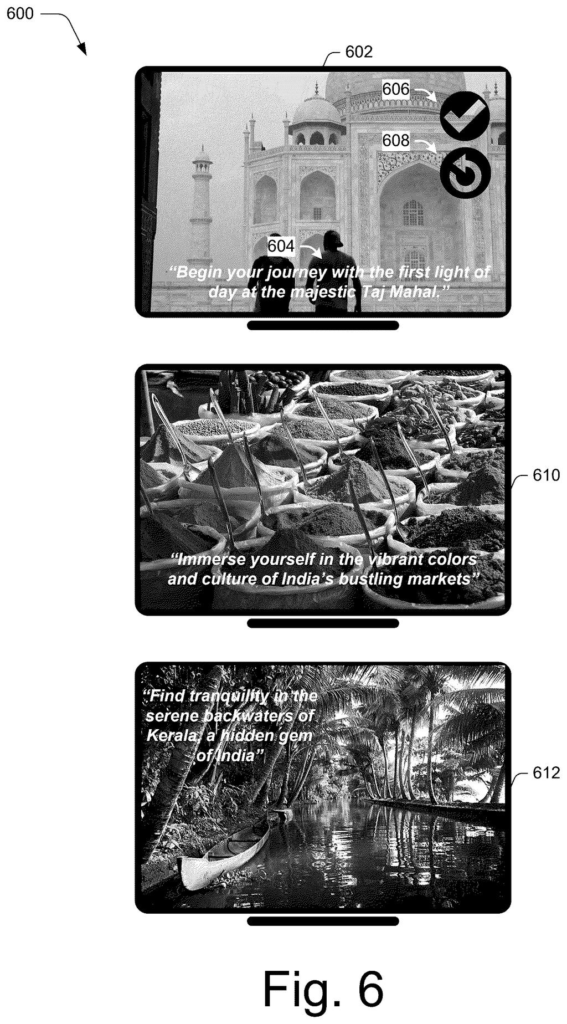
How Adobe's text-to-video pipeline actually works
Ever tried to put together a promo video with no video editing experience? You write a rough idea, then spend hours sourcing clips, recording narration, and stitching everything together. Adobe's patent describes a system designed to handle all of that from a single text description.
You type what you want the video to be about, and the system uses AI to write a scene-by-scene script, find or generate matching visuals, synthesize a voiceover, and pick background audio. It then trims and adjusts each scene so the timing feels natural when everything plays back together.
The patent also describes the system producing multiple versions of the same video at once, so you can compare different visual styles or tones before committing to one. At any point you can step in and edit the script keywords or narration before the final video is assembled.
… presenting, by the processing device and via a user interface, the script as generated by the one or more machine learning models with at least one of an option to revise a keyword describing visual aspects of a scene in the script or an option to revise narration text for the scene in the script …
Translation: Users can edit the AI generated script by changing scene visuals or narration words.
How the system builds scenes from a script to final cut
The patent describes a pipeline with several connected stages, all triggered by plain-text input from a user.
First, a machine learning model (an AI system trained on large amounts of data) reads the user's description and any optional settings, then produces a structured script broken into individual scenes. Each scene includes a description of the visuals and the narration text that should accompany it.
Next, the system acquires image data and audio data for each scene. That means either pulling from a library of existing assets or generating visuals and audio synthetically. The patent leaves room for both approaches.
The system then assembles the video by matching visuals to narration timing, layering in music or ambient audio, and adjusting pacing so cuts feel coherent. A key detail in the claim is that the user interface lets you revise keywords describing visual aspects or the narration text before the final assembly, giving you a checkpoint to steer the output.
Finally, the patent describes an option to produce multiple video variations in parallel, so users can see different interpretations of the same prompt side by side.
… automatically imports or generates visuals, synthesizes narration, and selects audio for each video scene …
Translation: The software builds the video by gathering pictures, making voiceovers, and picking music.
What this means for creators using Adobe tools
For anyone who makes marketing videos, training materials, or social content without a production team, a system like this could cut the time from idea to watchable draft from hours to minutes. The user-facing checkpoint for editing scripts and keywords is a practical detail: it means the AI handles the heavy lifting, but you stay in control of what the video actually says and shows.
Adobe keeps filing on AI-driven content creation, and this fits a pattern of moving its tools toward generating finished assets, not just helping polish ones you already made. Whether this specific pipeline ends up in an existing Adobe product or something new is an open question, but the direction is clear.
Adobe's second patent in the Voice & speech AI filings we cover since August builds on one about designing graphics by voice.
The shortest path from this patent to a real shipping feature is actually pretty short. Adobe already has Firefly for image and video generation, and Premiere Pro as an editing host. The pieces this patent describes, generating a script with an AI model, sourcing assets, and assembling a timeline, are all things Adobe's existing infrastructure could plausibly support without new hardware.
The user-editable script checkpoint is the most practically interesting part. Text-to-video systems that produce a single opaque output are harder to trust for professional work. Surfacing the script as an editable layer before final assembly is the kind of design decision that comes from thinking about real workflows, not just demos.
The multi-variation output is a nice idea but also the part most likely to be trimmed in a shipping version. Generating one polished video is hard enough; generating several coherent alternatives in parallel raises the compute cost fast. Expect that feature to appear, if at all, in a higher-tier offering.
There are more where this came from
We read every patent application Big Tech publishes and send you the ones worth knowing. Plain English, free, every week.
The drawings
8 drawing sheets from US 2026/0290399 A1 · click any drawing to enlarge


Want this weekly breakdown for a company we don't cover? Patentlyze Pro →
Be the first to weigh in