
Microsoft Patents a Way to Compress AI Models Without Losing What Matters Most
Running a powerful AI model on a phone or laptop usually means accepting a watered-down version. Microsoft's new patent tries to change that math by being surgical about what gets compressed and what doesn't.
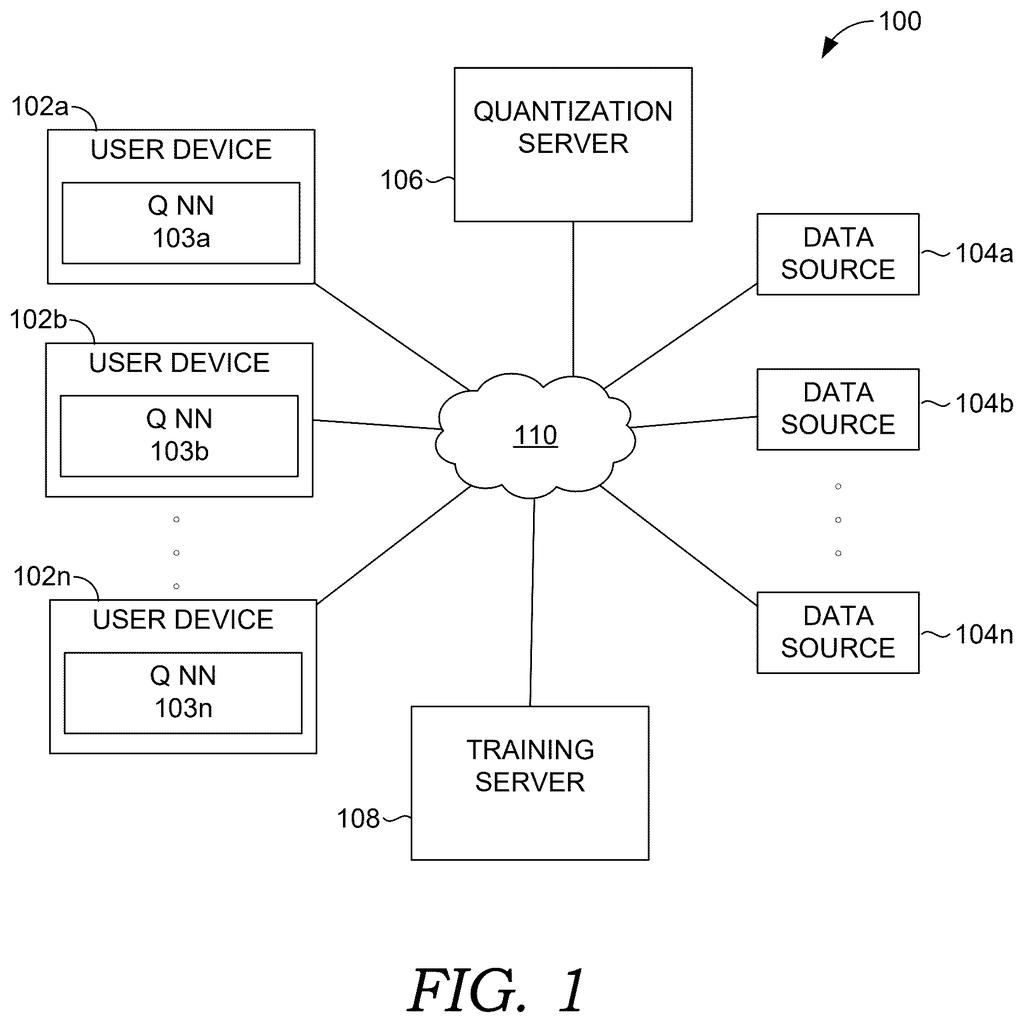
How Microsoft shrinks AI to fit on everyday hardware
You're trying to run an AI assistant directly on your phone, no cloud required, but the model is simply too large for the hardware to handle at full quality. Something has to give.
Microsoft's patent describes a technique for deciding which parts of an AI model are worth preserving in high fidelity and which parts can be safely squeezed down without the model noticing. Think of it like digitizing an old photograph: you keep the subject's face sharp and let the background go a little blurry. The AI keeps its important "neurons" at full precision and compresses the rest aggressively.
The result is a model that takes up far less memory and computing power, making it practical to run on a laptop, phone, or other edge device that can't tap a data center. The goal is to preserve accuracy where it counts while making the tradeoffs in places the model can absorb.
… identifying a first plurality of significant columns and/or rows in the orthogonal matrix that make above a threshold contribution to producing an accurate final inference …
Translation: It finds the parts of the AI that actually matter for making correct guesses.
How the patent separates critical AI weights from disposable ones
The patent centers on a mathematical technique called Singular Value Decomposition (SVD), a method for breaking a large table of numbers (called a matrix) into simpler pieces ranked by how much they contribute to the matrix's overall meaning. In an AI model, each layer of the network contains such matrices, and SVD lets you sort those pieces from most important to least important.
Once ranked, the system splits the matrix into two groups:
- A significant matrix containing the top-contributing components, which gets quantized (compressed) lightly or not at all
- A less significant matrix containing lower-contributing components, which gets compressed aggressively to save memory and computation
Quantization is the process of representing numbers with fewer decimal places. Full-precision AI weights might use 32 bits per number; a quantized version might use 4 or 8 bits. Less data means faster processing and lower memory use, but it also means more approximation. The risk is that too much compression degrades the model's answers.
By applying different compression levels to different parts of the same layer, based on SVD's ranking, the patent aims to keep degradation concentrated in the parts of the network that can absorb it without affecting output quality.
The significant components undergo minimal or no quantization, while the less significant components undergo higher degrees of quantization.
Translation: Important parts stay high quality while unimportant parts are heavily shrunk down.
What this means for AI running on phones and laptops
For most people, this is about whether a capable AI model can run locally on your device rather than requiring a server somewhere else. Local AI is faster, more private, and works without an internet connection. The barrier has always been that the most capable models are simply too large for consumer hardware to run well.
If Microsoft can make this technique work reliably across a range of model sizes and hardware types, it becomes a practical tool for shipping AI features in Windows or other software without depending on cloud infrastructure. Microsoft's track record in AI efficiency patents suggests this is part of a broader push to make large language models viable on ordinary machines, not just in data centers.
Microsoft's 11th filing we've tracked since August in our on-device AI privacy watchlist follows earlier applications like scrubbing medical audio and battery-safe camera streaming.
The core tradeoff here is real and worth naming: SVD-based ranking tells you which components contributed most to the training data, but a component that looks unimportant on average can matter a lot for specific, edge-case queries. Compress the "less significant" half too hard and the model may hold up on common questions while failing oddly on unusual ones, which is exactly the kind of failure that's hard to catch in testing.
There's also a computational cost to running SVD itself before deployment, and the patent doesn't dwell on how expensive that pre-processing step is or how often it needs to be repeated as models are updated. That's a real operational question for anyone trying to use this in practice.
The underlying idea is sound, and differential compression is a well-motivated direction. Whether this specific implementation makes the right cuts consistently enough to trust in production is a question the patent, by design, doesn't have to answer.
There are more where this came from
We read every patent application Big Tech publishes and send you the ones worth knowing. Plain English, free, every week.
The drawings
8 drawing sheets from US 2026/0300700 A1 · click any drawing to enlarge


Want this weekly breakdown for a company we don't cover? Patentlyze Pro →
Be the first to weigh in