
Microsoft Patents a Way to Tell When an AI Model Has Learned Enough
Training an AI security system today means waiting days even when the model stopped improving hours ago. Microsoft has filed a patent for a system that watches a mathematical property of incoming data and automatically stops training the moment further learning would be wasted.
What Microsoft's auto-stopping AI training actually does
Today, when a company sets up an AI system to watch for cyberattacks, the model trains on network data for a fixed stretch of time, often days, because no one has a reliable way to know when it has actually learned everything useful. That default timer is a guess, and a conservative one.
Microsoft's patent describes a system that monitors a property of the incoming data called fractal dimension, which is a way of measuring how complex or varied the patterns in that data are. As the model trains, the system tracks whether that complexity measurement has stopped changing. Once it levels off, the data isn't teaching the model anything new, so training stops.
The payoff for you is concrete: if your company rolls out a new security monitoring tool, it could be watching for threats in hours instead of days. The patent also describes a way to generate realistic fake traffic for testing, so administrators can run drills without accidentally retraining the model on artificial data.
Default long training durations are sometimes replaced by shorter durations without any loss of model accuracy. For instance, the time-to-detect for a model-based intrusion detection system is shortened by days in some circumstances.
Translation: This method can cut training times down by days while keeping the artificial intelligence just as accurate.
How fractal dimension signals that training is done
The patent describes a computer-implemented method built around fractal dimension, a number that captures how self-similar or complex a dataset is at different scales. Think of it like a texture measurement: a totally flat, predictable data stream scores low; chaotic, varied network traffic scores higher.
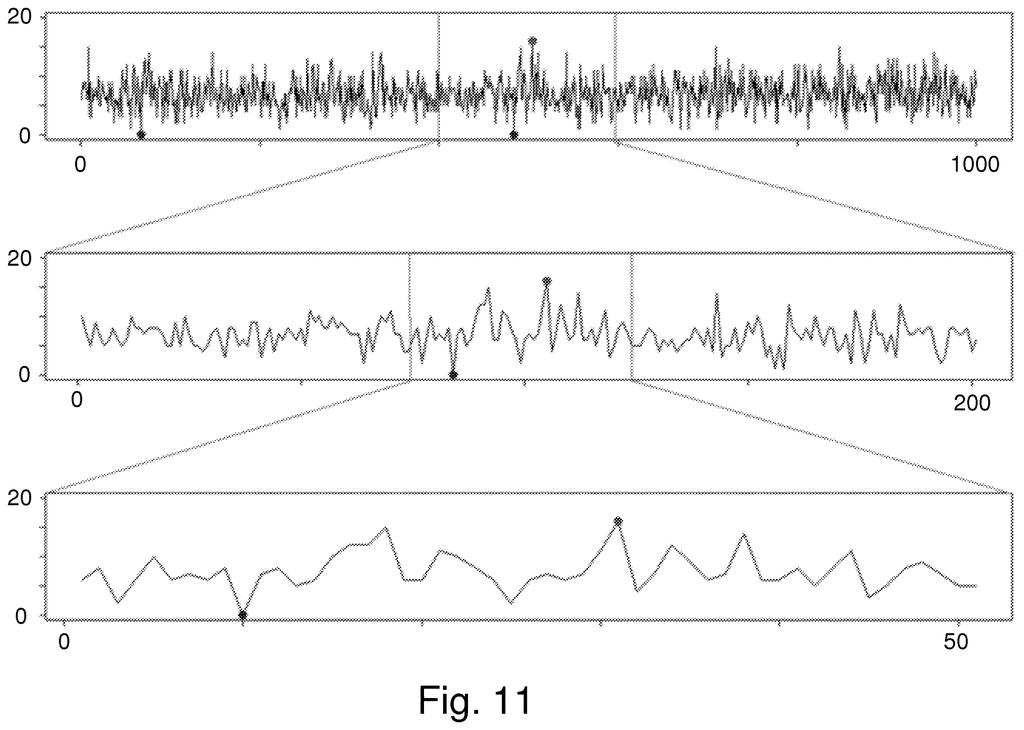
As training data accumulates over time, the system continuously recalculates that fractal dimension. The key observation in the patent is that once a dataset has enough variety to represent the real world, the fractal dimension stabilizes. The system watches for that stabilization, called a convergence condition, and stops training when it is met.
The patent adds a few layers on top of that core mechanism:
- Profile-based training: models can be trained separately for specific resources, users, or entities rather than treating an entire network as one uniform dataset.
- Spike counting: the system also tracks sudden jumps in data characteristics as an additional signal about complexity.
- Test data generation: realistic synthetic traffic can be produced on demand for demos or scheduled health checks, without that synthetic data contaminating the trained model.
The underlying target is intrusion detection systems, the AI tools that watch network traffic for signs of a breach. The patent claims some deployments currently take days to reach a usable model; this approach could cut that to a fraction of the time.
What shorter training means for security tools you rely on
For anyone relying on an AI-based security product, the current setup means a newly deployed or updated detection model may be sitting in training mode for days before it can actually flag threats. That gap is a real window of exposure. Microsoft's approach narrows that window by ending training as soon as the data stops being informative, rather than running a fixed clock.
The synthetic test-data feature is practical too. Security teams regularly need to verify their tools are working, but running a live drill using real malicious traffic is dangerous and using fake traffic risks skewing the model. A built-in generator that produces realistic data without touching the model's training memory addresses that in a clean way.
Microsoft's 22nd filing we've tracked since May in AI training and infrastructure follows one about running big models on small chips and another about mid-run workload self-adjustment.
For a security team, the practical win is time. When a new fraud or intrusion detection system goes live, there is a gap where the software is still learning and not yet protecting anyone. This patent describes a way to close that gap by measuring how complicated the incoming data actually is and stopping training the moment the model has learned enough, potentially shrinking that vulnerable window from days to hours.
The system scales to fit the environment. Simple, predictable traffic gets a faster result. A large, tangled network trains longer. Either way, the decision is driven by measurement rather than a fixed timer someone set conservatively years ago.
The synthetic test data piece solves a separate but equally real headache: proving the tool still works without staging a fake attack or waiting for a real one. Quarterly security audits become routine sign-offs instead of stressful productions.
There are more where this came from
We read every patent application Big Tech publishes and send you the ones worth knowing. Plain English, free, every week.
The drawings
6 drawing sheets from US 2026/0289413 A1 · click any drawing to enlarge


Want this weekly breakdown for a company we don't cover? Patentlyze Pro →
Be the first to weigh in