
Sony Patents a Surgery Simulator That Makes Virtual Tissue Bleed and Smoke
Sony has filed a patent application for a surgery simulator where a virtual electric scalpel heats virtual tissue until it smokes, and cutting a vessel makes blood flow. The smoke and blood come straight out of a heat simulation of the tissue.
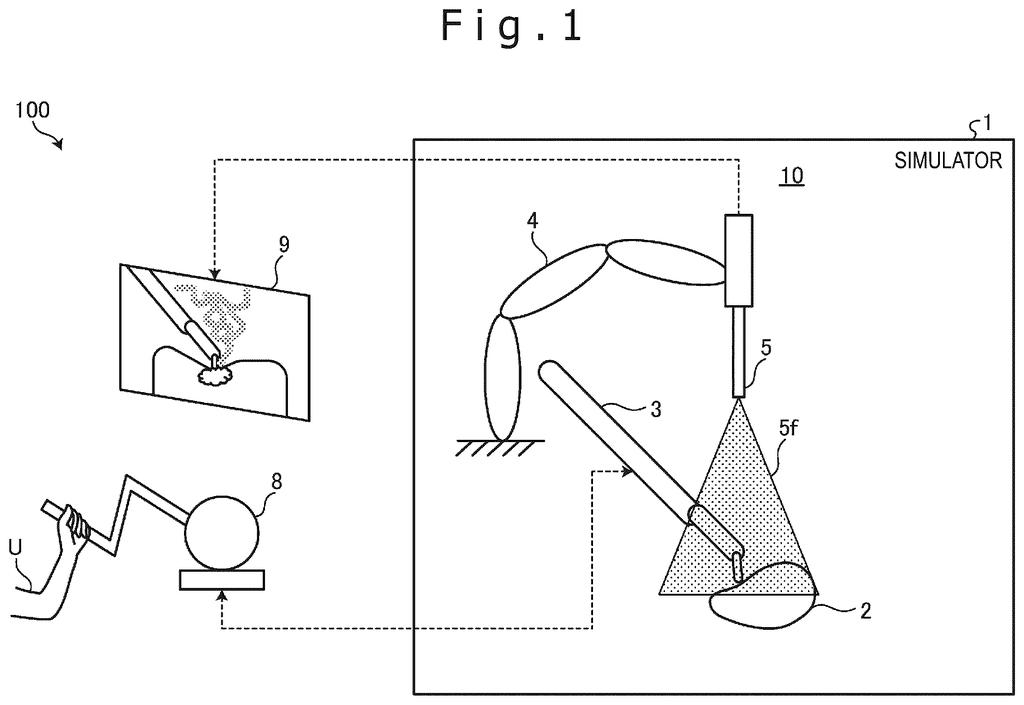
What Sony's bleeding-and-smoke surgery sim does
Ever wondered how a surgeon practices before touching a real patient? Often it's on a computer, where a virtual scalpel cuts virtual tissue. The catch is that real surgery is messy. Cutting makes blood well up, and an electric scalpel burns tissue and sends up smoke, yet older simulators tend to skip those effects or fake them in a very simple way.
Sony's patent application describes a simulator that models the heat itself. The virtual tool warms the tissue it touches, that warmth spreads outward, and when a spot gets hot enough it vaporizes. That spot gives off smoke, and if the cut hits a blood vessel, blood flows out and runs across the tissue.
You guide the tool with a touch-feedback controller, so you feel resistance as you work, while watching the whole scene on a screen.
… simulates at least one of bleeding and smoke release from a biological tissue, based on heating in the biological tissue caused by an energy device, and heat propagation in the biological tissue.
Translation: The system calculates how surgical tools heat up tissue to realistically show blood and smoke.
How heat spreads and turns tissue into smoke
The simulator runs on a computer with at least one processor (the filing describes a CPU and a graphics chip working together). It treats an energy device, meaning a heated surgical tool such as an electric or ultrasonic scalpel, as a heat source. Tissue is modeled as a cloud of small virtual particles, linked by connections the filing calls thermal springs that pass heat from one neighbor to the next.
Each moment of the simulation goes roughly like this:
- Particles within a set distance of the tool tip pick up heat.
- Heat spreads through the links, so closer particles run hotter.
- A particle that reaches the vaporization temperature (100°C in the example, and adjustable) is removed from the tissue.
- Smoke particles are released from the gap and drawn with a standard graphics engine such as Unreal Engine.
Blood works as a second layer. Where tissue has been removed, fluid particles are created to stand in for blood, and the computer keeps adjusting their positions so the blood holds a constant density, the way a real liquid resists being squeezed. Denser boundary particles along the tissue surface stop the blood from leaking through, and extra rules cover stickiness, thickness and surface tension. Blood only appears when a cut reaches a blood vessel drawn into the tissue's texture.
What Sony's simulator means for surgeon training
If you or someone you love ever needs surgery, the person holding the scalpel may have practiced on a screen first. The more a practice session looks and feels like the real thing, including the blood that blocks the view and the smoke that clouds it, the more useful the practice is. The filing says the system could be used for training and planning operations such as laparoscopic, chest and brain surgery.
The filing also describes a variation that links a trainee's controls to a real robot arm, with the simulation checking whether a move looks dangerous and limiting the arm's motion if so. It describes splitting the heavy calculations between a local computer and a cloud computer too. Both are listed as options, and the patent names no product.
Sony's 588th filing in our Sony coverage since May adds to a run that includes noise-filtered health earbuds and cutscene video compression.
Of all the pieces a surgical simulator needs, this one is mostly software. The filing runs on a computer with a graphics chip, a touch-feedback controller and a screen, hardware that already exists. Nothing in it calls for a new device.
What has to exist first is the content: detailed 3D organs, blood vessels drawn into the tissue, and tuned values for how fast heat spreads. The patent gives 100°C as an example for vaporization but leaves it adjustable, so someone still has to decide what is medically right.
The shortest path to a product is adding these effects to an existing surgery trainer, which would be a software upgrade built on today's equipment. My verdict: a practical, buildable idea. Whether surgeons find it realistic enough to trust is something a patent cannot answer.
Get our take in your Top Stories
Liked this breakdown? Add Patentlyze as a preferred source on Google, and our plain-English take shows up more often in your Top Stories the next time Sony patent news breaks.
There are more where this came from
We read every patent application Big Tech publishes and send you the ones worth knowing. Plain English, free, every week.
The drawings
29 drawing sheets from US 2026/0311618 A1 · click any drawing to enlarge


Show the other 21 sheets


Want this weekly breakdown for a company we don't cover? Patentlyze Pro →
Be the first to weigh in