
Samsung Patents a Multi-Processor Display System That Adjusts Brightness Without Waking the Main Chip
Every time your phone adjusts screen brightness, it risks nudging a power-hungry processor out of sleep. Samsung's new patent tries to fix that by routing the whole job through smaller, lower-power chips.
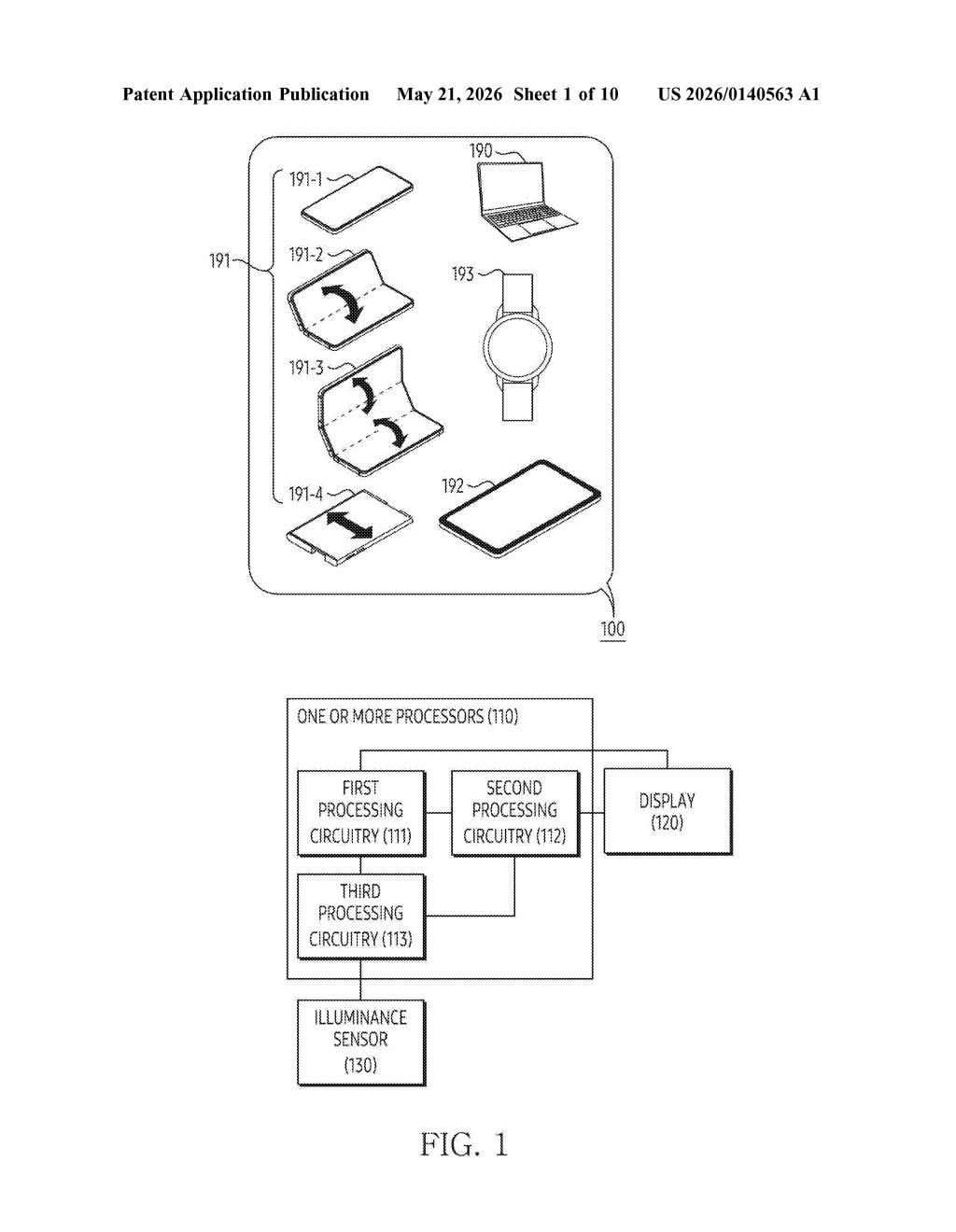
How Samsung keeps your screen dimming without burning battery
Imagine your phone is sitting on your desk in always-on display mode — showing the clock, maybe a notification. The room gets brighter, so the screen should dim. Simple enough, right? The problem is that on most phones, telling the display to change brightness means waking up the main processor, which burns a surprising amount of power just to relay one small instruction.
Samsung's patent describes a smarter hand-off. A small, low-power chip (the 'third processing circuitry') reads the light sensor and passes the brightness reading to a mid-level chip (the 'second processing circuitry'). That mid-level chip then tells the display to adjust — all without ever disturbing the main processor (the 'first processing circuitry'), which stays asleep the whole time.
The result is that your screen can respond to changing light conditions during low-power states — like always-on display — without the energy cost of a full wake cycle. It's the kind of quiet plumbing work that shows up as a longer battery life on spec sheets.
How three processor tiers hand off the brightness command
The patent describes an electronic device with a three-tier processor hierarchy, each tier operating at a different power level. The key innovation is in how brightness adjustments are choreographed across those tiers during low-power display operation.
Here's the chain of events the patent lays out:
- The third processing circuitry (a small, always-on co-processor) continuously reads the illuminance sensor while the display is in its low-power 'first display operating state' — think always-on display or ambient mode.
- It passes the illuminance level to the second processing circuitry (a mid-tier chip), specifically chosen because it can handle this task without requiring the main processor to wake up.
- The second processing circuitry sends a brightness-change command directly to the display, moving it from one brightness level to another.
- The first processing circuitry (the main application processor) stays in its low-power 'first operating state' throughout the entire sequence — it never gets involved.
The architecture is essentially a task delegation system: each processor only handles work appropriate to its power tier. The patent also specifies that the third circuitry's role is explicitly to protect the main processor's sleep state — it's not just a convenience, it's a design requirement baked into how the illuminance data gets routed.
What this means for always-on display battery drain
Always-on displays (AOD) have become a standard feature on flagship Android phones and Samsung Galaxy devices, but they've always carried a battery cost. A big chunk of that cost isn't the display itself — it's the overhead of keeping system-level logic responsive. If adjusting brightness for ambient lighting requires the main application processor to wake up dozens of times per hour, those micro-wake-cycles add up fast.
By offloading the sensor-read and brightness-command path to lower-power circuitry, Samsung could meaningfully extend AOD battery life without changing the display hardware at all. For you as a user, that might mean a few extra hours of standby, or a brighter, more responsive AOD without the usual tradeoff of faster battery drain.
This is unglamorous firmware architecture work, but it's exactly the kind of thing that separates good always-on display implementations from great ones. Samsung has been iterating on Galaxy AOD for years, and filing a patent around the processor-handoff logic suggests they're tightening the system at a level most users will only notice as 'huh, the battery seems better.' Worth tracking as a signal that AOD efficiency is a deliberate engineering priority, not an afterthought.
Get our take in your Top Stories
Liked this breakdown? Add Patentlyze as a preferred source on Google, and our plain-English take shows up more often in your Top Stories the next time Samsung patent news breaks.
There are more where this came from
We read every patent application Big Tech publishes and send you the ones worth knowing. Plain English, free, every week.
Want this weekly breakdown for a company we don't cover? Patentlyze Pro →