
Samsung Patents a Multi-Chip Setup Where Processors Share Data Directly
Samsung is patenting a way to have multiple processor chips talk to each other directly, swapping data back and forth so they can each crunch bigger problems than any one chip could handle alone.
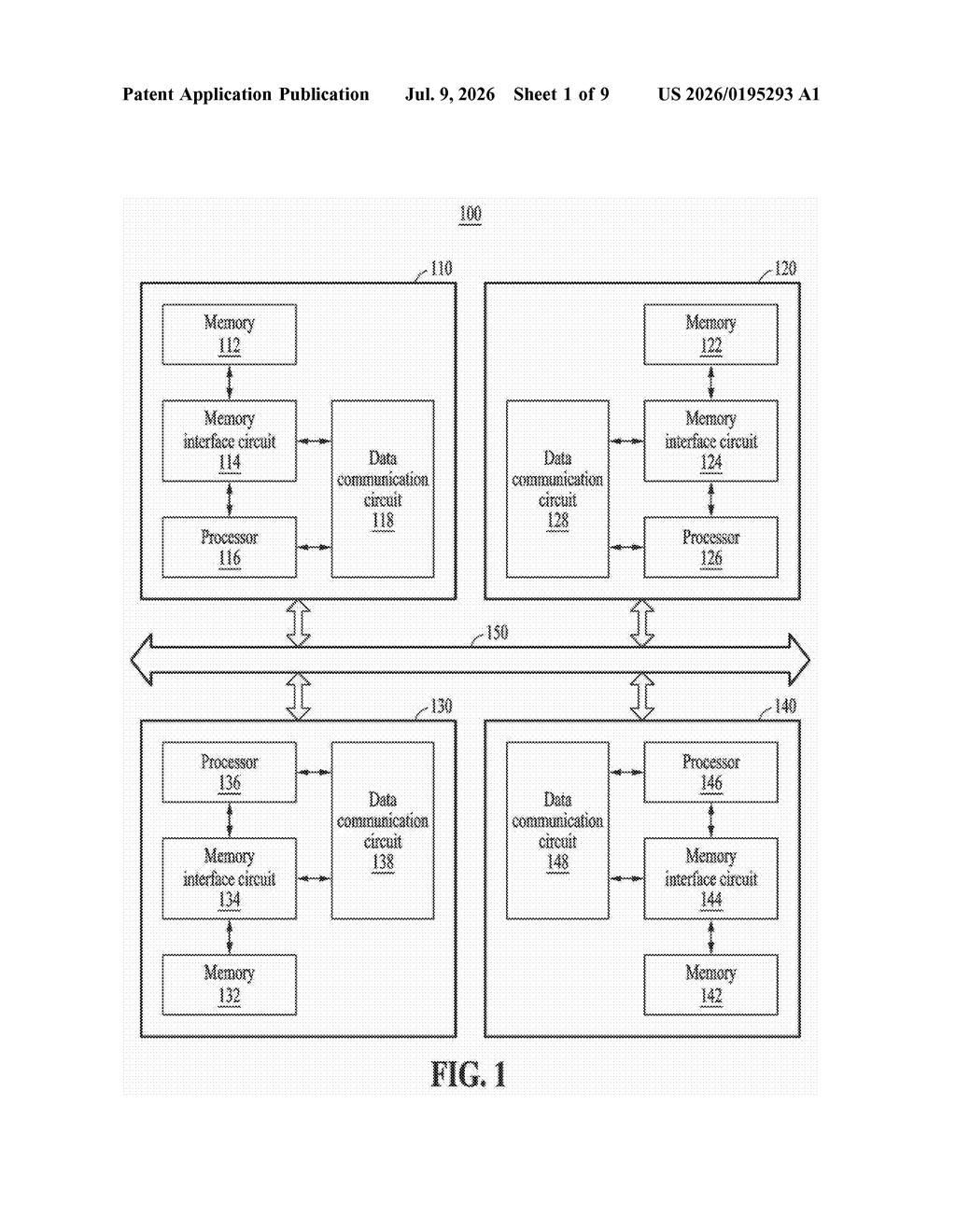
What Samsung's processor data-sharing system actually does
Imagine you and a coworker are each solving different parts of the same math problem. Instead of one person finishing first and then handing everything over, you both share your notes at the same time and keep working. Samsung's patent describes a chip system that works the same way.
In this setup, multiple processor chips each have their own memory and computing power. Each chip sends its stored data to a neighbor, receives that neighbor's data in return, and then does calculations using both sets of information together. No single chip has to wait around for a central coordinator.
This kind of direct chip-to-chip communication is especially useful for the heavy workloads that AI systems demand, where splitting a task across many chips can be faster than loading everything onto one.
How each chip sends, receives, and computes in parallel
The patent describes a multiprocessor apparatus made up of several processing circuits, each of which contains at least one processor and its own local memory. The key design choice is that each circuit is built to do four things in a coordinated loop:
- Send its locally stored data to another processing circuit
- Receive that other circuit's locally stored data in return
- Feed the received data directly into its own processor
- Run a computation using both its own original data and the data it just received
This is a form of what chip designers call a collective operation (a coordinated data exchange across many processors at once, similar to how members of a relay team pass a baton). Rather than routing all data through a central memory pool, each chip handles its share locally and only exchanges what is needed.
The claim is broad and covers any configuration where this send-receive-compute cycle happens across multiple chips, whether they are inside a single device or spread across a larger system.
What this means for Samsung's AI chip ambitions
AI training and inference workloads are increasingly too large for a single chip. The industry standard response is to split the work across many processors, but coordinating that split efficiently is hard. Samsung's patent targets exactly that coordination problem, describing an architecture where chips collaborate without a bottleneck at the center. For Samsung, which competes in both the chip design market (through its Exynos line) and AI accelerator space, owning foundational patents on multi-chip coordination matters strategically.
For you as a consumer, this kind of work is what eventually shows up as faster AI responses on your phone or in your TV. It is infrastructure-level work, invisible when it works and painful when it does not.
This is a broad, foundational patent on multi-chip data sharing, and broad foundational patents are either very valuable or very easy to design around, depending on what prior art exists. Samsung is clearly building its patent portfolio around AI chip architectures, which makes sense given the competitive pressure from Nvidia, AMD, and Apple Silicon. Whether this specific claim survives scrutiny is another matter.
Get our take in your Top Stories
Liked this breakdown? Add Patentlyze as a preferred source on Google, and our plain-English take shows up more often in your Top Stories the next time Samsung patent news breaks.
There are more where this came from
We read every patent application Big Tech publishes and send you the ones worth knowing. Plain English, free, every week.
Want this weekly breakdown for a company we don't cover? Patentlyze Pro →