
Samsung Patents a Weight-Interpolation Method for Merging AI Models
Samsung has filed a patent for a technique that blends a base AI model with one or more fine-tuned versions — not by retraining from scratch, but by mathematically interpolating their weights to produce a new, merged model.
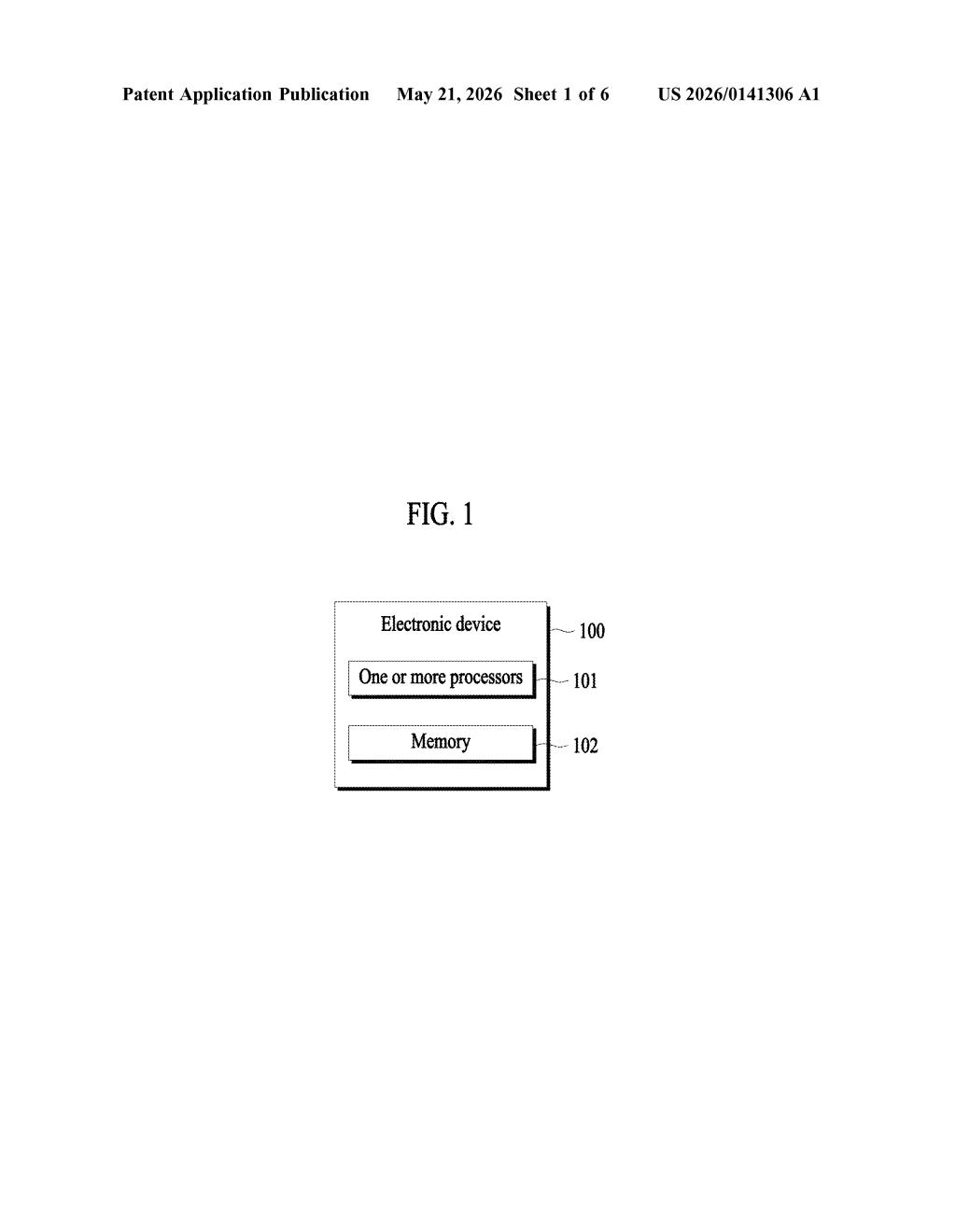
How Samsung blends two AI models into one target model
Imagine you have a general-purpose AI assistant baked into your phone, and then someone trains a specialized version of it to be better at translating Korean, and another to be better at summarizing news. Normally, picking between them is a binary choice. Samsung's patent describes a way to blend those models together into a single new one.
The trick is treating each model's learned parameters — the numbers that define how it behaves — as points in a shared mathematical space. By drawing a line between those points and picking a spot along that line, Samsung's method produces a merged "target model" that borrows characteristics from all contributors. No fresh training required.
The practical payoff is flexibility: a device could generate a tailored model on the fly, tuned to your current task, without the storage cost of keeping multiple full models around or the compute cost of retraining any of them.
How linear interpolation navigates the weight value space
The patent describes a layer-by-layer model merging pipeline. For every layer in a pre-trained base model (the "first model"), the system retrieves the corresponding weight values from that base model and from one or more fine-tuned variants (the "second models" — versions of the base that were further trained on specific tasks or datasets).
Each set of weight values is treated as a location in a weight value space — think of it as a high-dimensional coordinate system where every point represents a particular model behavior. The system then applies linear interpolation (the same math behind a color gradient or a speed ramp — find a point proportionally between two known points) to derive a new location in that space.
The weight values at that new location become the "third weight values" of a merged target model. This is done independently for each layer, so the merge can, in principle, vary its blend ratio or interpolation path per layer rather than applying a single global mix.
The result is a target model that is structurally identical to the base model but carries interpolated weights — sitting somewhere in behavior space between the base and the fine-tuned variants. The approach is closely related to what researchers call model merging or model soups, a growing area of ML research that Samsung is now staking a patent claim in.
What this means for efficient on-device AI deployment
For Samsung's Galaxy devices — which increasingly run on-device AI for features like translation, image editing, and text summarization — this technique could mean one compact base model that morphs toward different specializations without requiring separate full-model downloads or real-time fine-tuning compute. That's a meaningful win for storage and battery life on a smartphone.
More broadly, this is Samsung planting a flag in model merging, a technique that's getting serious traction in the research community (think Mistral merges, "frankenmerge" experiments on Hugging Face). If Samsung can enforce or build around this patent, it could matter for how AI model customization pipelines are designed in edge-device ecosystems.
Model merging via weight interpolation is a real and active research area — not a theoretical curiosity — so Samsung is filing on something with genuine near-term utility. That said, the core idea of interpolating model weights is already well-documented in academic literature ("model soups" from Google in 2022, task arithmetic work from 2023), which means the novelty here likely hinges on specific implementation details like the layer-by-layer location-derivation framing. Worth watching for how broadly the granted claims end up being written.
Get our take in your Top Stories
Liked this breakdown? Add Patentlyze as a preferred source on Google, and our plain-English take shows up more often in your Top Stories the next time Samsung patent news breaks.
There are more where this came from
We read every patent application Big Tech publishes and send you the ones worth knowing. Plain English, free, every week.
Want this weekly breakdown for a company we don't cover? Patentlyze Pro →