
Sony Files Patent for a Narration Voice Picked to Match Your Video's Topic
Sony's filing picks a computer narrator for your video by listening to who narrates similar shows. Write about soccer, and you get a voice that sounds like soccer coverage.
What Sony's topic-matched narrator voice does
You're making a video about last night's soccer match, and you need a narrator. The app offers a long list of computer voices, and many sound alike. You click through samples for twenty minutes and still can't tell which one fits.
Sony has filed a patent application that tries to skip the guesswork. You type your script, and the system works out its topic, say, soccer. It then looks through a library of real shows and videos on that topic, listens to how their narrators sound, and finds the computer voice that sounds closest.
It can also offer a few contrasting options, so a set of lessons doesn't end up with the same voice for every subject. You even get a link to the real show it used as a model, so you can hear what it was aiming for.
a speaker search unit that performs a search based on a topic of text data among a plurality of pieces of speaker data to select speaker data …
Translation: The system matches the subject of your writing with the voice of a specific person.
How Sony turns a script into a voice match
The patent describes three cooperating pieces. A content analysis server collects popular reference videos and radio shows, turns their speech into text, and tags each one with a topic vector (a short list of percentages showing how strongly the text leans toward each subject, such as 0.8 movies and 0.2 smartphones). It also reduces each narrator's voice to an x-vector, a voiceprint of typically 512 numbers produced by a neural network.
When you submit text, a database computes the same kind of topic score for it and finds the reference shows whose topics are closest. The voice synthesis server then compares that show's voiceprint with the voiceprints of the voices it holds, using cosine similarity (a score from -1 to 1 for how closely two sets of numbers point the same way), and reads your text in the best match.
The filing also describes extras:
- A list of candidates: the top match, one whose voice is unrelated to it (score near 0), and one that is its opposite (near -1), so the voices differ.
- Checking more reference shows, up to 30, when the top matches all sound alike.
- Splitting long scripts by paragraph, and detecting speaker changes in reference shows every 30 seconds.
… a voice synthesis unit that generates synthesized voice data of the text data with the speaker data selected by the speaker search unit …
Translation: It then reads the text aloud using the matching voice that the system found.
Why choosing an AI narrator could get faster
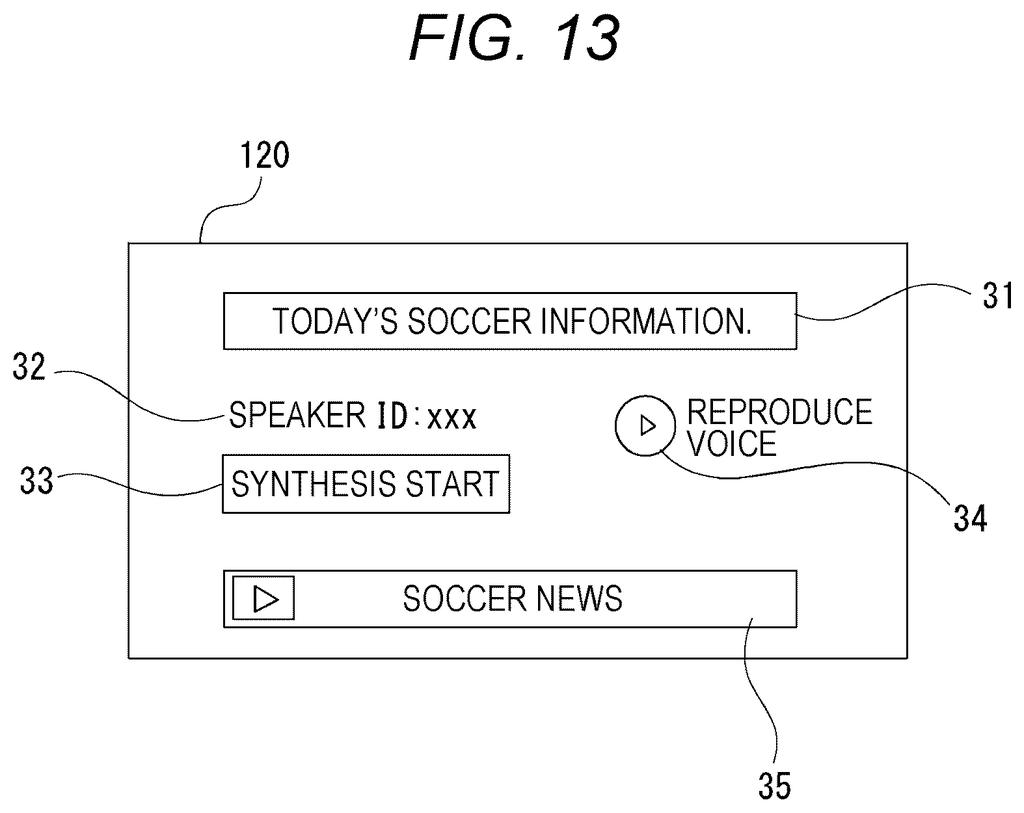
If you make videos, lessons or podcasts with computer narration, choosing a voice is a chore that eats time and still feels like a coin flip. A tool that reads what your script is about and suggests a voice, with a link to a real show that sounds similar, could cut that to a few clicks. The filing's soccer example shows the idea: a sports script gets a voice that fits sports, and a poetry paragraph can get its own voice.
The filing also describes an online class for elementary school students, where each subject gets a different voice so the lessons don't blur together. The document describes a general voice suggestion service and names no specific app or product.
Sony's fifth voice and speech AI filing we've tracked since May builds on earlier work like reading voices for matchmaking and fixing dubbed dialogue.
The design's biggest cost is its dependence on the reference library. A voice can only sound like a documentary narrator if the system has analyzed documentaries, and it can only hand you voices already sitting in its own catalog. A thin library or a small voice roster would produce confident suggestions that miss.
There is a second cost: matching voices to popular shows pulls everyone toward the same sound. The filing treats that as a plus, since viewers already accept those voices, and the contrast option works against it a little. Your script also gets sent to a database for topic matching, which some creators will want to think about.
The trade reads as worth it for this job. A wrong pick costs you a minute of listening, and the link to the real show lets you check the logic yourself. It is a modest tool with a sensible escape hatch.
Get our take in your Top Stories
Liked this breakdown? Add Patentlyze as a preferred source on Google, and our plain-English take shows up more often in your Top Stories the next time Sony patent news breaks.
There are more where this came from
We read every patent application Big Tech publishes and send you the ones worth knowing. Plain English, free, every week.
The drawings
19 drawing sheets from US 2026/0321241 A1 · click any drawing to enlarge


Show the other 11 sheets


Want this weekly breakdown for a company we don't cover? Patentlyze Pro →
Be the first to weigh in