
Apple Files Patent for a Headset That Uses Bird Chirps to Catch Your Mind Wandering
A bird chirps somewhere off to your left while you meditate in a headset. If your eyes flick toward it, Apple's patent says that is your cue that your mind has wandered.
What Apple's bird-chirp focus test actually does
You're halfway through a guided meditation in a headset. A calm lake fills your view, and a soft voice tells you to follow your breath. Off to your left, a bird chirps. If you stay put, you're probably locked in. If your eyes drift toward the sound, your mind may have wandered.
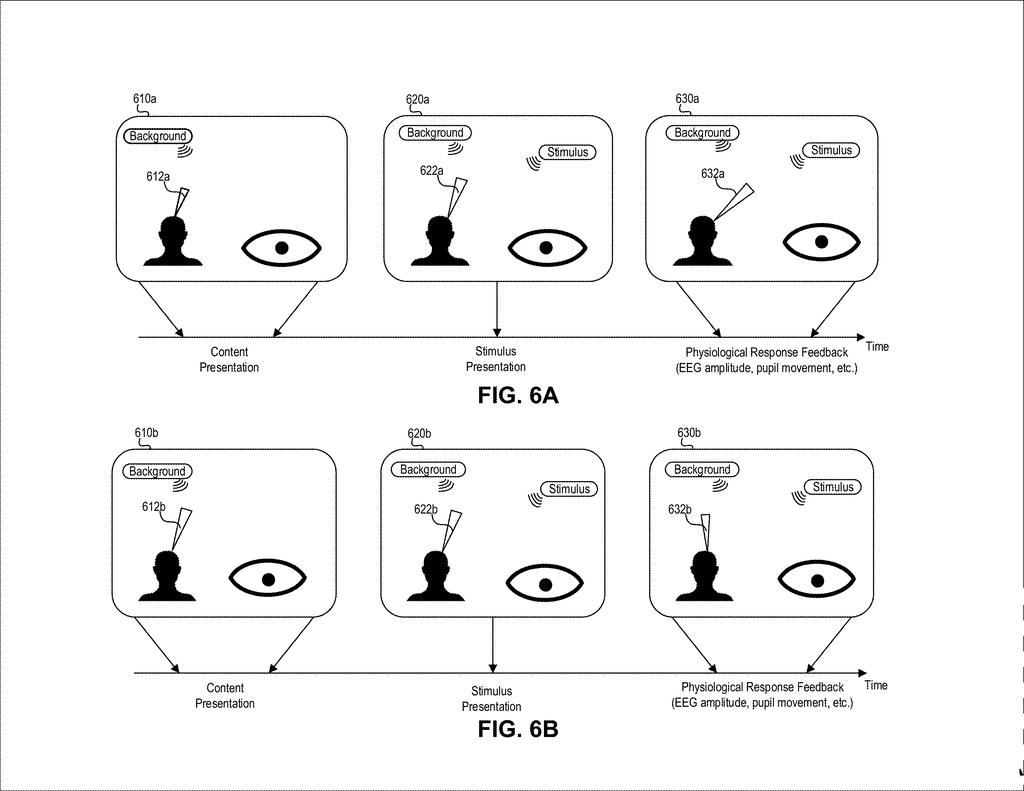
That little moment is the whole idea behind this Apple patent application. The device plays a sound that seems to come from a specific spot around you, then watches how your body reacts: where your eyes go, how your pupils change, or brainwave readings if a sensor is available. The sound is picked to fit the scene (birds by a lake, a mail cart rolling past in an office) so it doesn't pull you out of the moment.
If the system decides you drifted, it can nudge you back or adjust the content. The filing pitches this for meditation, studying and office work.
How the headset decides your mind has drifted
The claims cover two angles on one idea. One has a device play a sound during an extended reality (XR) experience (a headset scene that is fully or partly virtual), with the sound tied to a specific virtual location in 3D space. The other picks a sound to match the user's surroundings and uses it to judge whether someone is focused or mind-wandering during a productivity or learning experience.
The filing describes this flow:
- Classify the scene. Neural networks (software trained to recognize patterns) spot trees, desks or students and label the setting, such as forest or classroom.
- Pick a sound from a database of sounds known to draw measurable reactions: a bird chirp, a school bell, a mail cart.
- Place it with spatial audio so it seems to come from the left, right, behind or above. It can even move, like a bird flying closer.
- Watch for a reaction. The system might wait up to five seconds to see if you look toward the sound. Sensors include eye tracking and EEG (electrodes that read brain activity).
Scoring can be simple or learned. In one example, the system records an EEG baseline for 30 to 60 seconds, then flags a drift if the signal moves more than 10% after a sound. Another mixes common sounds (80% of the time) with rarer ones (20%), since the rarer ones may trigger a stronger brain response. A machine learning model can also be trained on people who were asked, right after a sound, how focused they felt.
Why a focus alarm could reach past meditation
If this ever shipped in a headset, the practical payoff is feedback while you study, meditate or work: a gentle nudge when your attention slips, or sessions that adapt to when you tend to drift. The filing also lets you set how sensitive it is, so a brief glance away (under 30 seconds in its study example) to think about what you just read would not trigger a reminder.
The catch is the data. Eye movement, pupil size and brain signals are personal, and the filing's own privacy section says collection should rest on user consent, with the option to opt out. It also suggests combining results from many users to show content creators where people tune out.
Apple's 41st filing eye and hand controls we've tracked since May follows work like floating virtual object controls and an uncertain food tracker.
Everyone's attention drifts, and for most people the cost is a few lost minutes of a book or a meditation session. That is a modest problem, and a bird chirp in a headset is a proportionate answer to it.
The filing does point at bigger stakes in its description: a tired surgeon, a truck driver losing focus. The claims themselves stick to productivity and learning experiences, so a drowsy-driver alarm is not what is being claimed here.
The weak spot is the core assumption. Looking toward a sound can mean boredom, curiosity or a plain reflex, and the filing gives no accuracy numbers. Whether a headset can tell those apart is the whole question.
Get our take in your Top Stories
Liked this breakdown? Add Patentlyze as a preferred source on Google, and our plain-English take shows up more often in your Top Stories the next time Apple patent news breaks.
There are more where this came from
We read every patent application Big Tech publishes and send you the ones worth knowing. Plain English, free, every week.
The drawings
7 drawing sheets from US 2026/0321108 A1 · click any drawing to enlarge


Want this weekly breakdown for a company we don't cover? Patentlyze Pro →
Be the first to weigh in