US 2026/0277335 A1
Apple Patents Air Gestures That Control Siri With a Wave of Your Hand
Extends hand gesture recognition to voice assistant control, solving the problem of commanding Siri without touching a device during tasks like cooking.

This tracker collects Apple's patents on gaze detection, hand gestures, and the software that turns both into commands for menus, sliders, and real-world objects. The pattern points to a control layer built to replace touchscreens, one tuned to stay accurate even when a gaze drifts or a gesture misses.
30 filings · tracking since Apr 2026 · latest Sep 2026 · updates weekly
based on all tracked filings in this watchlist · refreshes every week
Apple has filed a large set of patents around letting people control devices using their eyes, hands, and face, without needing to physically touch anything.
The filings cluster most heavily around two areas: reading where a person is looking to trigger actions, and recognizing hand movements to navigate menus and apps.
a dated entry each week this watchlist moves · older entries stay archived
This week's filings focus on two things: letting your eyes and hands control what you see, and making those controls smarter. Apple is working on ways to filter out accidental moves, track hands in the dark, and let your pupils reshape the screen.
Apple filed a patent exploring eye-based Mac unlocking. This adds gaze as a possible way to prove it's you looking at the screen.
This week's filing focuses on the small dial on the side of Apple Watch and how hard a person presses it. Apple is exploring ways to turn press strength into a new form of control.
Both new filings deal with Apple teaching devices to read intent: one looks at how high your hand is to guess if you mean to type in the air, and the other judges whether a tap was on purpose or not.
Apple’s tracked filings by month · newest first
| Month | Filings | Latest that month |
|---|---|---|
| Sep 2026 | 7 | Apple Patents Air Gestures That Control Siri With a Wave of Your Hand |
| Aug 2026 | 7 | Apple Patents a Crown That Measures How Hard You Press It |
| Jul 2026 | 8 | Apple Vision Pro Patent Hides Exactly Where Your Eyes Are Looking |
| Jun 2026 | 3 | Apple's New Patent Quietly Widens the Target After a Missed Gesture |
| May 2026 | 4 | Apple Patents a Two-Stage Playback Control System Driven by Gaze and Gesture |
| Apr 2026 | 1 | Apple Patents Eye-Gaze Detection That Triggers Hot Corner Actions |
15 or more filings that month · 5 to 14 · under 5
the problems Apple keeps filing on · each with its three newest filings · new filings join every week
Looking at something is becoming a way to control it, not just see it. These filings cover using your gaze to move sliders, trigger corner shortcuts, aim a cursor, and pick what you want on screen.
Waving, flicking, or pointing in the air could replace tapping and clicking. These filings cover gesture systems for opening menus, flipping between apps, controlling nearby devices, and acting on real-world objects.
Getting eye tracking right is hard because lenses bend light and eyes move in three dimensions. These filings work on measuring, correcting, and mapping exactly where a person is looking.
Some actions need both your eyes and your hands working at the same time. These filings combine looking and moving to control playback, reframe photos, and run a head-worn device hands-free.
Apple is exploring letting you control nearby devices just by looking at them.
A patent shows controlling real-world objects with a hand gesture, no screen needed.
Apple filed a patent for a slider you move simply by looking at it.
This filing combines eye gaze and hand gestures to control video playback together.
every tracked filing, month by month · counts are USPTO pre-grant publications, one per publication number (an application, not a granted patent)
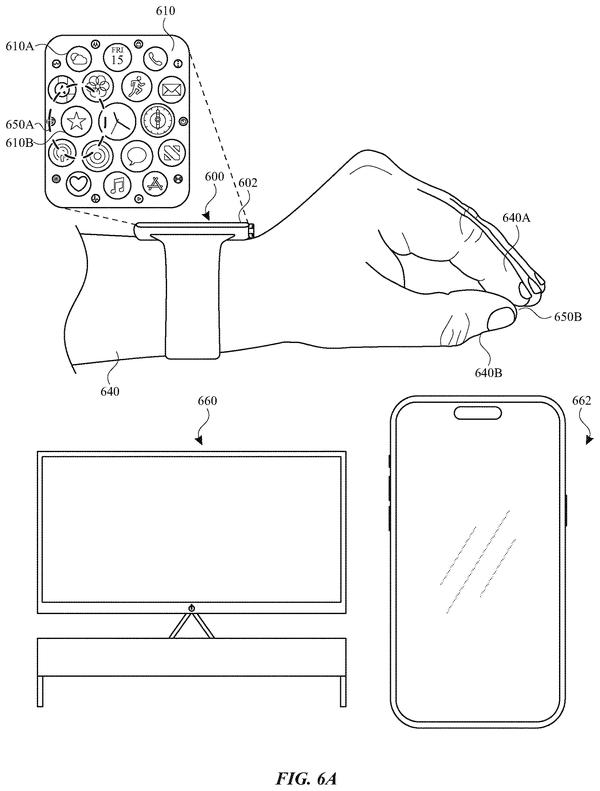
US 2026/0277335 A1
Extends hand gesture recognition to voice assistant control, solving the problem of commanding Siri without touching a device during tasks like cooking.
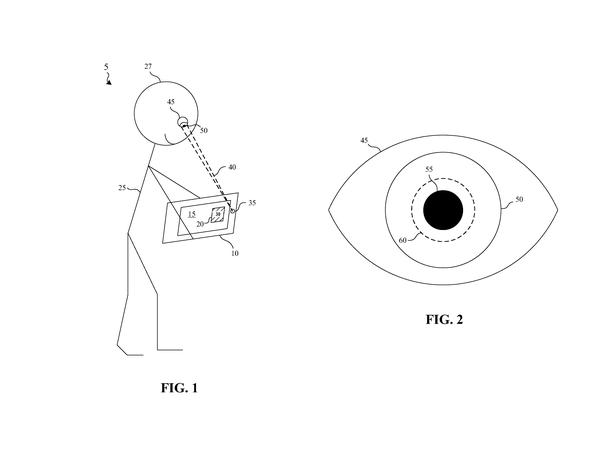
US 2026/0277322 A1
Extends the hand and eye control layer to include involuntary pupil response as a sensing input, letting devices read engagement without explicit gesture or gaze direction commands.
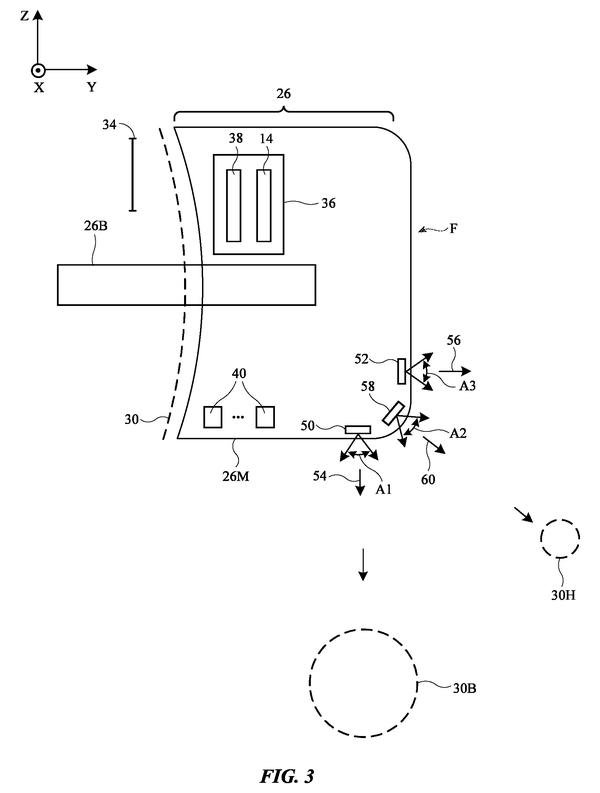
US 2026/0276997 A1
Hand tracking cameras lose the signal in dim lighting, breaking gesture control. Apple's infrared system keeps hands visible to sensors regardless of room brightness.
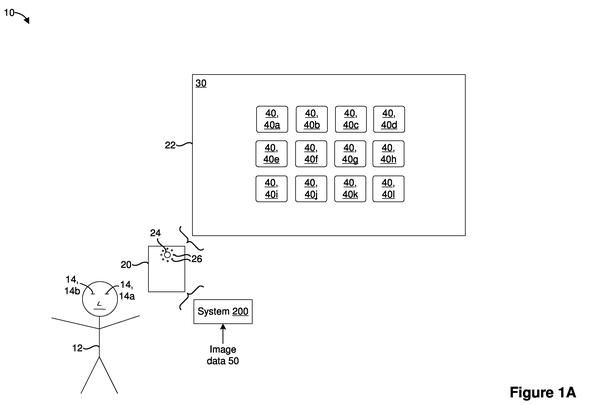
US 2026/0277410 A1
Dwell confirmation adds a buffer between gaze detection and command execution, preventing accidental activations when eyes naturally drift across the screen during normal viewing.
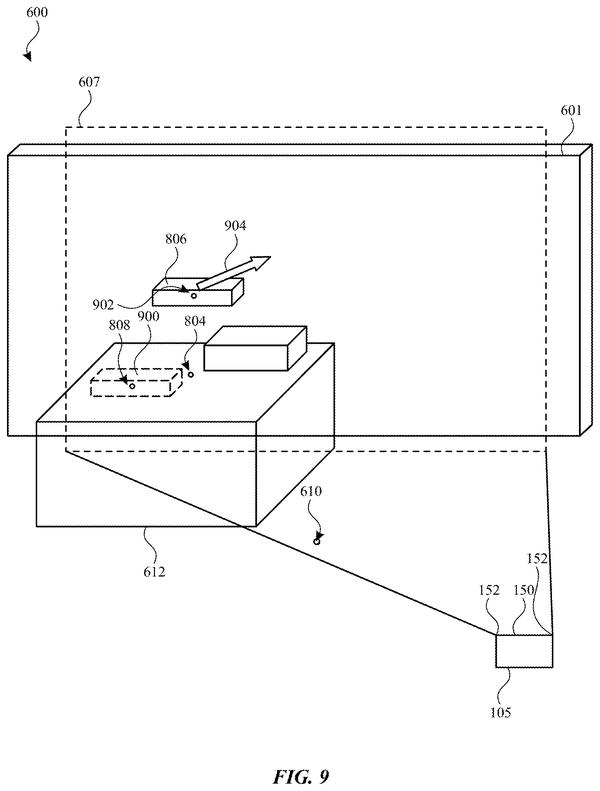
US 2026/0277386 A1
Batch moving AR objects without scattering them. The patent describes selecting and repositioning multiple virtual items as a unit, eliminating the tedium of adjusting each placement individually in headset environments.
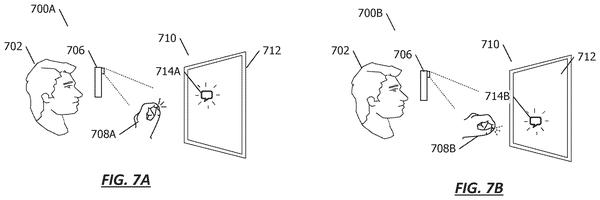
US 2026/0279103 A1
After establishing that hand tracking needs to distinguish intentional gestures from incidental finger movements, this patent targets false positives by filtering out pinches that lack the pressure signature of actual user commands.
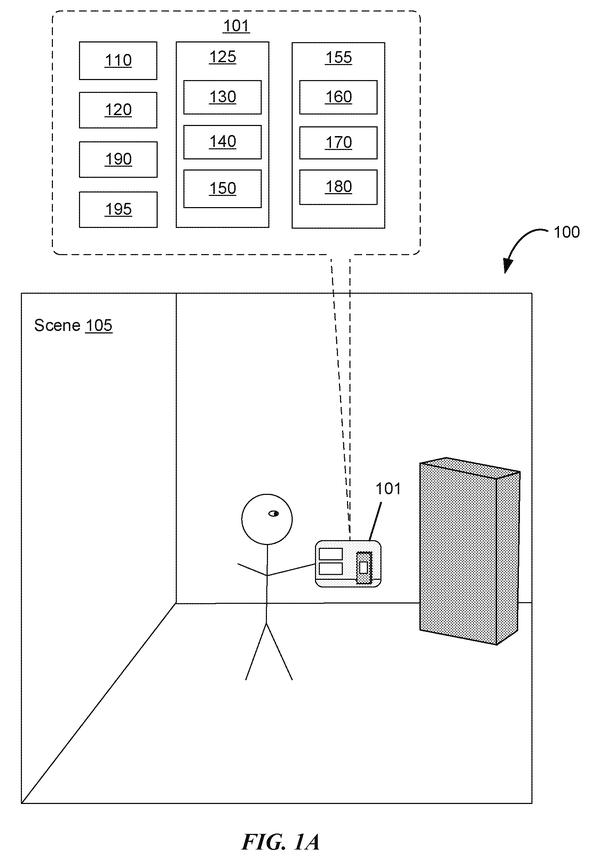
US 2026/0267945 A1
Preventing accidental unlocks requires confirming the user's visual attention is on the target device, not just that they're physically nearby. Apple's patent links gaze detection across devices to gate the unlock sequence.
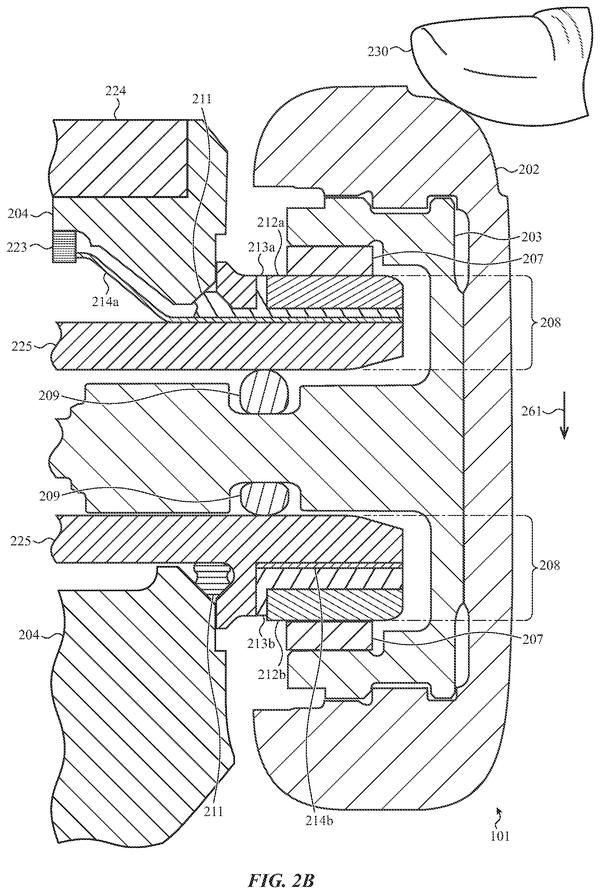
US 2026/0252033 A1
Distinguishing soft from firm presses on the crown expands the input vocabulary for wearable controls, letting a single physical gesture map to multiple commands based on pressure intensity.
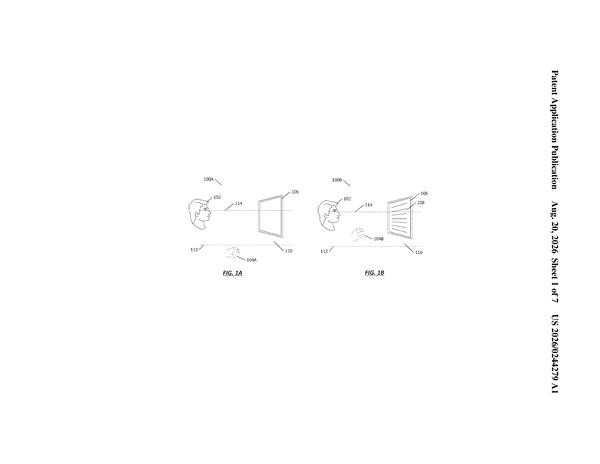
US 2026/0244279 A1
Distinguishing idle hand position from active input by monitoring elevation against a virtual threshold helps the system reject accidental gestures during spatial computing, sharpening the signal-to-noise problem that plagues gestural interfaces.
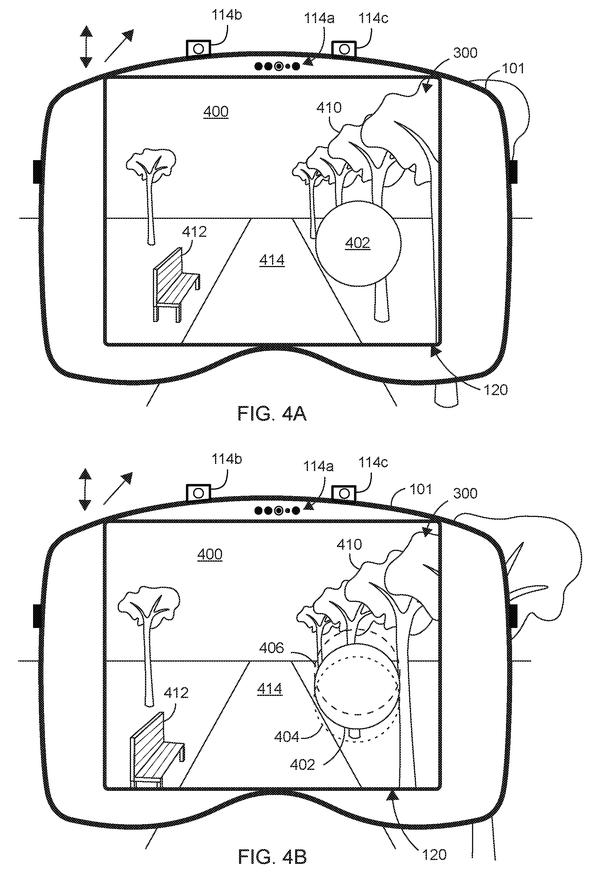
US 2026/0244307 A1
Moving your head while tapping a button in augmented reality is a recipe for phantom clicks. Apple's latest patent describes a system that watches how your device is moving and decides, based on that motion, whether your tap should actually do anything.
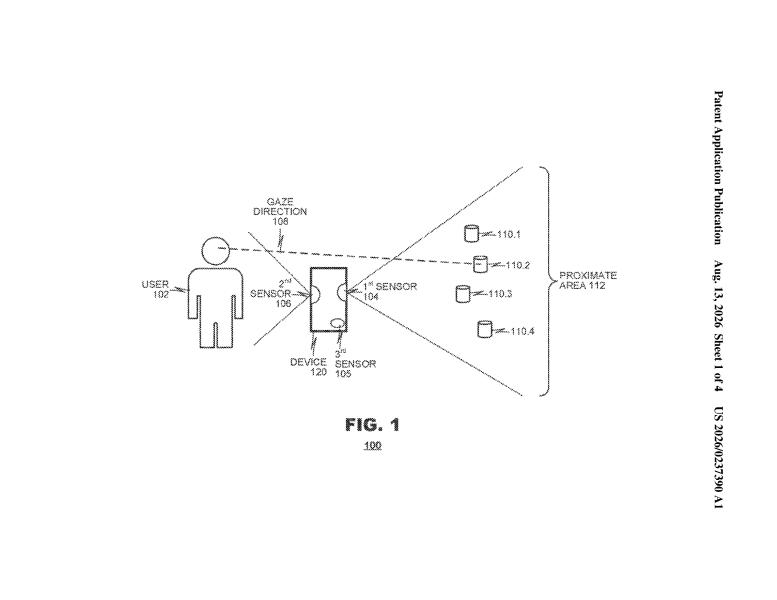
US 2026/0237390 A1
Users speaking vague commands like "turn that off" need the device to know which object they mean. Eye-tracking paired with environmental mapping lets the system narrow possibilities from a full room down to what you're actually looking at.
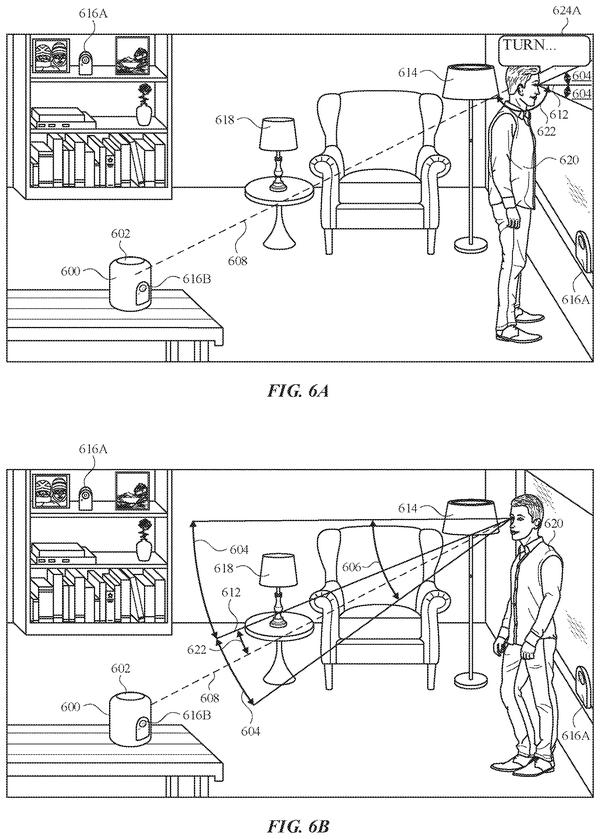
US 2026/0236096 A1
Identifying which physical object a user means requires gaze data tied to spatial position. This filing shows how eye tracking can pinpoint a specific lamp or device in a room, then route commands to it without voice disambiguation.
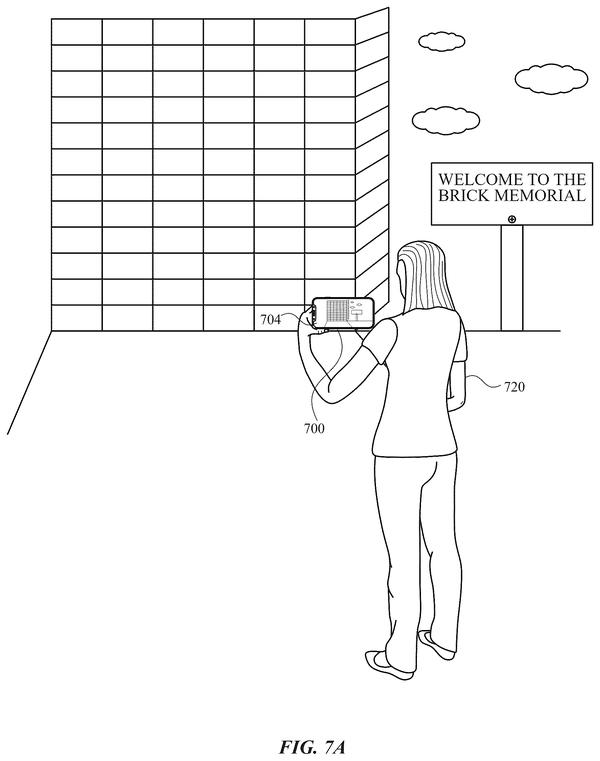
US 2026/0227850 A1
Switching to eye-only control when hand input becomes unavailable solves the messy-hands problem that keeps spatial interfaces from working in real kitchens, workshops, and other places where your hands stay busy.
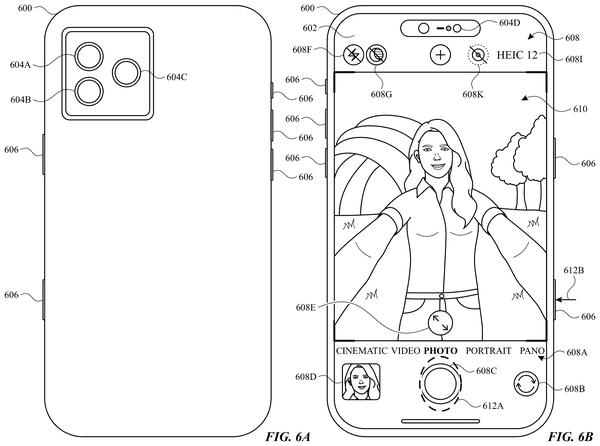
US 2026/0230700 A1
The control layer gains a fusion point: hand position and voice timing combine to resolve what a gesture alone leaves ambiguous, letting a single motion mean zoom or pan based on concurrent speech.
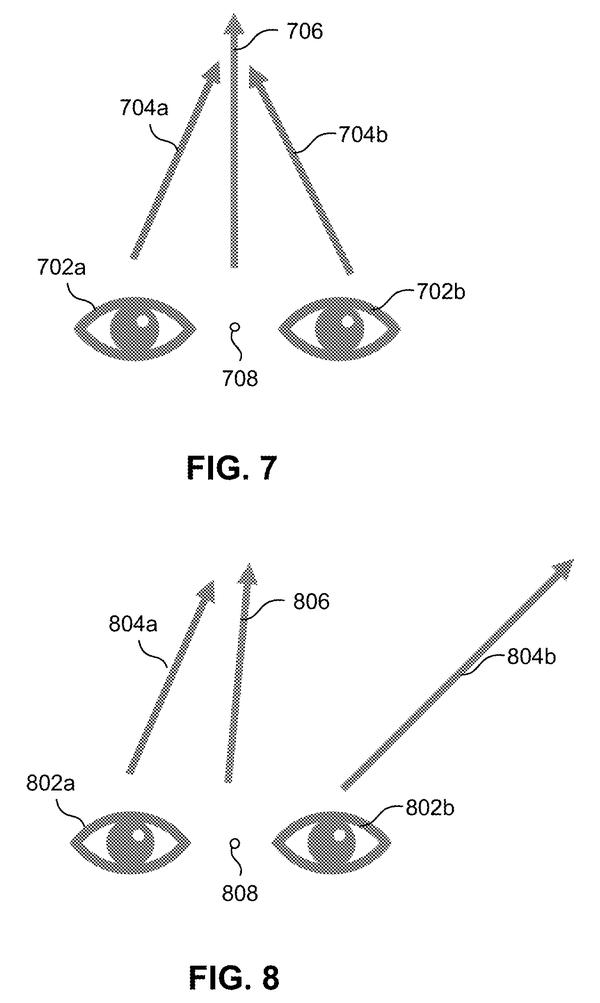
US 2026/0212840 A1
Blurring gaze data before sending it to apps lets the headset preserve rendering fidelity while blocking apps from inferring medical or behavioral details from eye movement patterns.
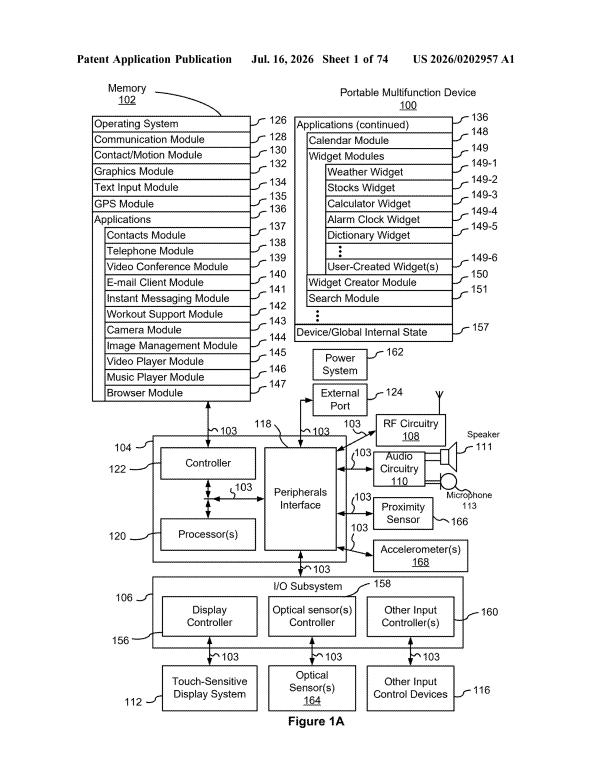
US 2026/0202957 A1
Users could browse the app stack without committing to a switch, then decide mid-gesture whether to jump to an app or pull up notifications instead of locking into separate swipes.
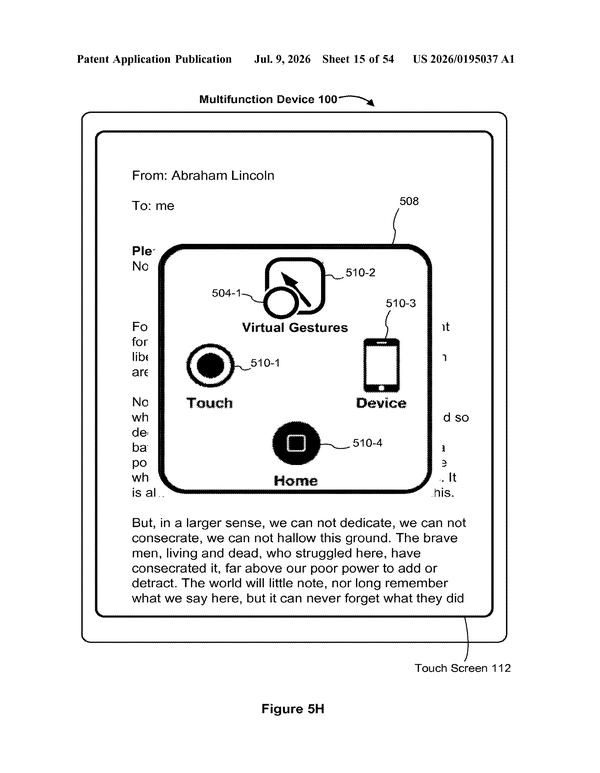
US 2026/0195037 A1
Eye and hand controls have focused on detecting what users intend. This filing shifts toward translating those intentions into app commands when direct touch isn't possible, mapping gestures like pinch and swipe through an on-screen proxy.
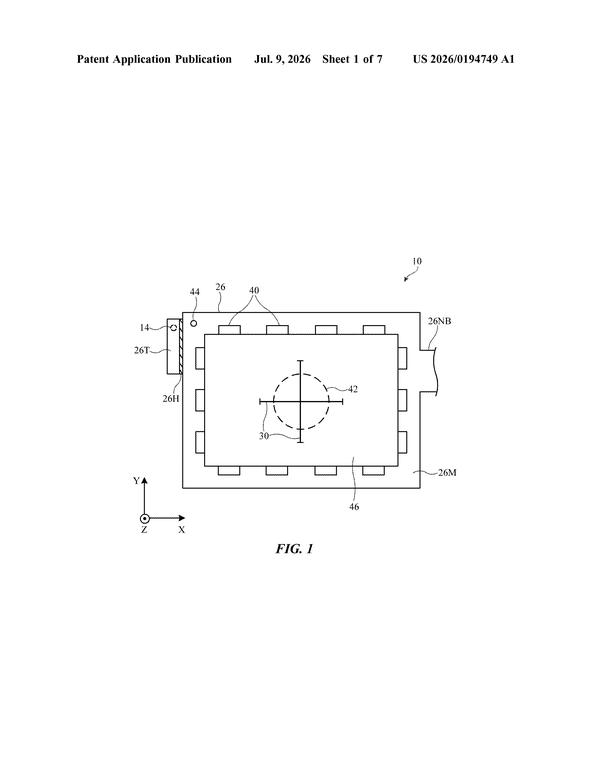
US 2026/0194749 A1
Pairing a low-power light-sensor system with a high-resolution camera lets the headset switch between them based on task demands, solving the battery drain that comes from running precision eye tracking continuously during long sessions.
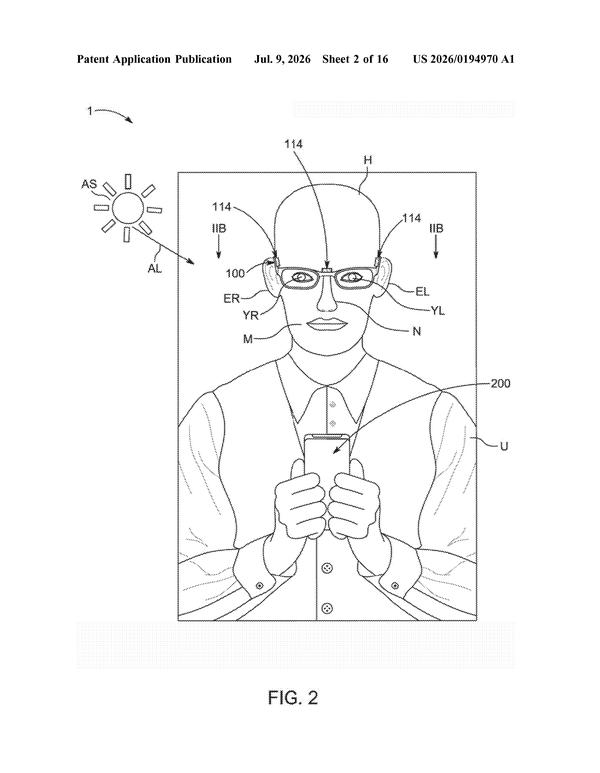
US 2026/0194970 A1
The control layer expands beyond gaze and hand tracking into facial expressions, letting users command a headset through eyebrow raises and squints rather than external gestures alone.
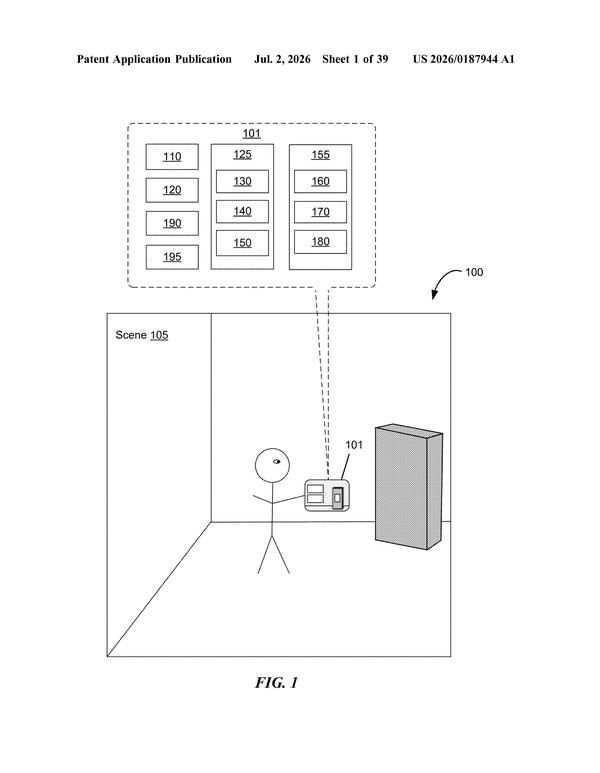
US 2026/0187944 A1
Coordinating two hands simultaneously lets a single gesture change meaning based on context, multiplying the command vocabulary without requiring users to learn entirely new motions.
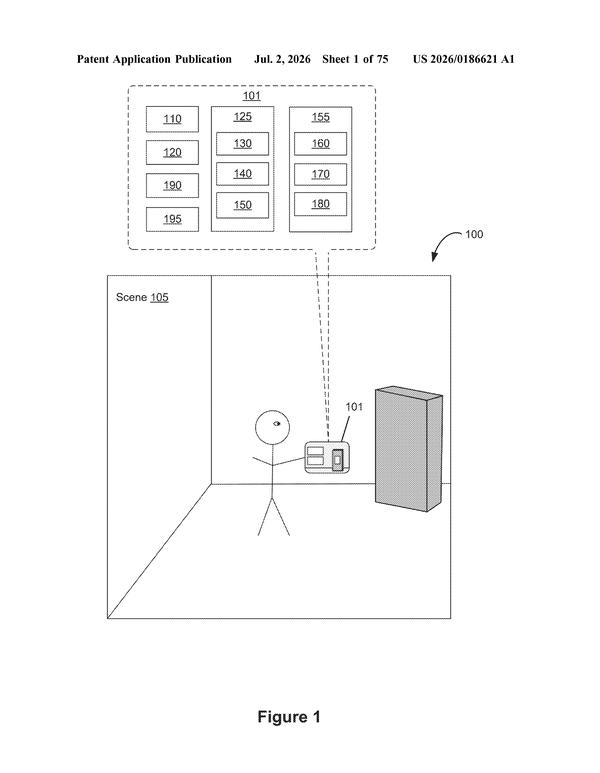
US 2026/0186621 A1
A gaze-locked marker that holds a slider value when you stare at it solves the friction of reaching for virtual controls mid-interaction, letting users adjust settings without breaking immersion or lifting their hands.
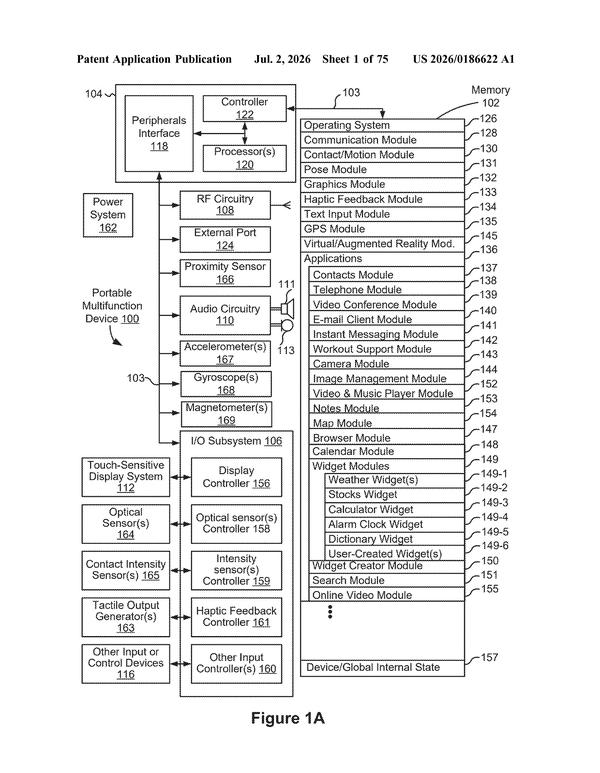
US 2026/0186622 A1
Users could see exactly where they'll land before committing to a tap, eliminating the guess work of VR input and making virtual interfaces feel as responsive as physical ones.
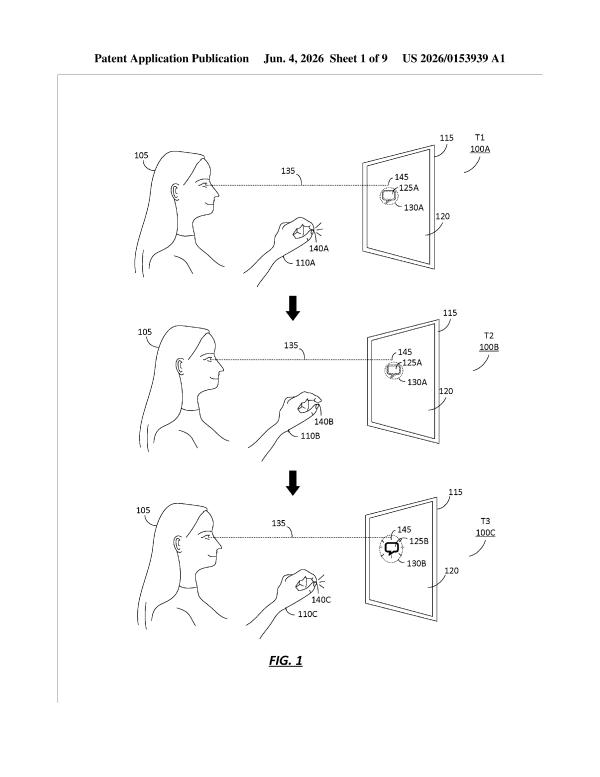
US 2026/0153939 A1
Expanding target zones after near-misses lets users recover from imprecise hand gestures without restarting, turning spatial interfaces more forgiving than touchscreen tapping.
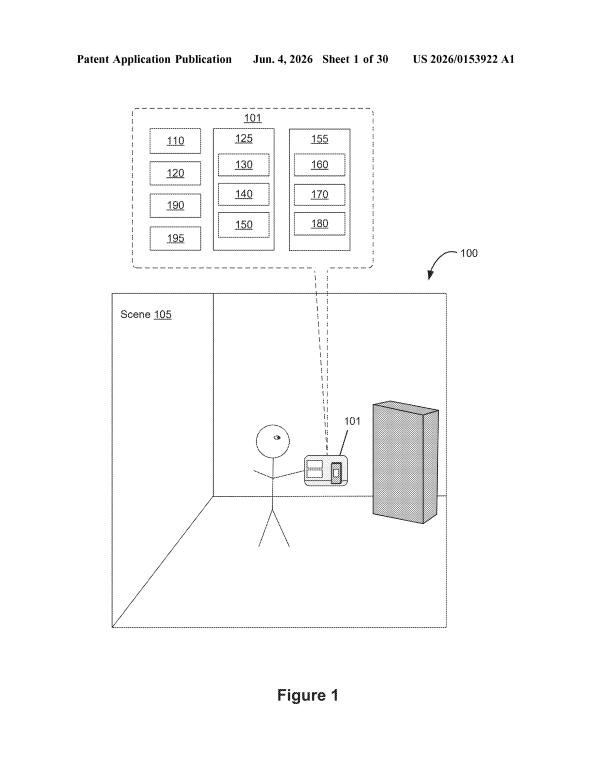
US 2026/0153922 A1
Users could launch apps without breaking eye contact with their current task, just by glancing briefly at their hand and flicking. This fills a gap in the gesture-and-gaze system: a reliable way to invoke new functions while keeping hands free.
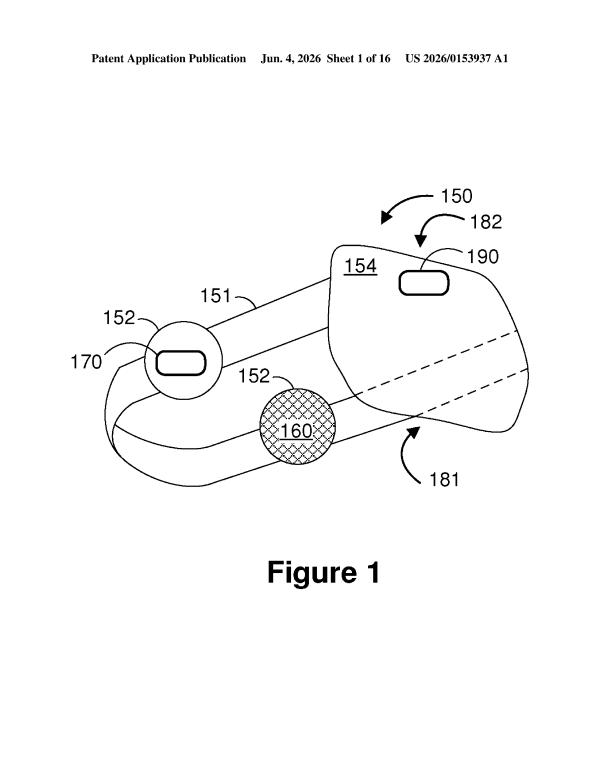
US 2026/0153937 A1
The eye-and-hand timeline so far shows Apple moving gesture control into virtual menus and apps. This filing extends that by removing the intermediary entirely: gestures pointed directly at physical objects become commands, skipping the UI layer.
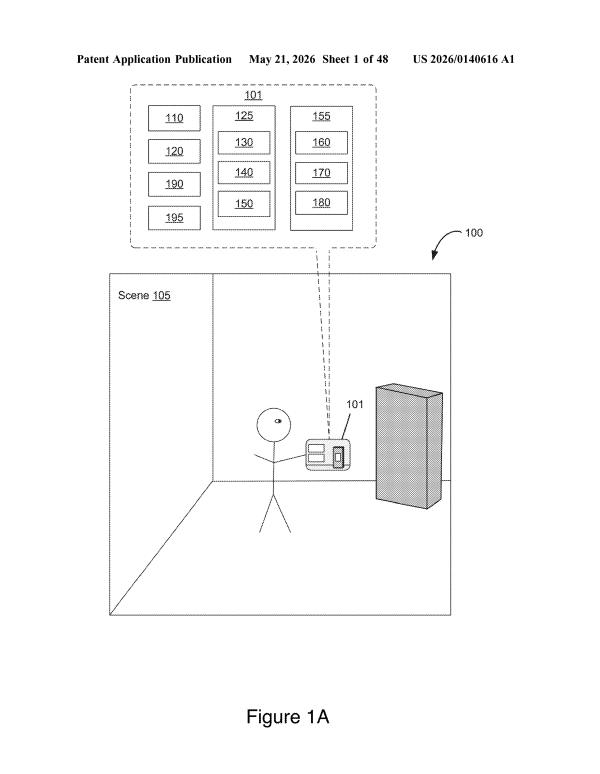
US 2026/0140616 A1
Distinguishing accidental glances from intentional stares lets the system hide controls until you actually need them, reducing visual clutter in AR/VR viewing.
US 2026/0126854 A1
Dynamic content repositioning based on eye position keeps text and UI elements in the viewer's optimal focal zone, addressing the fatigue and navigation friction that extended eye-controlled interfaces would otherwise create.
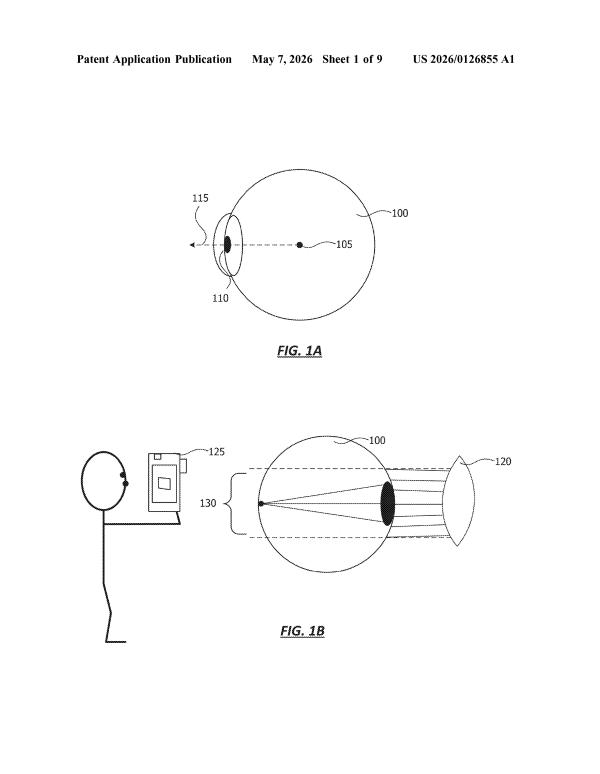
US 2026/0126855 A1
Eyes at the lens edge send garbage coordinates to the system; correcting this data prevents commands from misfiring when you glance toward the periphery of the display.
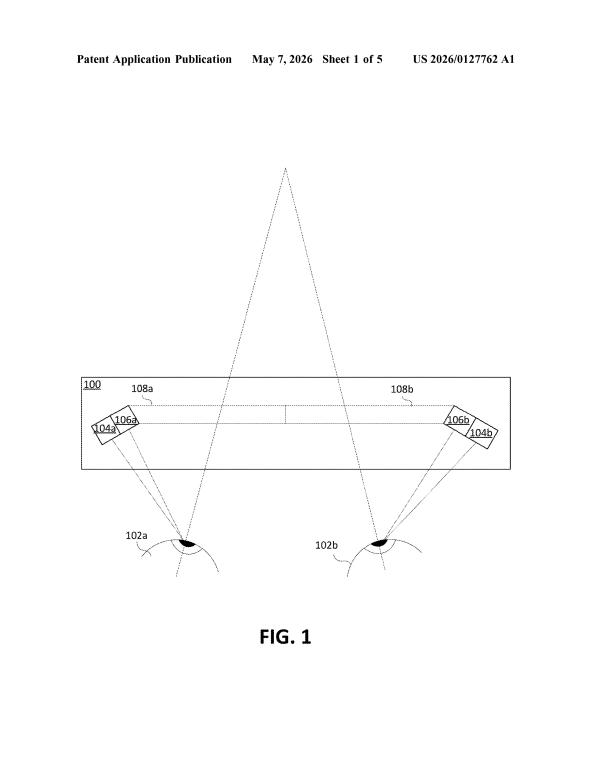
US 2026/0127762 A1
The watchlist so far assumes eye tracking works once calibrated. This filing shows Apple wants to skip the calibration step entirely, building an eye model continuously during normal use so gaze control works from the first moment you put on a headset.
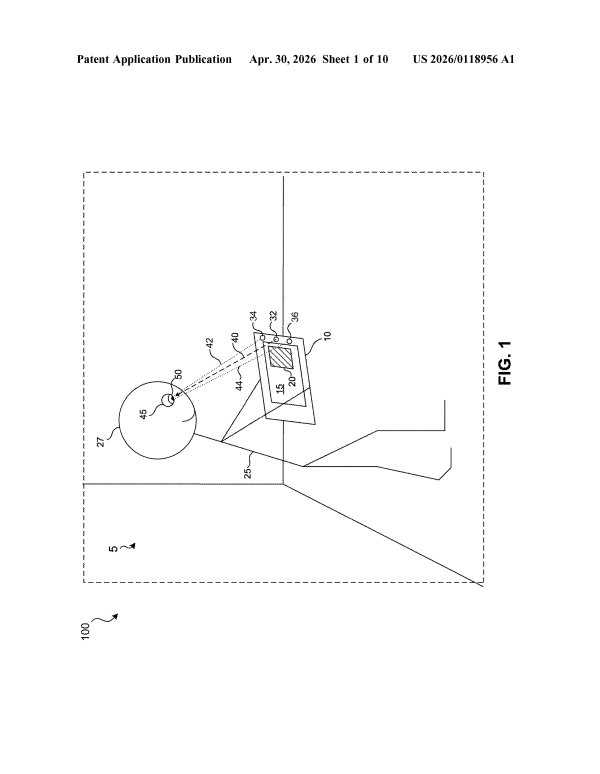
US 2026/0118956 A1
Triggering screen corners by gaze alone eliminates the need to move a physical input device, making hot corners accessible to users with limited hand mobility or those already wearing eye-tracking hardware for other control tasks.
Not necessarily. These are patent filings, which describe research directions Apple is protecting, not confirmed products. The filings do show consistent investment in making gaze and gesture input accurate and forgiving enough to work as a control method, which suggests Apple is serious about the idea even if no shipping product uses all of it yet.
One filing in this watchlist describes a correction step that adjusts gaze data specifically when your eye looks toward the boundary of a headset lens, where tracking normally gets less reliable. It is a narrow fix aimed at a known weak spot in eye tracking rather than a general upgrade.
Yes, at least on paper. One filing describes gesturing at real-world objects like a door or a smart light to control them, which extends the gaze and gesture ideas beyond menus inside a headset. It is one of the more ambitious filings in the batch and worth watching for follow-ups.
Several filings address exactly that. One widens the target area after a missed gesture so a slightly off pinch still registers, and another requires two hands together before an AR action fires, which cuts down on accidental single-hand triggers. The pattern suggests Apple is focused on tolerance for imperfect input.
Want this weekly breakdown for a company we don't cover? Patentlyze Pro →