
IBM Files Patent for a Tool That Flags Software Blind Spots Using Old Bug Reports
Most software bugs come from a scenario nobody thought to test. IBM's patent application describes a tool that checks a project's plans against its own history of past bugs to find those gaps.
What IBM's bug-history checker actually does
When a team builds software, a testing plan only covers the scenarios someone thought to write down. The ones nobody thought of tend to show up late, when fixing them can mean reworking big chunks of the product and retesting everything that touches it.
IBM's patent application describes a tool that goes looking for those blind spots early. It reads three things your team already has: the document describing what the software should do, the tests written for it, and the log of bugs found in the past. It turns each into a step-by-step map, puts them all in one common format, and compares them.
If a planned feature looks like something that broke before, the tool flags it and suggests a fix, such as adding a test for an unusual situation.
generating a test case tree graph based on a combination of a functional requirement document and a test case document …
Translation: It builds a visual map of how the software is supposed to be tested using existing requirements and test files.
How IBM turns requirements into comparable steps
The system starts with three documents: a requirements document (what the software should do), a test case document (checks that confirm it works), and a known defects document (a record of past bugs). Text-reading software converts each into a flowchart, then into a tree graph, a branching diagram where each branch is one path through a process.
The requirements and the tests are merged, with test details filling vague spots. If the requirements say "several days" and the test says "seven days," the merged diagram says seven. If the diagram lacks detail, the system keeps splitting steps into finer ones until it hits a set level of detail.
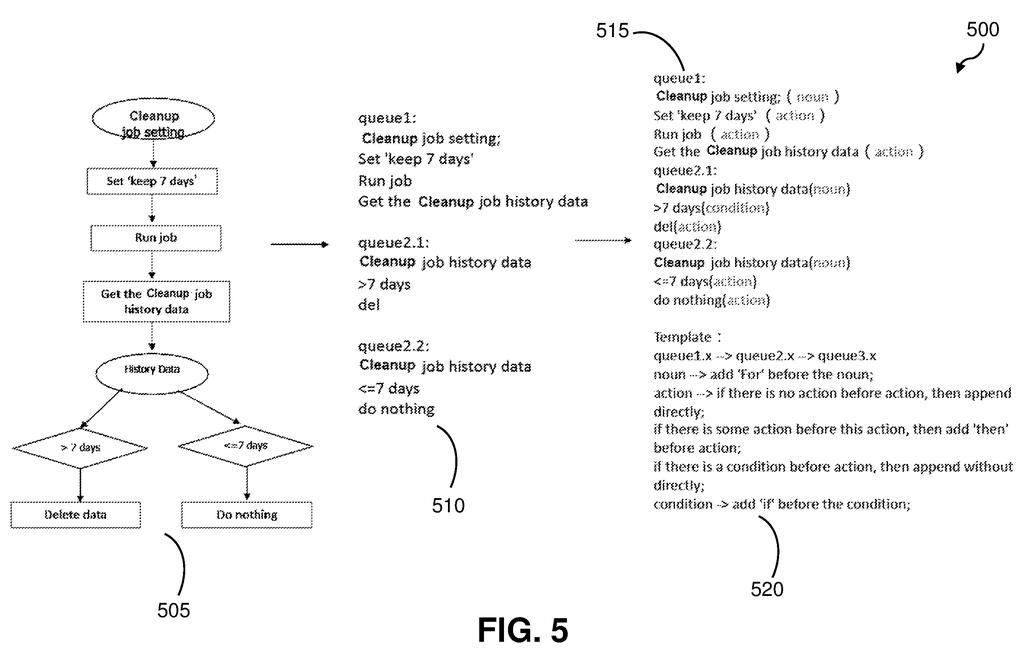
Each branch then goes into a shared test template, for new tests and old bugs alike. Parts get labels (a noun, an action or a condition) and weights for how much they matter in judging similarity. A regression model (a statistical model that learns from past examples) can tune those weights over time.
Finally, the system compares new cases to old bugs, using text matching or language models that catch synonyms, and recommends fixes such as:
- Risk assessments for a possible defect
- Extra tests for edge cases (rare situations)
- Warnings that a fix might break something else
… iteratively refining the test case tree graph until the predetermined level of granularity is met …
Translation: The system repeatedly adjusts the test map until it reaches the required level of detail.
Why IBM wants test gaps caught before release
If you use apps or online services, you feel the cost of missed test cases as crashes, odd behavior and rushed fixes. The filing says late changes can disrupt existing features, force heavy retesting and delay releases. Catching gaps while the plan is still on paper is cheaper than patching after launch.
For software teams, the pitch is a second set of eyes built from their own history. The filing also describes a service provider running the process for business customers on a subscription. It does not describe any specific product, and whether it catches real gaps depends on how good a team's bug records are. The filing gives no accuracy results.
IBM's 403rd filing in our IBM coverage since May adds to a run that includes turning code into flowcharts and teaching AI to read vague time.
Among patents, this one sits close to shippable: it is pure software, with no new chip or device needed. The ingredients are documents most software teams already keep, namely requirements, test cases and a log of past bugs.
The hard part is the setup. Those documents have to exist, be written clearly enough for the tool to read, and the bug log has to be long enough to teach the model what counts as similar. A company with a messy bug tracker would get little out of it.
The shortest route to a product is an add-on to the tools teams already use to track tests and bugs. The filing shows no accuracy numbers, so how often the tool flags a real gap instead of noise is unknown. It is a sensible, workmanlike idea for software teams, and you would probably only notice it through fewer buggy updates.
Get our take in your Top Stories
Liked this breakdown? Add Patentlyze as a preferred source on Google, and our plain-English take shows up more often in your Top Stories the next time IBM patent news breaks.
There are more where this came from
We read every patent application Big Tech publishes and send you the ones worth knowing. Plain English, free, every week.
The drawings
6 drawing sheets from US 2026/0319924 A1 · click any drawing to enlarge


Want this weekly breakdown for a company we don't cover? Patentlyze Pro →
Be the first to weigh in