
Red Hat Files Patent for Car Hack Defenses That Scale With the Threat
One example in this Red Hat patent application describes a car with 150 tiny computers and a rulebook that decides which to slow down or switch off when hackers show up. Some responses can even wait until you're parked.
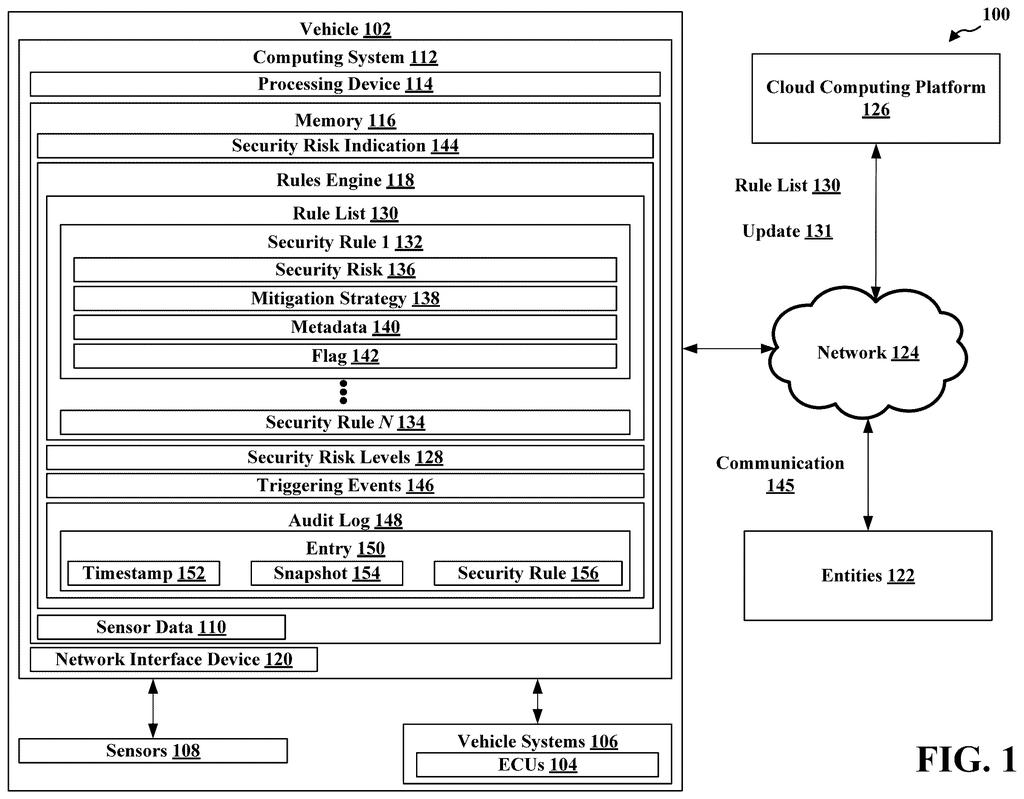
What Red Hat's car security rulebook actually does
What should your car do if hackers start probing its computers while you're cruising down the highway? Shutting everything down could be dangerous, but ignoring the problem is risky too. A new Red Hat patent application tries to find a middle path.
Your car is really a collection of small computers, and one example in the filing has about 150 of them. Under this idea, the car keeps a rulebook of if-this-then-that entries. When it spots a threat, it rates how serious it is, finds the matching rule, and carries out the response. That might mean slowing down suspicious traffic, keeping detailed records, or switching off one affected part.
Some rules carry a time limit and safety information. If shutting something down isn't safe yet, like turning off an engine while the car is moving, the car checks again later. The filing says it may wait until the car is at rest. The car's maker can also update the rulebook over the internet.
… identifying, via a rules engine executed by a processing device, a security rule from amongst a plurality of security rules based on the indication of the security risk to the vehicle, wherein the security rule indicates a mitigation strategy for the security risk; …
Translation: The onboard computer matches the threat to a specific defense rule.
How the car matches an attack to a response
The patent covers a method where a vehicle gets an indication of a security risk, then uses a rules engine (software that checks a list of rules and acts on whichever one matches) to pick the right rule from many. The vehicle then carries out the response that rule names. Rules follow a simple pattern: IF (attack or scenario) THEN (mitigation).
The warning can come from the car's own sensor data or from messages it receives. It can also be sent to the car over a network, such as a cloud platform run by the manufacturer. The description sketches severity levels from zero (no danger) to four (critical danger). The responses listed in the claims include:
- Rate-limiting: capping how many requests the car accepts in a given window, which blunts flooding attacks.
- Verbose logging: recording extra detail so the structure of an attack can be studied.
- Modifying or disabling an ECU: an electronic control unit is one of the small computers that runs a specific part of the car.
- Flagging an at-risk ECU or subsystem.
Rules can fire on triggers such as a set amount of time passing, the car entering a certain location, a service visit, or a driver's request. A rule can also carry functional safety metadata (labels tied to standards for keeping car electronics from causing harm) and a time-span flag. If the response can't be completed in time, the car re-checks the threat before acting.
The rules engine can also write an audit log entry, with a snapshot of the car's speed, location and system states, and the rule list can be updated remotely.
Aspects of the present disclosure relate to a security attack mitigator for automotive dynamic security defense levels.
Translation: The technology adjusts car safety defenses based on how severe a threat is.
Why a hacked car shouldn't just shut itself down
A car that treats every hacking attempt the same way will either overreact or underreact. The filing's own examples show the range: a leak of entertainment account details is a small problem, while losing control of the steering is a serious one. A rulebook that scales the response to the threat means you're less likely to be stranded over a minor scare, and the car is less likely to shrug off a major one.
The timing piece may be the most relatable for drivers. The description notes a car can't safely turn off its engine while moving, so the response waits or gets re-checked. The audit log and remote rule updates also point at manufacturers and repair shops, who could review what a car did and change its playbook after it leaves the factory. This is a patent application, not a product announcement.
IBM's 382nd filing we've tracked since May adds to a run that includes fixing how AI reads large numbers and AI code that tests itself, all part of our IBM coverage.
Claim 1 is short and wide. It covers a vehicle that gets a warning about a security risk, looks up a matching rule in a list of rules, and carries out the response that rule names. It says nothing about what the risk looks like, how the rules are written, or what the response has to be.
That breadth means the claim, if granted, would reach any vehicle security setup that matches a threat to a stored response, on land, sea or air (claim 14 names all three). The details that make this filing interesting sit in the narrower claims: severity levels in claim 3, safety-standard tags in claim 9, and the time-limit flag in claim 15 that lets a car hold off on a risky shutdown.
My read: the basic idea of "if this threat, do that" is familiar from everyday computer security, so the real substance sits in those add-ons. How much this filing ends up covering depends on which of them survive review.
Get our take in your Top Stories
Liked this breakdown? Add Patentlyze as a preferred source on Google, and our plain-English take shows up more often in your Top Stories the next time IBM patent news breaks.
There are more where this came from
We read every patent application Big Tech publishes and send you the ones worth knowing. Plain English, free, every week.
The drawings
4 drawing sheets from US 2026/0312981 A1 · click any drawing to enlarge


Want this weekly breakdown for a company we don't cover? Patentlyze Pro →
Be the first to weigh in