
Google Files Patent for a Two-Lane System That Picks Ads Without Exposing Your Data
Locking down your personal data is slow, and ads have to load in milliseconds. Google's answer on paper: protect only the personal part, and rush everything else through ordinary servers.
What Google's two-lane ad-picking setup does
You open a news article on your phone, and a blank slot near the top is waiting for an ad. Behind the scenes, several companies have only a few milliseconds to offer something, or the page may load with a hole in it.
The catch is that the best ad picks use personal details like your age range or interests, and you probably don't want those floating around. A locked-down computing area can protect them, but that kind of protection is slow and costly to run.
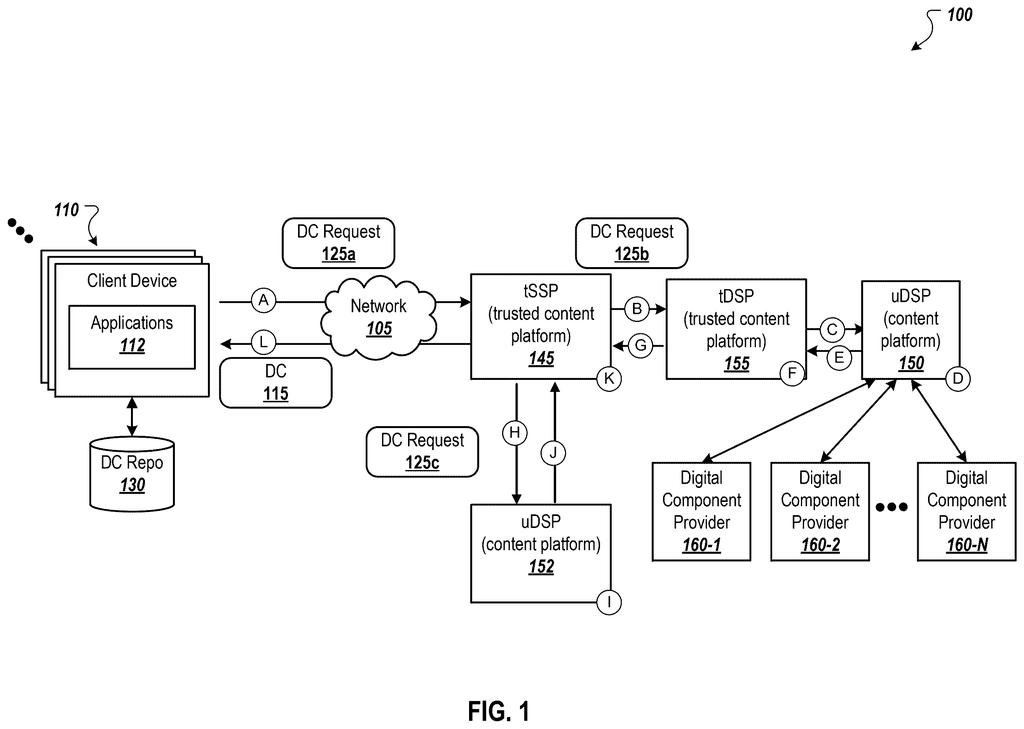
Google's patent application splits the job in two. Your personal details stay encrypted and are only unlocked inside a secure vault. Everything harmless, like the topic of the page, goes down a faster, ordinary route. Both routes come back with candidate ads, and one gets picked and shown to you.
receiving, by a first trusted content platform and from a client device of a user, a first digital component request comprising (i) sensitive data comprising encrypted user data for the user and (ii) non-sensitive data comprising contextual data related to a resource with which a selected digital component will be presented at the client device; …
Translation: A secure server splits your web request into secret personal data and normal page details.
How sensitive and plain data take separate routes
The filing describes a way of picking an ad, or any piece of content, using two kinds of servers. Trusted platforms run inside a trusted execution environment (TEE, a protected area of a processor that outsiders cannot read or tamper with). Untrusted platforms are ordinary servers that can be quite secure but offer no such guarantee.
In the main claim, your device sends a request with two parts: encrypted user data (the sensitive part) and contextual data, such as details about the page you are viewing. The first trusted platform then does three things:
- It passes the encrypted user data to other trusted platforms, which return candidate ads.
- It sends only the contextual data to untrusted platforms, which return their own candidates.
- It picks one winner from the combined pile and sends it to your device.
The trusted platforms can decrypt your data and score each candidate using a selection value (roughly, what the advertiser will pay) and a predicted performance metric (such as how likely you are to interact with the ad). The description says the two routes can run in parallel to cut delay.
Two other independent claims shift who does what. One has an untrusted platform take the request and hand the sensitive part to trusted ones. Another has your own device make the final pick, showing encrypted ads in a fenced frame (an isolated display box on the page).
The first trusted content platform sends a second digital component request that includes encrypted user data to one or more second trusted content platforms.
Translation: The secure server forwards your encrypted personal information to other trusted platforms.
What this means for Google ads and your privacy
The filing says it is aimed at a problem you may have heard about: browsers are blocking third-party cookies, the trackers that used to follow you across sites. This design offers one answer on paper: keep personal details locked up, and let the rest move fast. For you, the pitch is ads that stay relevant without your age or interests being handed to every company in the chain, and pages that don't stall waiting on slow security checks.
It is a patent application, not a product. The examiner's first review rejected the claims as filed, which is routine at this stage and usually followed by amendments. The filing names no product, so read it as a look at how Google weighs the tradeoff between privacy and speed.
Google's 60th filing we've tracked since May follows earlier applications for picking the best of several answers and making a small AI think twice, all part of the on-device AI privacy work we cover.
You would likely never notice this working, and that is the point. The best outcome is an ad slot that fills instantly with something that fits you, while your age range and interests stay locked away from the companies bidding on the space.
The failure it targets is familiar: a page that finishes loading while an ad box sits empty, or a privacy promise that depends on every middleman behaving. Splitting the work so that only the personal part gets the expensive protection is a sensible way to avoid both.
One open question for you as a user: the filing says what counts as sensitive depends on the system's privacy level, so the strength of the protection hinges on where Google draws that line. The patent describes a design, and what you would actually get depends on those choices.
Get our take in your Top Stories
Liked this breakdown? Add Patentlyze as a preferred source on Google, and our plain-English take shows up more often in your Top Stories the next time Google patent news breaks.
There are more where this came from
We read every patent application Big Tech publishes and send you the ones worth knowing. Plain English, free, every week.
The drawings
9 drawing sheets from US 2026/0320223 A1 · click any drawing to enlarge


Show the other 1 sheets

Want this weekly breakdown for a company we don't cover? Patentlyze Pro →
Be the first to weigh in