
Google Patents Technology to Pick Winning Ads Without Exposing User Data
Every time a webpage loads, an auction determines which ad you see — and that auction typically requires sharing data about you. Google is patenting a system that runs the auction without any single server ever seeing the full picture.
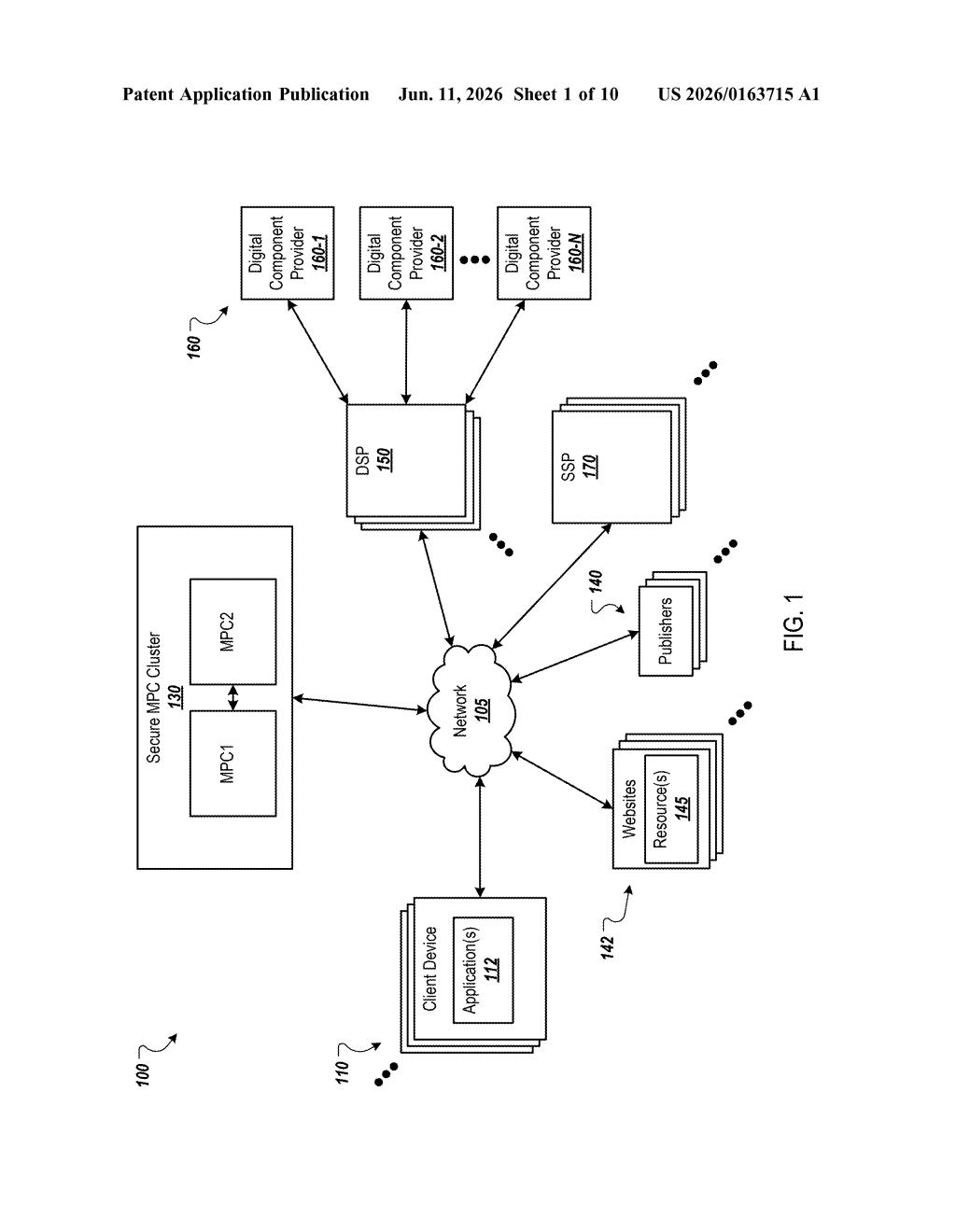
How Google's privacy-safe ad auction actually works
Imagine a poker game where no single dealer can see all the cards, but the game still plays out fairly and picks a winner. That's roughly what Google is attempting to build for online advertising.
Right now, when an ad slot opens on a webpage, multiple companies bid for it. Running that auction usually means someone — an ad platform, a data broker — gets to see sensitive details about who you are and what you're doing. Google's patent describes splitting the auction across multiple independent servers that each hold only a fragment of the data, called a secret share. No single server has enough information to reconstruct your profile, but together they can still determine which ad wins.
The twist: when an advertiser loses a bid, the system can tell them how close they were to winning — again, without revealing anyone else's actual numbers. You get a functioning, competitive ad marketplace, and your data stays private throughout.
Inside Google's secret-share auction selection system
The patent describes a secure multi-party computation (MPC) system — a cryptographic technique where multiple servers jointly compute a result without any one of them ever seeing the raw inputs in full.
For each ad in the auction, the system works like this:
- Each server holds only a secret share — a mathematically scrambled fragment of a bid value. Alone, the fragment is meaningless.
- The servers collaborate using MPC protocols to determine which ad has the highest bid, computing a winner parameter distributed across all servers.
- For every losing ad, the system also computes the highest competing bid value — again as secret shares — so the losing advertiser can receive a partial, privacy-safe signal about how they fared.
The practical upshot is that the auction outcome can be determined and verified, advertisers can receive useful feedback, and yet no single server — not even Google's — ever holds a complete view of all bids or the user data behind them. The architecture is designed to be resistant to any one party cheating or snooping.
What this means for ad privacy and data regulations
Ad auctions are one of the biggest data-collection pressure points on the internet. Regulations like GDPR in Europe and CCPA in California are squeezing how much raw user data can flow through these systems, and Google has been under sustained regulatory scrutiny over its advertising practices. A cryptographically enforced privacy layer — rather than a policy promise — is a much harder target for regulators to object to.
For you as a user, this kind of system could mean that the machinery deciding which ads appear in your browser no longer requires your personal data to be handed off in readable form. Whether that translates into real privacy gains depends entirely on how (and whether) Google deploys it — but the architecture itself is a meaningful step beyond current approaches.
This is genuinely interesting infrastructure work, not a flashy consumer feature. MPC-based ad auctions are something the privacy research community has been pushing for years, and seeing Google file a detailed patent on the mechanics suggests this may be moving from academic proposal toward actual deployment. Given Google's regulatory headwinds, that timing is not a coincidence.
There are more where this came from
We read every patent application Big Tech publishes and send you the ones worth knowing. Plain English, free, every week.
Want this weekly breakdown for a company we don't cover? Patentlyze Pro →