
Tesla Files Patent for a Truck That Tilts Itself to Make Loading Ramps Gentler
Tesla has filed to let a truck crouch at the back and rise at the front on command, so a motorcycle rolling up a ramp stops scraping its belly on the bed.
What Tesla's truck ramp mode actually does
A rider walks a motorcycle up a ramp into a pickup bed, and the bike's underside scrapes right where the ramp meets the bed. That awkward lip is a familiar headache for anyone who hauls bikes, scooters or all-terrain vehicles.
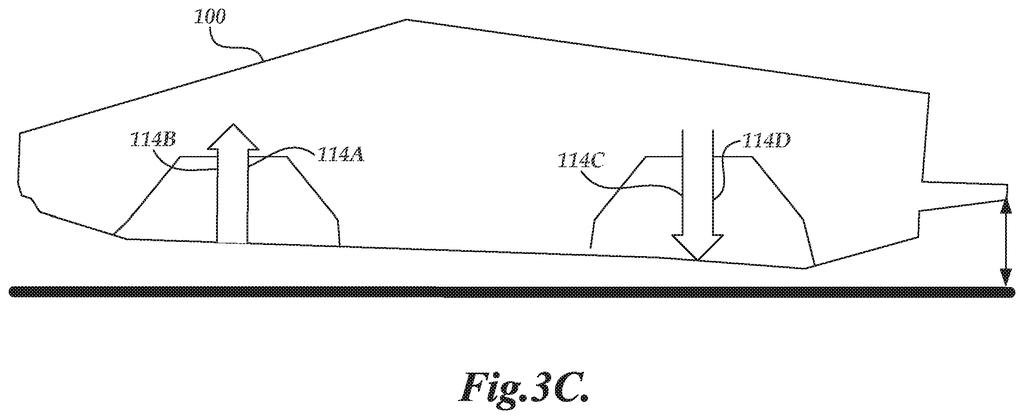
Tesla's filing fixes it by letting the truck change its own posture. Switch on a ramp mode, and the truck lowers its back end by up to 70 millimeters (under 3 inches) and raises its front by up to 80 (a little over 3 inches). That tilt shrinks the sharp bend at the top of the ramp from roughly 45 to 55 degrees down to about 20 to 30.
You'd pick the mode on the truck's screen or from your phone. While it's active, the truck also keeps itself from being shifted into gear, so it can't lurch while you're loading.
selecting a decrease in a position value of a first subset of independent controllable portions associated with a rear portion of the vehicle; and selecting an increase in the position value of a second subset of independent controllable portions associated with a front portion of the vehicle …
Translation: The truck lowers its back end while raising its front end to flatten out the loading angle.
How the four wheels tilt the truck bed
The system treats the suspension as four separate controls, one at each wheel. In the main example, each corner uses an air-filled bellows or strut (basically a rubber air spring), and a central controller tells a pump to add or release air to raise or lower that corner.
In ramp mode, the controller picks the mode from your input (a button in the truck or an app on your phone) and from sensor readings such as speed, location and whether the doors or tailgate are open. It then lowers the two rear corners and raises the two front ones. That cuts the breakover angle (the bend where the ramp meets the bed) from about 45 to 55 degrees to about 20 to 30.
The filing adds several safety steps:
- A validation check can block or delay the change if the truck is moving too fast, is in gear, has a door open or has a person aboard.
- The truck is kept from shifting into drive or reverse, and the emergency brake can be applied.
- Once a load is detected, the rear rises again so cargo doesn't slide off.
- On uneven ground, individual corners can be adjusted.
The description also covers a dump mode (all four corners drop to bring the bed low), a nominal mode (default driving height) and a level mode for camping on uneven ground.
A second mode may correspond to lowering two controllable components corresponding to the rear wheels of the vehicle and raising two controllable components corresponding to front wheels of the vehicle.
Translation: One specific setting tilts the vehicle by dropping the rear wheels and lifting the front ones.
Why this matters if you haul a motorcycle
If you own a truck and haul a motorcycle, ATV or scooter, the daily payoff is simple: a gentler ramp angle means less scraping, less wrestling and less risk of dropping the bike. The filing also notes that lowering the back of the truck lets you use a shorter ramp, which is easier to store.
The safety rules matter just as much. Lowering a vehicle too far can damage the chassis, battery or doors, or scrape on curbs and rocks. By checking speed, gear, doors and surroundings before it moves, the truck keeps this a parked-only trick, and by locking out the gear selector it keeps the truck from driving off while it sits low.
Tesla's 50th filing in our Tesla coverage since May adds to a camera-focused run that includes road-reading cameras and blur-fixing lens covers.
The filing assumes every wheel already has its own air spring, which means the real invention here is the software layer sitting on top: a button, a set of rules for when the move is allowed, and a lock that keeps the truck from driving off while the bed is tilted. That is a short distance from a shippable feature.
A minimal version needs almost no new hardware. The document mentions an optional curb sensor and an incline sensor, but the core tilt routine could run on controls and readings a modern truck already carries.
The numbers in the filing are modest, about 70 millimeters down at the rear and 80 up at the front, which is enough to turn a tall truck bed into something a person can roll a bike onto without lifting it overhead. That is a small, specific annoyance that truck owners deal with constantly, and a feature that solves it tends to get used every single week.
Get our take in your Top Stories
Liked this breakdown? Add Patentlyze as a preferred source on Google, and our plain-English take shows up more often in your Top Stories the next time Tesla patent news breaks.
There are more where this came from
We read every patent application Big Tech publishes and send you the ones worth knowing. Plain English, free, every week.
The drawings
7 drawing sheets from US 2026/0326744 A1 · click any drawing to enlarge


Want this weekly breakdown for a company we don't cover? Patentlyze Pro →
Be the first to weigh in