
Disney Files Patent for a Character That Writes You a Song From Your Favorite Memory
Disney's filing describes an AI character that asks for your favorite memory, answers with a matching one it invented, and then sings you a song about it.
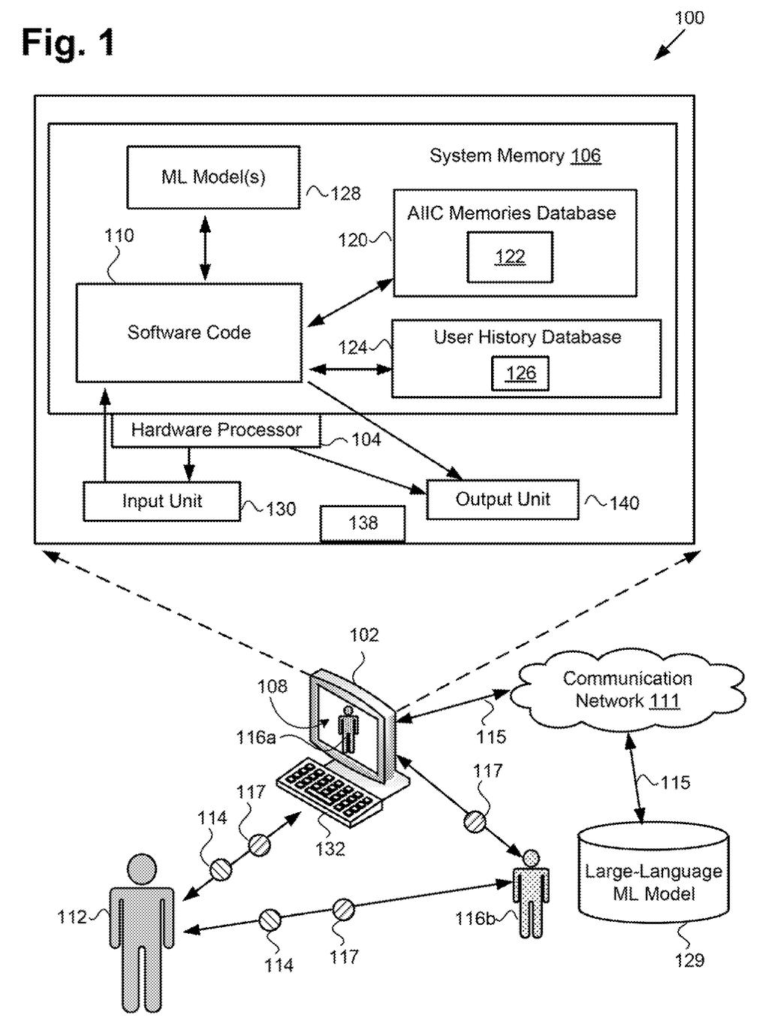
What Disney's memory-swapping AI character does
Ever told someone about a day at the beach, and had them answer with a beach story of their own? Suddenly you feel like you have something in common.
Disney's patent tries to build that feeling into an AI character, such as an animated figure on a screen or a robot. The character asks you for a favorite memory, then searches a bank of made-up memories written for it and finds one that resembles yours. If nothing fits, the filing says the system can invent a new one.
From there, the character reads the emotion in that memory and writes a song for you, with lyrics, a melody and a mood to match. The idea rests on psychology research the filing points to, which says that sharing memories makes people feel closer.
elicit, using the AIIC, a reminiscence from a user; predict, using a trained machine learning (ML) model and the reminiscence, at least one user memory feature; …
Translation: The character asks about your past and uses AI to analyze your memories.
How the character matches your memory to its own
The system works as a chain. First, the character elicits a reminiscence, for example by asking 'What is your favorite memory?' in text or speech. A trained language model then predicts memory features from your answer, such as the people, places, activity and emotion involved.
- The features are compared against the character's memory data structure, a web of memories (each with people, places and feelings) joined by links showing how they relate.
- A scorer rates each match and the best one wins. It need not be exact: a beach trip with your cousin can match one with a friend, while a beach trip with a dog scores low.
- The matched memory's emotion sets a mood modifier, such as tempo, musical key, instrument, timbre or pitch. If you spoke, the rhythm and tone of your voice can feed in too.
Then the song gets built. A large language model (the chatbot-style AI behind many text tools) drafts lyrics from the matched memory, and a filter drops profanity, hate speech and anything that could infringe someone else's intellectual property. Chord progressions and melodies are generated in batches, scored, and the best are picked. The finished song is turned into audio with virtual instruments and a synthetic singing voice.
The character then performs it through a screen, a speaker or a robot's motors.
… determine a mood modifier based on emotion information of the identified one or more of the memory features for the AIIC, and generate a creative composition for performance by the AIIC based on the mood modifier.
Translation: It figures out the emotional tone of the memory to write a custom song for the character to perform.
Why a made-up memory could make a toy feel close
The filing names on-screen characters, robots, toys and tabletop speakers as places this could live, so the practical goal is a character that feels personal instead of canned. It leans on the idea that sharing memories builds closeness, and it uses music because the two are so tied together. The song's structure can even depend on the venue where the character is performing.
Privacy gets a mention too: the stored interaction history leaves out personal details like age or gender, and a phone version can keep your data on the device. The filing also leaves room for a human songwriter to step in and choose among options, so the system could work as a writing aid as well as a performer.
Disney's second filing in the AI assistant & agent topic we've tracked since July follows their robot movement learning application with a new AI assistant patent.
The design buys closeness with a small fib. The character's memories are written for it, and the filing says it can add a made-up one when nothing matches yours, so the 'shared' experience is staged every time. Some people will find that warm, and others will feel played once they learn the trick.
The other cost is emotional risk. The filing lists one character memory about the passing of a loved one next to another about a vacation with that same person. That variety helps it match many different people, yet it means the character could answer a grief story with the wrong tune. A scorer that treats a cousin as close to a friend and a dog as far away is also a blunt tool for something as delicate as feelings.
For a robot, toy or on-screen character, a song that sounds like it was listening beats a canned greeting. The trade reads as worth it if the song lands, and the wrong-mood risk is the part to watch.
Get our take in your Top Stories
Liked this breakdown? Add Patentlyze as a preferred source on Google, and our plain-English take shows up more often in your Top Stories the next time Disney patent news breaks.
There are more where this came from
We read every patent application Big Tech publishes and send you the ones worth knowing. Plain English, free, every week.
The drawings
9 drawing sheets from US 2026/0330272 A1 · click any drawing to enlarge


Show the other 1 sheets

Want this weekly breakdown for a company we don't cover? Patentlyze Pro →
Be the first to weigh in