
A New IBM Patent Has AI Models Argue Over Whether a Security Alert Is Real
IBM wants to settle security alarms the way a courtroom settles a case: one AI argues the alert is real, another argues it's fake, and a third AI plays judge.
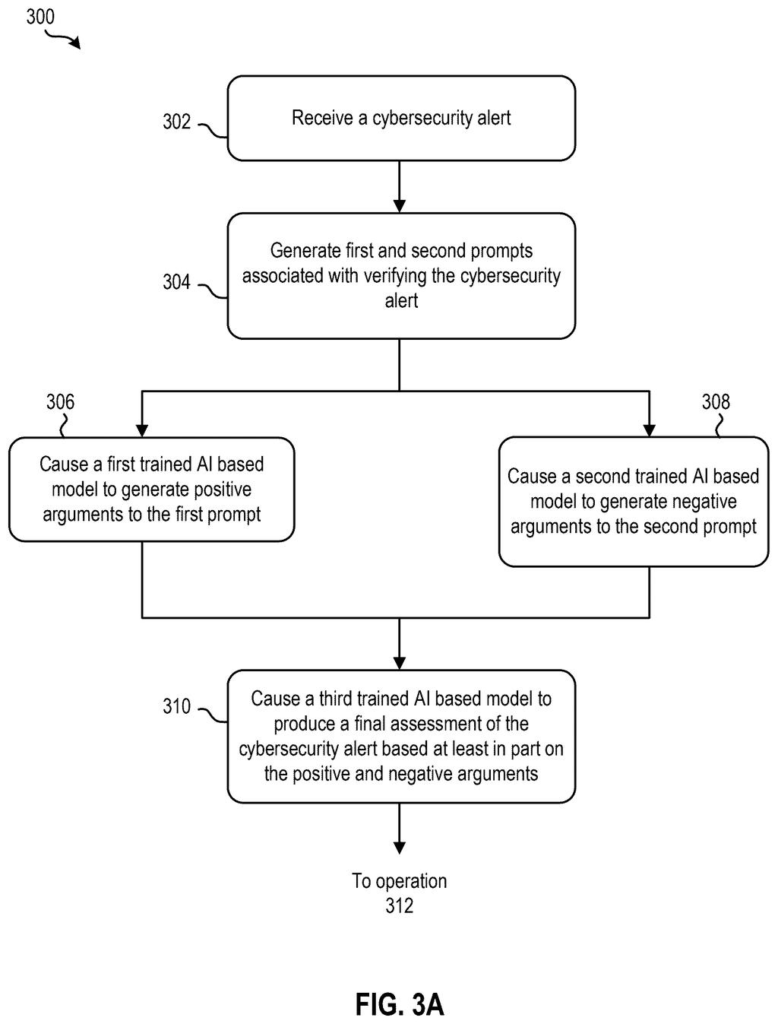
What IBM's AI debate over security alerts does
You're a security analyst and your screen is lit up with hundreds of alarms. Some are real break-in attempts. Most are false alarms. Checking each one by hand eats your whole shift, and the real threats sit in the pile waiting.
IBM's patent application describes a way to sort that pile with a built-in debate. When an alert arrives, the system writes two questions about it. One AI model is asked to make the case that the alert is real. A second is asked to make the case that it's fake. A third model reads both sides and decides.
If the alert looks fake, it gets thrown out. If it looks real, it moves on to the people who respond to it. A human analyst can also step in, pick the strongest arguments, and add their own.
… causing a first trained AI based model to generate positive arguments to the first prompt; causing a second trained AI based model to generate negative arguments to the second prompt; …
Translation: One AI builds the case that the alert is real while another argues that it is fake.
How IBM's three AI models argue an alert
The filing covers a method for checking cybersecurity alerts, which are the warnings that monitoring software raises when something looks like an attack. The claims describe three steps working together.
First, the system takes an incoming alert and generates two prompts (written instructions to an AI model). In the description's example, one asks for arguments that the alert is a TRUE alert and the other asks for arguments that it is a FALSE alert.
Second, a first trained AI model produces the positive arguments and a second produces the negative arguments. The description says these can run in parallel, and it names large language models (the same family of AI behind chatbots) as the likely choice. Third, a third model reads both sets and produces a final assessment: a verdict on whether the alert is genuine, plus a written justification for how it got there.
If the verdict is "not authentic," the alert is rejected. The filing also describes:
- Marking verified alerts and passing them on to a security operations center (the team that watches a company's systems)
- Letting a human analyst choose the most relevant arguments and add their own before the final call
- Generating a security ticket that explains the issue and how to fix it
Furthermore, a third trained AI based model is used to produce a final assessment of the cybersecurity alert based at least in part on the positive and negative arguments.
Translation: A final referee AI weighs both sides to decide if the threat is genuine.
Why IBM's alert-checking idea matters for security teams
The practical pitch is relief for overloaded security teams. Today, according to the filing, analysts inspect threats one at a time, which slows things down and invites mistakes when attacks spike. Letting AI weed out false alarms could leave humans with fewer, better-sorted cases, and the written justification means an analyst can see why an alert was dropped. The examiner's first review rejected the claims as filed, which is routine at this stage and usually followed by amendments.
There is a trade-off the patent leans on: rejecting an alert means the system deliberately does not react to it. That only works if the judge model is right. The human-in-the-loop option, where an analyst can review the arguments, is the safety valve here.
IBM's 19th filing we've tracked since May on teams of AI models follows earlier applications including a self-testing code writer and an outage diagnosis system.
Claim 1 is broad. It needs only three AI models, two prompts, and a rejection when the verdict says the alert is fake. Nothing in it says the models must be large language models, that a human must be involved, or that the alerts come from any particular kind of system. Those details sit in the dependent claims.
If granted as written, that breadth would reach any tool that has one AI argue for an alert, another argue against it, and a third decide. It would not reach a single model that simply scores alerts. The structure of a debate with a judge is the whole claim.
That makes it a clear and easy-to-picture idea, though a broad claim like this is exactly the kind an examiner pushes back on. Expect it to narrow before it goes anywhere.
Get our take in your Top Stories
Liked this breakdown? Add Patentlyze as a preferred source on Google, and our plain-English take shows up more often in your Top Stories the next time IBM patent news breaks.
There are more where this came from
We read every patent application Big Tech publishes and send you the ones worth knowing. Plain English, free, every week.
The drawings
6 drawing sheets from US 2026/0330010 A1 · click any drawing to enlarge


Want this weekly breakdown for a company we don't cover? Patentlyze Pro →
Be the first to weigh in