
Google Files Patent for a Family Tree of AI Ad Makers, Each Tuned to One Industry
Google's patent describes one AI ad maker that spawns copies of itself for each industry, region and advertiser. Each copy is trained on its own material and walled off from the rest.
What Google's family tree of ad AIs does
A fashion brand and a carmaker ask the same AI tool to make an ad. Both get results that feel generic, because the AI never learned what separates a sneaker ad from a truck ad. A big advertiser may also not want its design ideas and ad performance numbers feeding a tool its rivals use.
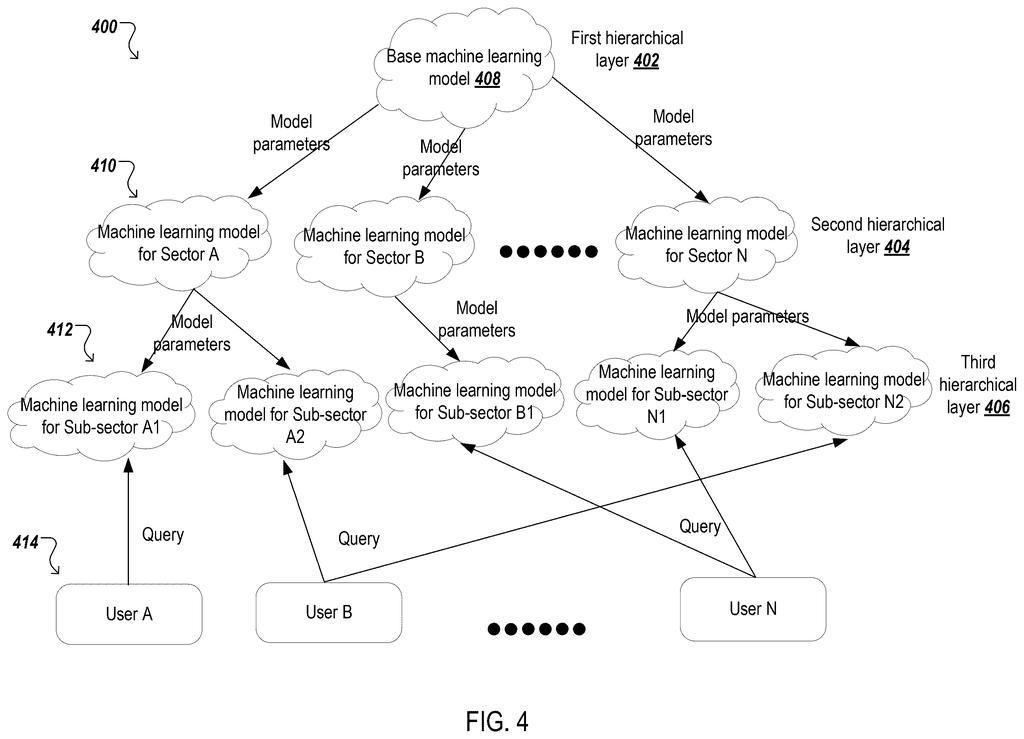
Google's patent describes a fix shaped like a family tree. It starts with one base AI model trained on general ad data. Then it makes a copy for a single industry, such as fashion, and keeps training that copy on fashion material. That copy can have copies of its own, say one for clothes and one for jewelry, each more specialized than the last.
The copies keep what they learn to themselves. A model lower in the tree does not share its data with the others, so an advertiser's private ideas stay private. When you ask for an ad, the system looks at your request and picks the model that fits best.
… generating, by the AI system, a second machine learning model based on the first model parameters, the second machine learning model being at a given hierarchical layer of a hierarchical model structure; …
Translation: The system builds a new AI model that sits at a specific level in a tiered structure.
How a base model spawns industry versions
Claim 1 describes a method for building a lineup of AI models in layers. An AI system takes the parameters of one trained model (the numbers it learned during training, which decide how it behaves). It uses them to create a second model at a given layer, then refines that second model so at least one number changes. It then creates a third model from the second model's numbers, one layer further down.
The filing's main example is ad generation:
- A base model sits at the top, trained on general ad data.
- Below it sit models for a sector, such as fashion or automobiles, or for a region, such as North America or Asia.
- Below those sit sub-sector models, such as clothes or jewelry under fashion.
Models in the same branch share a common attribute, which claim 2 says can be a vertical market (an industry) or a geographical region.
The parameters can include the model type, the weights (the internal dials adjusted during training), the loss function (the score that measures mistakes) and the optimization algorithm (the method for adjusting the dials). The filing also describes keeping each branch's parameters, queries, outputs and training data unshareable with other branches.
At request time, the system takes a query plus context data, such as an uploaded product photo, and picks the layer that fits. A photo of a coat goes to a coat model. A photo of coats, shoes and pants goes to the broader clothing model.
Why advertisers may want their own AI copy
For advertisers, the practical pitch is privacy plus a better fit. The filing says some big advertisers hold back from AI tools because they fear their design ideas and ad performance data will leak to others. A private copy of a shared base model, retrained only on their own material, is meant to address that. The filing also says a model specialized for an industry or region should produce ads that need less fixing afterward.
For everyone else, the effect is indirect: the ads you see could come from models tuned to your country or to one product category. The patent describes a design for ad generation and says nothing about whether or when Google would offer it. It does show how a company with one large shared AI could hand out private, specialized versions without mixing customers' data.
Google's 30th filing we've tracked in AI models working in teams since May builds on ideas like writing small helper programs and finding facts without a second model.
Claim 1 covers a specific three-step pattern: take the learned settings from one trained model, build a second model from those settings and retrain it until at least one setting changes, then use those updated settings to build a third model sitting one level below the second in a layered structure. The claim says nothing about ads, images, or text. It covers the pattern itself.
That scope is wide. Any team building a family of specialized models by starting each one from its parent's learned settings and retraining it on narrower material would fit this description, because that is a standard and efficient way to build related models at scale.
The dependent claims add the business details: organizing by industry or region, keeping data separated between branches, routing requests to the right model layer. Those tell the actual product story. But everything rests on Claim 1, and Claim 1 reaches well beyond any one product.
Get our take in your Top Stories
Liked this breakdown? Add Patentlyze as a preferred source on Google, and our plain-English take shows up more often in your Top Stories the next time Google patent news breaks.
There are more where this came from
We read every patent application Big Tech publishes and send you the ones worth knowing. Plain English, free, every week.
The drawings
7 drawing sheets from US 2026/0320472 A1 · click any drawing to enlarge


Want this weekly breakdown for a company we don't cover? Patentlyze Pro →
Be the first to weigh in