
Samsung Patents a Per-Zone Refresh Rate Clock System for OLED Displays
Most variable refresh rate systems treat the whole screen the same — Samsung's new patent lets different parts of your display refresh at completely different speeds, simultaneously, by selectively hiding clock pulses from the panel driver.
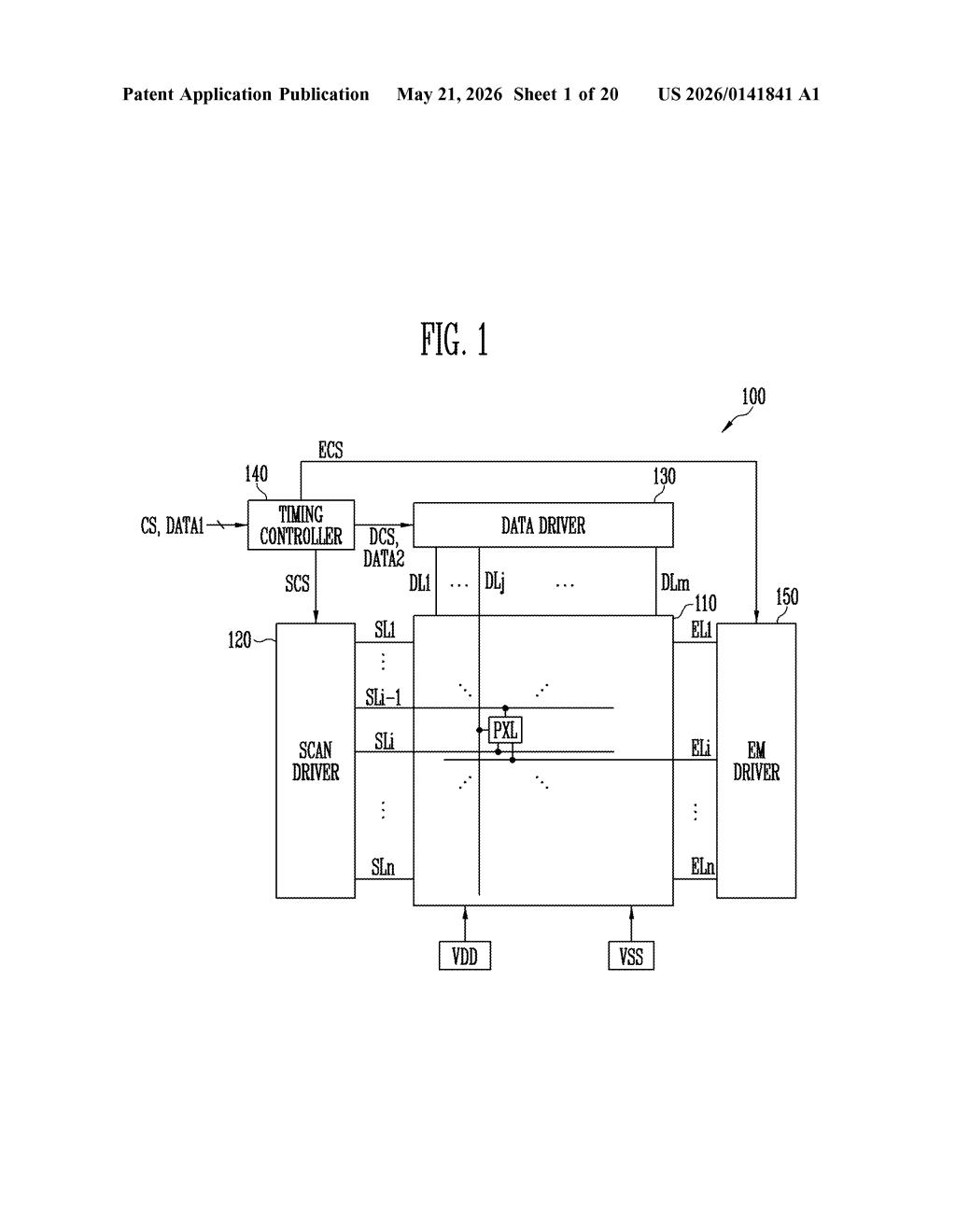
What Samsung's zone-based refresh rate trick actually does
Imagine your phone's screen is showing a still wallpaper at the top and a scrolling feed at the bottom. Today, the whole display typically refreshes at the same rate — even the parts that aren't changing. That wastes battery.
Samsung's patent describes a display driver that can split the screen into zones and refresh each zone at a different rate at the same time. A static area — say, a notification bar with nothing changing — can be told to update far less often, while an active video area keeps its full refresh rate.
The mechanism is surprisingly elegant: instead of a completely separate timing system per zone, the driver simply masks (skips) certain clock pulses for parts of the screen that don't need updating. The parts that do need updating keep receiving their pulses normally. It's like a conductor telling half the orchestra to rest while the other half keeps playing.
How the timing controller masks pulses to slow refresh
The patent centers on a timing controller that manages a light emission clock signal — the heartbeat that tells each row of pixels when to turn on and off. In a normal, single-mode operation (Mode 1), this clock fires a fixed number of pulses every frame, driving the whole display uniformly.
In Mode 2, the controller gets selective. It divides the frame period into two sub-periods:
- During the first period, it masks at least one pulse — intentionally suppressing it so the corresponding display area skips its refresh cycle.
- During the second period, it outputs pulses normally for the areas that do need updating.
The result is that Area 1 (the active zone) gets fully refreshed, while Area 2 (a static or semi-static zone) holds its last non-black image without re-drawing it. Critically, the patent specifies the held image must be a non-black still image — so the panel isn't just blanking that region, it's genuinely maintaining a visible picture at a lower refresh rate.
The clock frequency itself also changes between modes, giving the system an additional lever to tune power consumption versus responsiveness across the display.
What this means for OLED power efficiency on Galaxy screens
Variable refresh rate (VRR) technology already exists on flagship phones and monitors, but it typically applies to the whole panel at once. This patent's zone-level approach is a more surgical tool — useful for always-on display scenarios, split-screen multitasking, or status-bar-plus-content layouts where different regions have very different update demands. For OLED panels especially, fewer refreshes in static areas directly translates to lower power draw and reduced risk of burn-in.
Samsung Display supplies panels to Samsung's own Galaxy lineup as well as Apple and others. A display driver architecture like this could quietly underpin the next generation of low-power always-on modes — the kind that let your lock screen show persistent widgets or health data without chewing through your battery.
This is solid, practical display engineering — not a flashy concept but exactly the kind of unglamorous patent that ends up shipping in real panels. Samsung Display has obvious commercial incentive to push per-zone refresh further as always-on screens become a baseline expectation. Worth watching as a signal of where OLED power management is heading.
Get our take in your Top Stories
Liked this breakdown? Add Patentlyze as a preferred source on Google, and our plain-English take shows up more often in your Top Stories the next time Samsung patent news breaks.
There are more where this came from
We read every patent application Big Tech publishes and send you the ones worth knowing. Plain English, free, every week.
Want this weekly breakdown for a company we don't cover? Patentlyze Pro →