
Meta Files Patent for AI That Tells You Which Smart Clothing to Put On
Meta's patent application imagines your smart glasses spotting a tee time on your calendar and telling you to strap on a wristband for better swing tracking. The AI works out what gear you're missing before you do.
What Meta's sensor-clothing suggester does
Imagine you're getting dressed for a round of golf. You've got on a shirt with tiny sensors built in, and your smart glasses and watch are connected to it. Your calendar shows a tee time, so your glasses pop up a friendly note: put on this wristband, it will track your swing more accurately.
That's the idea behind this Meta filing. An AI looks at what you're wearing, what your calendar and past habits say you're about to do, and which sensors you're missing for the job. Then it points you to the piece of sensor-equipped clothing or gear that fills the gap.
The filing also describes the AI nudging you to do warm-up stretches, or to grab a jacket when the temperature is about to drop and your past games suffered in the cold.
… identifying an activity that the user is predicted to perform while wearing the first wearable article of manufacture; in response to the identification of the activity that the user is predicted to perform, identifying a second wearable article of manufacture …
Translation: The system figures out what you plan to do and selects a different piece of smart clothing for that specific task.
How the AI finds the sensors you're missing
The claims cover a chain of steps. First, a piece of sensor-equipped clothing or gear (the claims call it a wearable article of manufacture) connects to a nearby device such as a watch or phone and starts sending readings. The system uses those readings to work out what that gear can actually measure, which the filing calls its capabilities.
Next, an AI model gets two inputs: behavioral data about you (the filing offers calendar entries, past activity patterns and stated preferences as examples) and the live sensor readings. From those it predicts what you're about to do, such as play golf.
Then comes a gap check. The filing describes listing what sensing the activity needs, comparing that with what you're already wearing, and picking an item from a database whose sensors fill the hole. For golf, the needs include arm motion, torso rotation and grip pressure. Candidates can be ranked by:
- How fully they cover the gap
- Sensor accuracy
- Battery use
- Comfort
- Fit with what you already have on
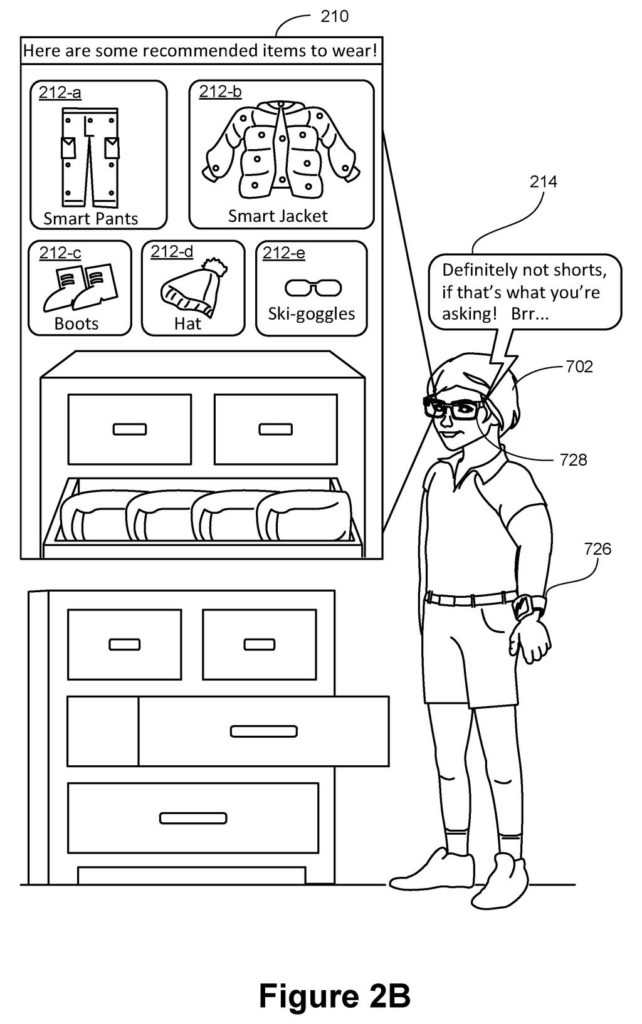
Finally, the system shows you a prompt to put the second item on. The filing also describes a ski-gear request and a military gear checklist, but the claims center on this prediction chain.
… presenting an indication suggesting to the user to don the second wearable article.
Translation: It displays a notification telling you which item of clothing you should put on next.
What this means for Meta's glasses and watches
If you wear a fitness watch, your device only knows what its own sensors can see. This filing describes a system that notices the gap and tells you what to add: a wristband for a golf swing, a jacket when the cold could hurt your game. For you, that could mean fewer blind spots in your workout data and fewer guesses about what to wear.
It also means your calendar, habits and body readings all feed one AI that decides what to recommend. The filing says data collection happens with user consent, with opt-in and options to request deletion. It also gives a maker of connected gear a built-in way to recommend the next item.
This is the 85th filing from Meta we've tracked in our smart glasses watchlist since May, adding to work like a custom control panel and slimmer frame batteries.
The software half of this is close to ready. Reading a calendar, guessing an activity and showing a pop-up on glasses or a watch all run on things people already own, and the claims never require a special garment: the first item can be a watch and the second a band.
The hard half is the closet. For the suggestions to mean anything, a second sensor-equipped item has to exist, be nearby, be charged and be listed in a database of what each item can sense. The filing describes that database but does not say who would fill it, and sensor-woven shirts and jackets are rare today.
The shortest route to a product is a narrow one: a watch or glasses feature that spots your tee time or gym visit and recommends one accessory from a single maker's lineup. Anything bigger waits on clothing that most people do not yet buy.
Get our take in your Top Stories
Liked this breakdown? Add Patentlyze as a preferred source on Google, and our plain-English take shows up more often in your Top Stories the next time Meta patent news breaks.
There are more where this came from
We read every patent application Big Tech publishes and send you the ones worth knowing. Plain English, free, every week.
The drawings
23 drawing sheets from US 2026/0339424 A1 · click any drawing to enlarge


Show the other 15 sheets


Want this weekly breakdown for a company we don't cover? Patentlyze Pro →
Be the first to weigh in