
Google Files Patent for a Fact-Checker That Edits AI Answers and Cites Sources
Chatbots sometimes state wrong facts with total confidence. Google's patent application has a second AI model look up the claims on the web, rewrite the wrong ones, and attach the sources.
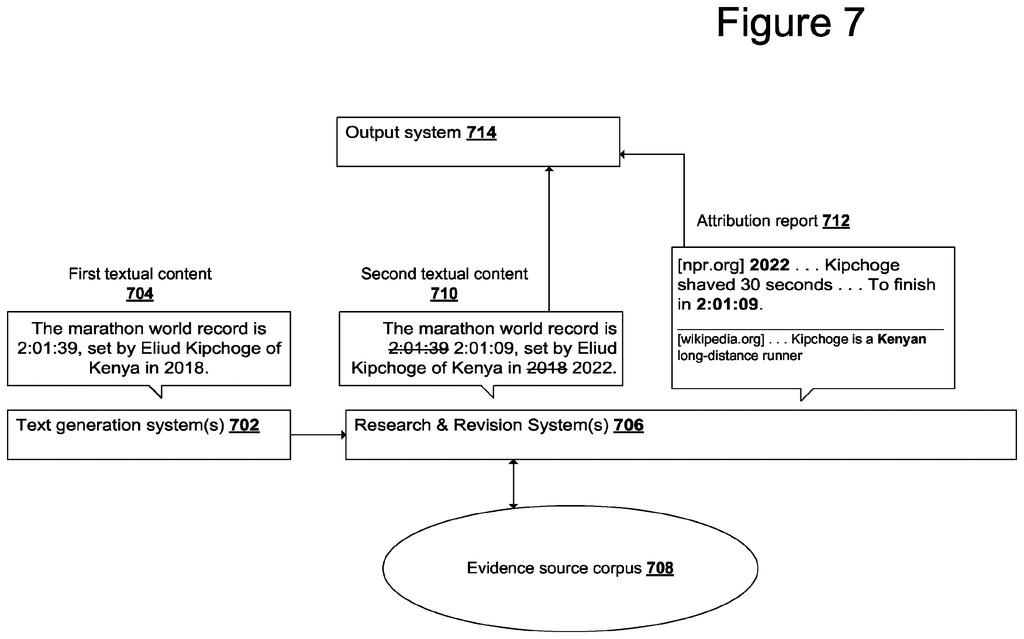
What Google's answer-checking patent actually does
A chatbot tells a student the wrong year for a historical event, in the same calm tone it uses for everything it gets right. Nothing on the screen warns you, so you either trust it or go check it yourself.
Google's patent application describes a built-in proofreader. A second AI model reads the answer, turns its factual statements into search questions, and looks up what the web says. If a source contradicts a statement, the model rewrites just that part and leaves the rest of the wording alone.
The result can also come with citations, either as a separate report or as in-text references. So instead of one smooth paragraph you can't judge, you would see which sources back which claims, and which claims no source covered.
… generating, by the computing system, a second textual content as an output of a second machine-learned language model, based on a comparison between the first textual content and the one or more evidence sources …
Translation: A second AI rewrites the original answer by checking it against outside facts.
How the second model fixes the first one's claims
The filing covers a two-model pipeline. A first language model (the AI that writes the original answer) produces text. The description says that text could also come from a human or a database. A second model then checks and revises it, step by step:
- Ask: a model, shown a handful of example question sets (the description uses six), writes search queries about each factual claim in the text.
- Search: the queries go to a standard web search engine, and the top results are collected (five per query in the example).
- Extract: a relevance model (software that scores how well a passage answers a question) slides a four-sentence window across each page and keeps the best-scoring passages.
- Compare: an agreement model labels each claim as supported, contradicted, or not addressed by those passages.
- Edit: an editing model rewrites only the contradicted parts.
Two checks then decide whether the edited version gets used. An edit distance (a count of how many characters changed) and a preservation score (how similar the new text is to the old) are weighed against an agreement score.
Finally, up to five evidence passages are chosen to cover as many of the questions as possible, and they are attached as the attribution.
First, systems and methods are provided for editing LMs' generated content based on a machine-learned comparison between the generated content and related evidence snippets …
Translation: The system fixes AI mistakes by comparing the text to real evidence.
Why Google's fact-fixing step has a catch
The practical payoff is an AI answer that arrives already checked, with receipts. In the filing's own tests, the approach kept the original intent over 90% of the time, while other tested systems kept it between 6% and 40%. It also raised how well text was backed by sources by up to 13 percentage points while changing only 10 to 20% of the words.
It works on text from existing models, so a company could add it without retraining a giant model, which the filing says saves computing cost. The examiner's first review rejected the claims as filed, which is routine at this stage and usually followed by amendments, so the final scope may look different.
This is the 26th Google filing we've tracked since May in our AI safety guardrails watch, following one on AI showing its work and a faster filter for harmful responses.
Every fix in this design leans on the web. If the top search results for a claim are wrong, the checker can swap a correct sentence for a wrong one, and the attached citation will make the mistake look more trustworthy.
There are other costs. The filing describes writing questions about each factual claim, running a search for each, and judging every passage, so one answer turns into several small jobs. A claim the search results never mention gets labeled 'not addressed' and stays as it was, which leaves a gap readers would need to see.
The restraint is the smart trade. Editing only what the evidence contradicts, and scoring how much of the original text survives, keeps the answer sounding like itself. Giving up some speed and some coverage for that looks worth it, as long as the citations are shown to you rather than hidden.
Get our take in your Top Stories
Liked this breakdown? Add Patentlyze as a preferred source on Google, and our plain-English take shows up more often in your Top Stories the next time Google patent news breaks.
There are more where this came from
We read every patent application Big Tech publishes and send you the ones worth knowing. Plain English, free, every week.
The drawings
18 drawing sheets from US 2026/0339990 A1 · click any drawing to enlarge


Show the other 10 sheets


Want this weekly breakdown for a company we don't cover? Patentlyze Pro →
Be the first to weigh in