
OpenAI Patents a Rulebook Its AI Reads Only When a Touchy Topic Comes Up
Most chatbots answer from their training plus one standing set of instructions. OpenAI's patent application describes a rulebook that speaks up only when your question touches a sensitive topic, like when ballots get mailed, and then takes its note back after one reply.
What OpenAI's topic-triggered rulebook does
Today, an AI chatbot learns from a big pile of text that stops at some date, so it can hand you stale answers on things like election deadlines. The usual fixes are slow: retrain the model, or stuff a long list of instructions into every conversation, whether or not it applies.
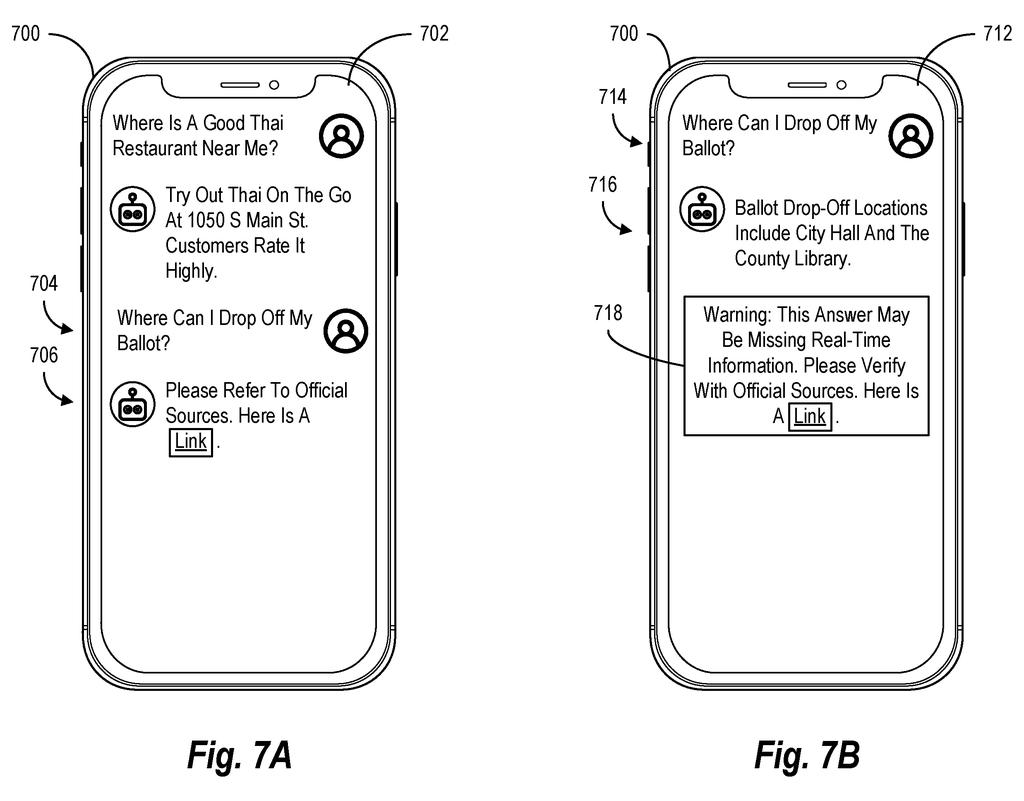
OpenAI's filing describes a third route. Behind the scenes, a rulebook (a database of policies) watches each message you send. If your question matches a policy, say you ask when ballots get mailed, the system hands the AI a short, temporary note on how to answer. In the patent's example, that note says to point you to official sources.
If your question doesn't match, like 'Are dogs cool?', nothing is added. Once the AI replies, the note is deleted, and the company can edit the rulebook any time without touching the AI itself.
How the temporary instruction gets slipped in
The system sits beside a large language model (LLM, an AI that writes text replies). It reads each user message, or a keyword the model passes along, and compares it with a policy database: a list of rules, each with a name, a description, the guidance to give, and a match criterion.
Matching can use plain text patterns (regular expressions), scores from moderation models (classifiers that rate how harmful a message looks), or a mix. Policies can also depend on the user's country, a time window such as an election campaign, or a run of related messages.
When a rule matches, the guidance reaches the model in one of two ways:
- Message scanning: a scanner reads your message before the model does and slips in a temporary system message, a private instruction for that single reply.
- Tool calling: the model is told which policies exist, then asks a guidance tool for the one that fits your question.
The guidance can tell the model to refuse, send you to official sources, use a browser to look up current facts, or add a disclaimer. For harmful requests, the system can block the reply, end the session, or lock the account. After the reply, the note is removed. Administrators can add, delete or edit policies, with a helper model formatting them, and none of that changes the model's parameters.
Why rule changes without retraining matter
For you, this could mean an AI that handles some topics differently from others. Ask about the weather and you get an answer. Ask where to drop off a ballot and you may get a pointer to official sources, or an answer with a note that it might be missing real-time information. The filing also covers blocking replies to abusive requests.
For the company, the appeal is speed. The filing says that retraining a model is slow and expensive, while a policy edit takes effect immediately. When a law changes or a new safety problem shows up, a team could fix the behavior by editing one rule. The filing adds that the logged interventions could later be used to train the model to handle these cases on its own.
OpenAI's AI safety guardrails watchlist hits its eighth filing since September, adding to earlier applications like finding security flaws and replies before checks finish that we've tracked.
Claim 1 is short and wide. It covers reading a user's message, checking it against a stored list of rules, and sending the AI model matching guidance so it can shape its reply. It never says the guidance must be temporary, that it must be deleted afterward, or that the topic must be elections.
Those narrower details sit in the dependent claims: the temporary message (claim 2), deleting it after the reply (claim 5), and editing rules without changing the model (claim 7). If the broad version were granted, it would reach any chatbot design that checks messages against a rule list and feeds the model instructions. That is a lot of ground for a simple idea.
Bottom line: sensible, plain engineering with a first claim that is ambitious in reach. How much of that width survives review is the open question.
Get our take in your Top Stories
Liked this breakdown? Add Patentlyze as a preferred source on Google, and our plain-English take shows up more often in your Top Stories the next time OpenAI patent news breaks.
There are more where this came from
We read every patent application Big Tech publishes and send you the ones worth knowing. Plain English, free, every week.
The drawings
13 drawing sheets from US 2026/0350367 A1 · click any drawing to enlarge


Show the other 5 sheets


Want this weekly breakdown for a company we don't cover? Patentlyze Pro →
Be the first to weigh in