
OpenAI Files Patent to Let Chatbot Replies Start Before Safety Checks Finish
OpenAI's filing describes a deliberate shortcut: let an AI's reply start reaching you before every word has been safety-checked, as long as the checker never falls more than a set number of words behind.
How OpenAI keeps chatbot safety checks from lagging
Imagine you're chatting out loud with an AI voice assistant while you cook. Every time it says a sentence, it stops for a beat to make sure nothing it's about to say breaks the rules. After a few of those pauses, the conversation stops feeling like a conversation.
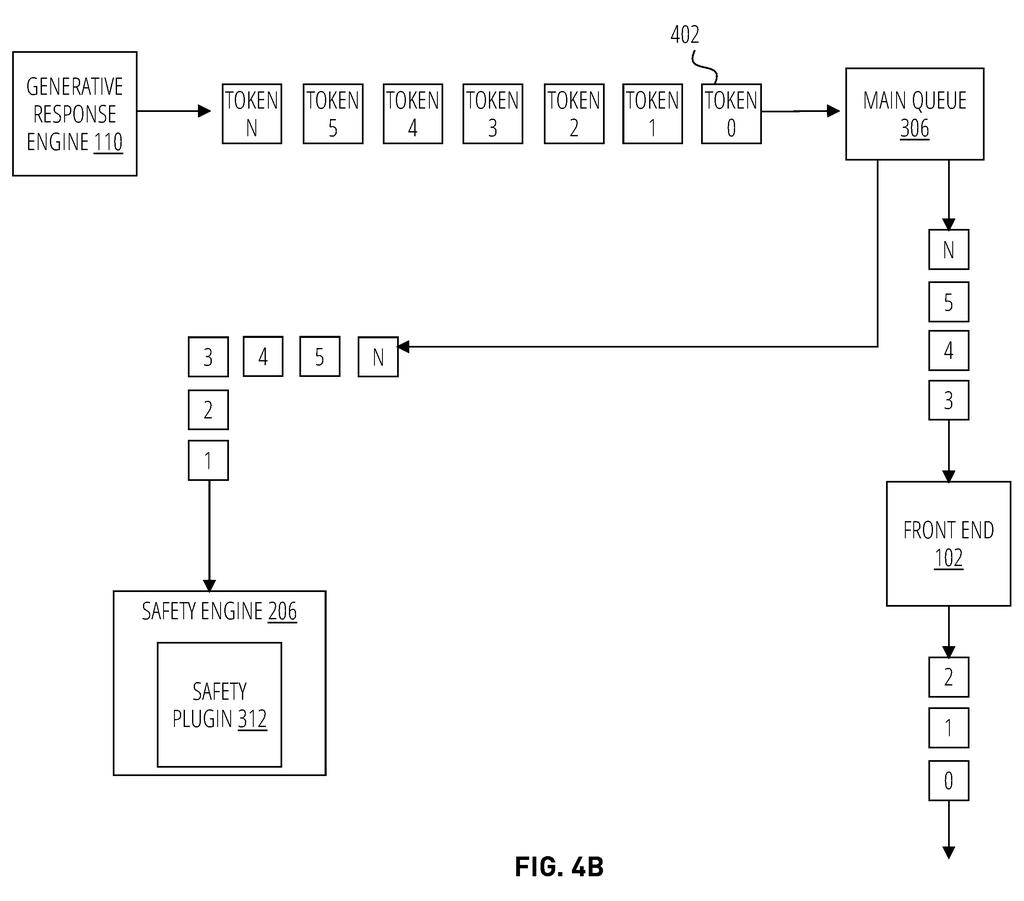
OpenAI's patent application goes after that lag. The AI's reply is split into small pieces called tokens (think of them as word-sized chunks). Each piece gets a number and travels down two lanes at once: one lane to you, one to a safety checker. The checker is allowed to trail behind, but only by a set number of pieces.
If the checker falls too far behind, your reply pauses until it catches up. If it spots a problem, the reply is cut off and you can be shown a message instead. Set the gap to zero and every piece is fully checked before you hear it.
… outputting, to a front end of the generative response engine, tokens from the token stream while a difference between an index of a respective output token and an index of the respective token processed by the safety plugin is less than a buffer.
Translation: The system streams words to users before safety checks finish by keeping the delay within a set limit.
How the three queues and the buffer work
The claims cover a method where a safety engine receives a stream of tokens from a generative AI (the model that writes the text or audio). Each token carries an index, which is just a running number. The engine checks tokens with a safety plugin (a small checking module), and tokens go on to the front end, the part you see and hear, only while the gap between the token being shown and the token being checked stays under a set buffer.
The filing describes the plumbing in three parts:
- A main queue collects every token and makes two copies.
- A safety queue feeds one copy to the checker.
- An output queue feeds the other copy to the front end.
The example in the filing uses a buffer of three tokens. The screen can show token 3 while the checker is still on token 1, but token 4 has to wait. If a token fails, the engine slips a stop token into the output queue, carrying a note that makes the front end show a message, and it can also tell the AI to stop generating.
Each plugin can have its own buffer, and a buffer of zero means fully checked before output. Example plugins include a voice-drift check on audio, a music detector, and a lookup against a database of copyrighted material. A timeout lets output resume if a check stalls, and an administrator can switch plugins off.
The technology employs tunable processing to ensure compliance with safety guidelines while maintaining real-time output. It utilizes a main queue to index output tokens, feeding them into both a safety queue and an output queue.
Translation: It balances strict safety rules with fast responses by tracking words in separate processing lines.
Why letting a few words slip out unchecked matters
If you talk to an AI by voice, a half-second pause after every sentence is enough to make it feel like a bad phone line. This filing is about removing that pause without removing the safety checks. Your reply keeps flowing while checkers run alongside, looking for things like a voice that strays from an approved one, music, or a match to copyrighted material.
For OpenAI, which names ChatGPT as one example model in the filing, the appeal is a dial. Each checker gets its own buffer, so a quick, cheap check can trail well behind while a sensitive one can be set to zero and clear every piece before you hear it. The filing also says testing can be used to find a buffer that adds no noticeable lag.
This is the sixth OpenAI patent we've tracked since September in our AI guardrails race watch, following one on voice identity protection and one on two-model comparison.
The cost is built into the design: a few pieces of an AI's reply can reach you before anything has checked them. A buffer of three, as in the filing's example, is a sliver of a sentence. Turn it up and the exposure grows, and spoken words cannot be taken back.
The fail-safes also favor keeping the conversation going. If a checker stalls, a timeout lets output continue, and an administrator can switch a checker off entirely. For a casual chat app that is fine, but any check guarding something serious deserves a buffer of zero.
The per-checker buffer is the saving grace, since a sensitive check can give up the speed exactly where it matters. The trade is worth it if those zero settings get used honestly.
Get our take in your Top Stories
Liked this breakdown? Add Patentlyze as a preferred source on Google, and our plain-English take shows up more often in your Top Stories the next time OpenAI patent news breaks.
There are more where this came from
We read every patent application Big Tech publishes and send you the ones worth knowing. Plain English, free, every week.
The drawings
10 drawing sheets from US 2026/0340286 A1 · click any drawing to enlarge


Show the other 2 sheets


Want this weekly breakdown for a company we don't cover? Patentlyze Pro →
Be the first to weigh in