
OpenAI Files Patent for a Chatbot That Writes Its Own Notes About You
OpenAI's patent application has a background AI read your old chats and write short notes about who you are, then hands those notes to the chatbot before it answers you.
How OpenAI's chatbot writes notes about you
Ever told a chatbot about your job, your dog and your dinner plans, only to have it greet you like a stranger next time? That's the gap OpenAI is trying to close here.
The filing describes a system where, between your chats, a separate AI pass reads through your old conversations and writes short memories about you in plain sentences. Think 'Jane enjoys exploring new and innovative dining experiences' rather than a pile of transcripts. Those notes sit in a profile tied to your account, alongside a list of simple facts, like your pet's name or your favorite coffee shop.
When you start a new chat, the system slips those notes in before the AI answers. So it can lean on what it knows about you, and it can go dig up an old conversation if a topic sounds familiar. The patent also describes keeping separate sets of notes for, say, your work life and your personal life.
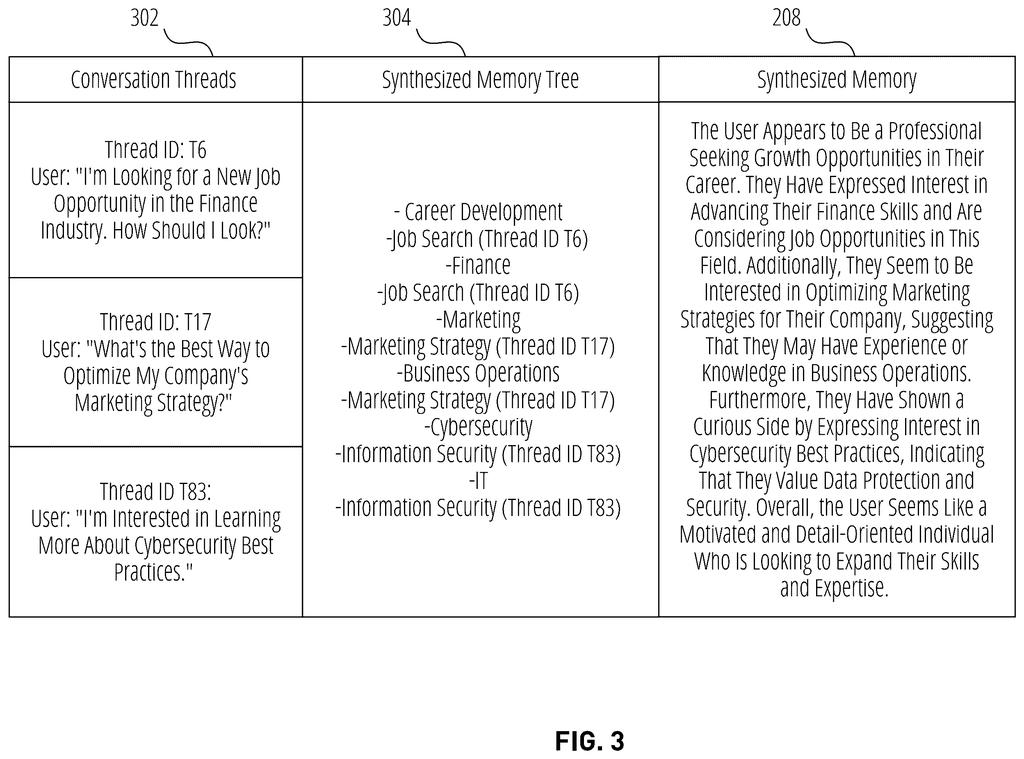
… synthesized memories are natural-language narrative descriptions of the user account that were generated by a language model that periodically analyzes past conversation threads involving the user account in an asynchronous offline process prior to receipt of the prompt …
Translation: The bot background reads your old chats to write story summaries about you.
How curated facts and synthesized memories differ
The core claim covers a server that, when you start a new conversation, loads a personalized memory state into the context window (the limited amount of text the AI can read at once) before the model begins answering. The prompt and the memory then go to the language model together.
The memory state has two main parts:
- Curated facts: short plain-language statements about you and your preferences, kept in a 'personalization notepad.' The AI can add to it when you share something or react to an answer.
- Synthesized memories: narrative descriptions of you, written by a language model that periodically reviews your past chats in an offline background process. Each one sums up connections across several conversations.
Other versions add more. The memories can include a topic list, so the AI knows an old conversation exists and can search an archive for details. A specialized AI can revise memories over time and move retired ones into the archive. Memories can also be split into usage profiles, such as business and personal, with only the fitting set pulled in.
If the window fills up, the AI can drop or shorten parts of the memory to make room.
Synthesized memories include listings of topics and summaries of topics, which are created by evaluating past conversation threads and determining what information should be synthesized into the memories …
Translation: It organizes your past chats into topic lists to personalize future replies.
Why your chatbot could stop forgetting you
If you use a chatbot as an assistant, one of the most common annoyances is repeating yourself. A system like this could mean answers that already reflect your job, your tastes and your running projects, without you pasting in background each time. The filing's trip-planning example shows the idea: the AI links a user's love of trying local food to a festival invitation and suggests food stalls to visit.
It also means the AI is writing descriptions of you, including guesses about your personality and values drawn from how you write. The filing says those inferences come from patterns in your language, not from anything you stated. How much say people get over those notes will matter as much as how well they work.
One more thing to know: the patent examiner has already issued a final rejection on this application. OpenAI can still amend the claims or appeal, and nothing described here has been approved yet.
OpenAI's fourth filing we've tracked in our AI assistants that remember you watchlist since August builds on earlier applications, including one that profiles users for apps and one that learns internal code names.
Every memory system trades convenience for the risk of being wrong about you. A summary that says you are cautious with money, or a cybersecurity beginner, is a guess squeezed from a few chats. Once that guess sits in the AI's working space, it can color every answer that follows.
The design limits the damage in sensible ways. Memories get revised, old ones move into an archive, and the AI is trained to decide whether to use them at all. Those fixes carry costs too: more background processing, a limited working space that has to be trimmed, and a second AI making judgment calls about what is worth remembering.
The trade looks worth it for people who lean on a chatbot every day. Still, the quality of those summaries decides everything, and the filing gives no numbers on how often they hit the mark.
Get our take in your Top Stories
Liked this breakdown? Add Patentlyze as a preferred source on Google, and our plain-English take shows up more often in your Top Stories the next time OpenAI patent news breaks.
There are more where this came from
We read every patent application Big Tech publishes and send you the ones worth knowing. Plain English, free, every week.
The drawings
8 drawing sheets from US 2026/0310729 A1 · click any drawing to enlarge


Want this weekly breakdown for a company we don't cover? Patentlyze Pro →
Be the first to weigh in