
A New Microsoft Patent Rewrites Your AI Questions Using Wording That Worked for Others
Every time you copy an AI answer, or ignore it and type a follow-up, Microsoft's patent application would treat that as a vote on the question that produced it. The highest-scoring questions then get stitched into other people's future questions before they ever reach the AI.
How Microsoft's patent upgrades your AI questions
Every time you ask an AI chatbot something and get a so-so answer, you reword the question and try again. Then you probably do it a third time. Microsoft's new patent application tries to cut that loop short.
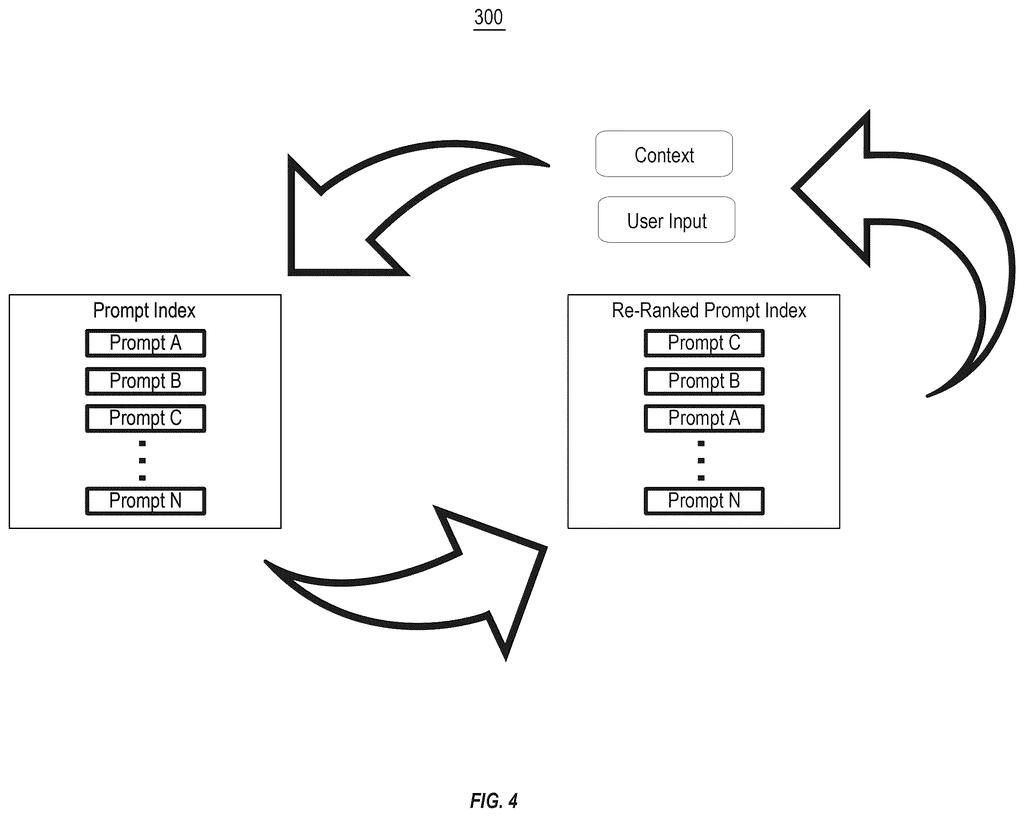
Here is the idea. Microsoft keeps a ranked list of past questions (called prompts) along with how well each one worked. Success is judged by what people do next. If someone copies or accepts the answer, that prompt earns points. If they reject it or type a follow-up, it loses points. When you write a new prompt, the system finds top-scoring ones from a similar situation and mixes their wording into yours before it goes to the AI.
You might never see the rewrite. The filing says it can happen invisibly, or it can show you the improved version first so you can approve it and pick up some tricks.
… generating an augmented new prompt by augmenting the prompt with content from one or more selected prompts selected from a prompt index, the one or more selected prompts being top-n ranked prompt(s) selected from the prompt index based on a determined success of the one or more selected prompts for a matching context …
Translation: The system improves your question by adding successful phrases from past questions that match your situation.
How the prompt index ranks winners and losers
The system keeps a prompt index (a searchable, ranked library of past prompts). Each entry stores the prompt text, the context it was used in, and a success score. Context can include the programming language, the codebase being worked on, the person asking, the AI model, or the user's company or group.
Scores change based on how people react to the answers:
- Copy or accept part of the answer, and the prompt's score goes up.
- Reject the answer or type a follow-up, and the score goes down.
- The description also mentions thumbs-up and thumbs-down buttons as feedback.
When you write a new prompt, for example by typing in a coding tool's autocomplete or in a chat box, the system acts before anything is sent to the AI. It picks the top-n ranked prompts (the description says one, two, three or more) whose context matches yours. Their content is either swapped in for parts of your prompt or added on top. Lower-scoring prompts are left out. The answer comes back, your reaction updates the scores of the prompts that were used, and the loop repeats.
The index can live on your own machine or on a remote server shared by many users, and the filing says it can draw on prompts from different organizations and social networks. The claims cover three versions: a method that augments the prompt, a method that also builds the index, and a computer system that runs it.
Systems and methods are provided for processing and augmenting prompts based on indexed prompts that are determined to be contextually relevant and successful.
Translation: The patent covers technology that looks up relevant and proven prompts to help the AI give better answers.
Why your copy button becomes a ranking signal
If you use AI helpers for coding or writing, the pitch is fewer rounds of rephrasing. The filing says its goal is to cut the back-and-forth needed to get a useful answer, which it calls a waste of both computing power and your time. Your wording would get a boost from what has worked for people in similar situations, such as the same programming language or the same codebase.
It also changes who writes your prompts. Wording from other people could blend into yours, and the filing says the system can hide the rewrite, partly because the borrowed text may hold trade-secret prompting know-how. Or it can show you the new version first, which the filing says helps teach good prompting. One catch to watch: copying an answer is a loose sign that it worked, so the scoreboard is only as good as people's habits.
Microsoft's 55th filing in our Enterprise AI coverage since May follows sorting spreadsheet reviews with AI and rewriting recorded speech, adding to the set of office productivity ideas we've tracked.
Claim 1 covers any prompt sent to any machine learning model, with no restriction to a particular product, industry, or use case. That scope is intentionally wide.
What the claim actually requires is a specific loop: an incoming question gets rewritten using high-ranking past prompts chosen for matching context, the model answers, and then the user's reaction reshuffles those rankings for next time. Every part of that cycle, the rewrite, the answer, the feedback, the re-ranking, must be present for something to fall within the claim.
A static library of saved prompt templates, one that never updates based on how users respond, would not meet that description. If granted as written, the patent would reach any system that runs all four steps together, across any application where people type questions into AI.
Get our take in your Top Stories
Liked this breakdown? Add Patentlyze as a preferred source on Google, and our plain-English take shows up more often in your Top Stories the next time Microsoft patent news breaks.
There are more where this came from
We read every patent application Big Tech publishes and send you the ones worth knowing. Plain English, free, every week.
The drawings
6 drawing sheets from US 2026/0350043 A1 · click any drawing to enlarge


Want this weekly breakdown for a company we don't cover? Patentlyze Pro →
Be the first to weigh in