
Nvidia Patents a Hierarchy-Aware Document Retrieval System for AI Search
When you ask an AI a question, it usually searches a flat pile of text chunks — no sense of whether a sentence belongs to an introduction, a subsection, or a footnote. Nvidia's new patent wants to change that by teaching retrieval systems to respect how documents are actually structured.
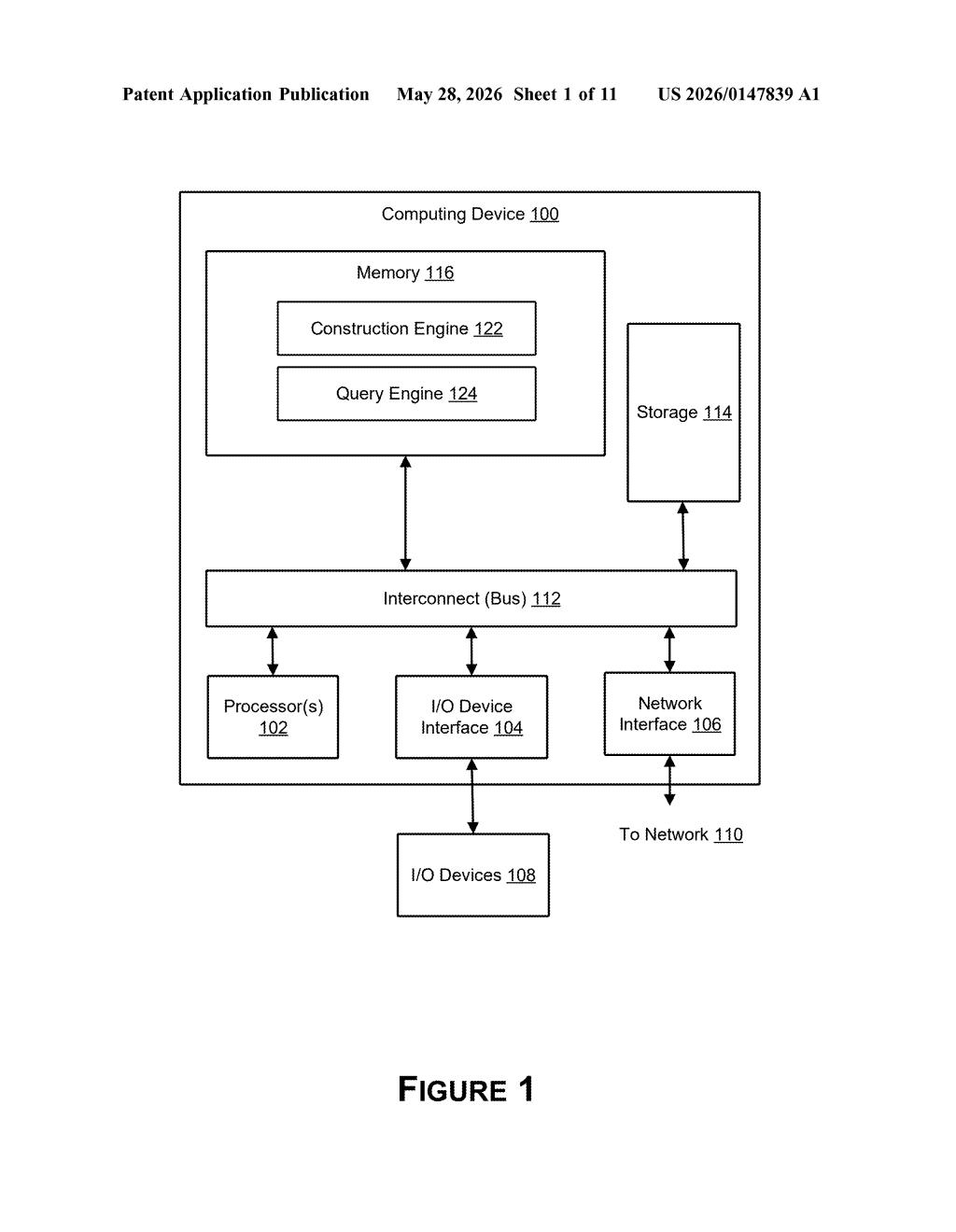
How Nvidia's document tree search actually works
Imagine asking a research assistant to find the most relevant passage in a 200-page report. A good human reader wouldn't treat every sentence equally — they'd know that a sentence under a section titled 'Key Findings' probably deserves more weight than one buried in an appendix. Most AI search systems today don't think that way.
Nvidia's patent describes a retrieval method that organizes a document into a tree structure — chapters at the top, sections below, individual paragraphs at the leaves. When you ask a question, the system scores every node in that tree for relevance, then combines a child node's score with the scores of its parent nodes above it. A paragraph that's both locally relevant and sits under a highly relevant section gets a higher combined score.
The result is a retrieval system that understands context the way a document was actually meant to be read — not just which sentence matches your query, but whether that sentence is in the right part of the document to begin with.
How parent scores bubble down to child chunks
The patent describes a system built around a hierarchical document tree — a data structure where a source document is broken into nested nodes: think chapter → section → subsection → paragraph. Each node is associated with a chunk of text from the original document.
When a query comes in, a machine learning model (likely an embedding or cross-encoder model) generates a similarity score for every node in the tree independently, measuring how relevant that chunk is to the question being asked.
The novel step is what happens next: the system calculates a combined similarity score for each child node by blending its own raw score with the scores of its ancestor nodes (its parent, grandparent, etc.). This means a paragraph-level chunk inherits relevance signal from the section and chapter it belongs to — context that a flat retrieval system would completely ignore.
- Document is parsed into a parent-child node tree
- ML model scores each node against the query
- Child scores are recalculated using weighted parent scores
- Final results are ranked by combined scores
The final query result is generated from those combined scores, surfacing the chunks that are relevant both locally and structurally.
What this means for RAG-based AI applications
This patent targets a well-known weak spot in Retrieval-Augmented Generation (RAG) — the architecture behind most enterprise AI chatbots and document Q&A tools. Standard RAG splits documents into flat chunks and retrieves them purely by vector similarity, which means it often misses context: a sentence can look relevant in isolation but be totally misleading if you don't know it's in a disclaimer section.
For Nvidia, this is squarely in the territory of its NeMo and NIM microservices ecosystem, where enterprises build custom AI pipelines on top of Nvidia hardware. A retrieval improvement that makes RAG more accurate is a direct value-add for selling inference infrastructure — it's not just a paper idea.
This is a targeted, credible improvement to a real problem in production RAG systems. It's not flashy AI research — it's the kind of careful engineering that makes enterprise document search actually trustworthy. If Nvidia ships this in a retrieval microservice, it's the sort of quiet capability upgrade that makes customers stick around.
There are more where this came from
We read every patent application Big Tech publishes and send you the ones worth knowing. Plain English, free, every week.
Want this weekly breakdown for a company we don't cover? Patentlyze Pro →