
Samsung Patents a Ray Simulation Correction Method for LiDAR Sensors
LiDAR sensors are only as good as the light signals they receive — and in the real world, those signals get messy. Samsung's new patent describes a way to pre-calculate how much a reflected light signal has been distorted, then correct for it on the fly.
What Samsung's LiDAR ray-simulation fix actually does
Imagine a LiDAR sensor — the spinning laser-based radar used in self-driving cars and some robotics — trying to measure how far away a stop sign is. The light pulse it fires bounces back, but depending on the angle, the surface texture, or even the geometry of the scene, the returning signal can be weaker or stronger than expected. That mismatch can throw off distance and speed calculations.
Samsung's patent tackles this by running an optical ray simulation — essentially a virtual model of how light should behave in a given scene — to generate a correction coefficient. That coefficient is then applied to the real incoming signal before the sensor calculates distance or speed.
Think of it like auto white-balance on a camera: your phone doesn't just record raw light, it adjusts for the lighting conditions it expects to find. Samsung's approach does something similar for LiDAR, using physics-based simulation rather than just raw signal processing.
How the optical ray simulation generates correction coefficients
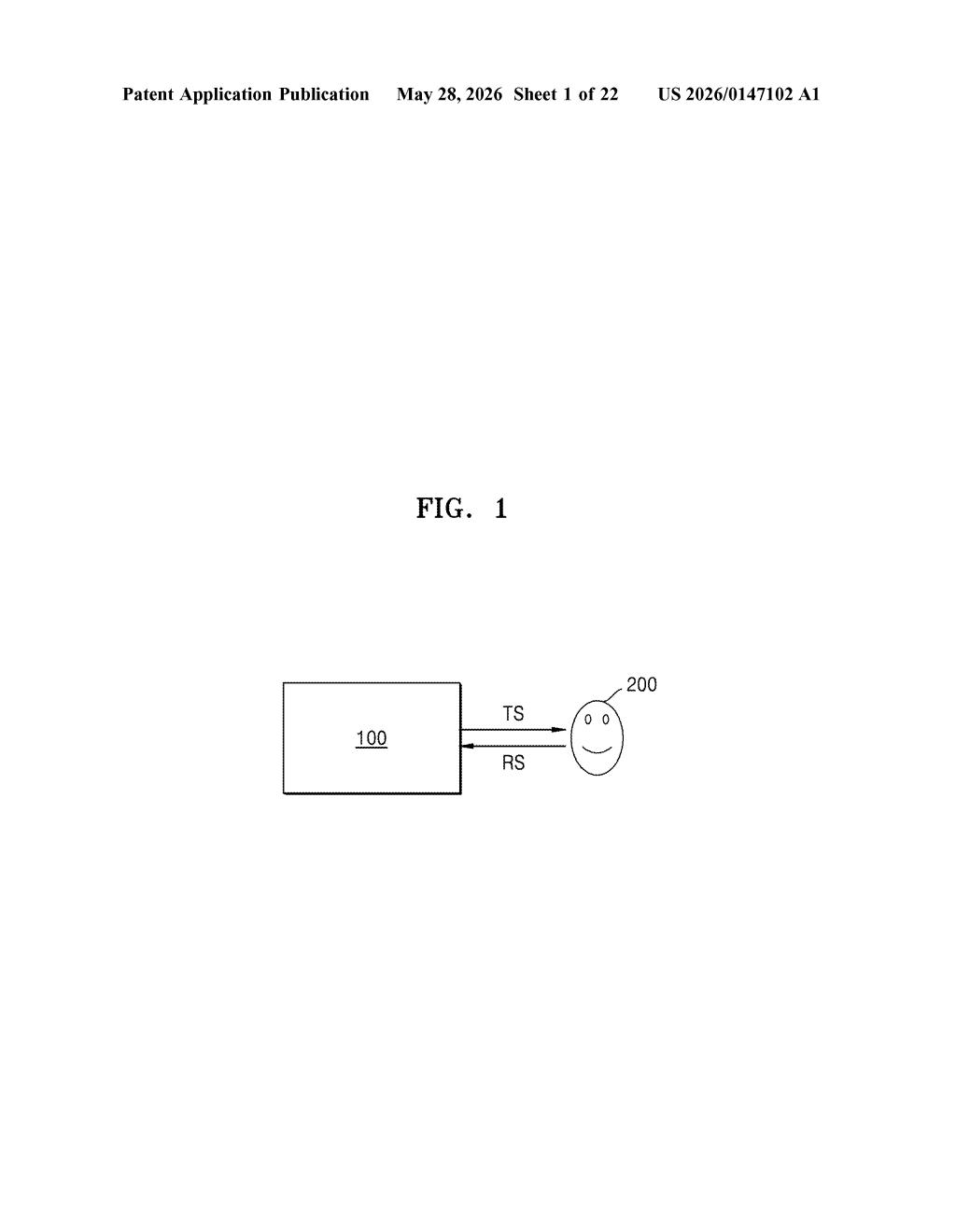
The core of Samsung's method is a four-step pipeline. The LiDAR device fires a laser pulse (the transmission signal), receives the reflected echo (the reception signal), runs an optical ray simulation to model expected light behavior, and uses the output of that simulation — a correction coefficient — to normalize the received signal before extracting distance or velocity data.
The correction coefficient is the key innovation here. Rather than treating every returned pulse identically, the system accounts for how light intensity should vary based on the physical properties of the scene. Optical ray simulation (think ray tracing, the same technique used in realistic 3D rendering) traces hypothetical photon paths through a scene model to predict signal strength. The gap between predicted and received intensity is what gets corrected.
This matters because LiDAR signal strength isn't uniform. Surfaces at oblique angles, retroreflective materials like road signs, and objects at varying distances all return light differently. Without correction, those variations can cause the sensor to misread distances or flag false speed changes.
Claim 1 is method-based, which means Samsung is staking out the process of using simulation-derived coefficients — not just a specific hardware implementation — making the coverage potentially broad across different LiDAR form factors.
What this means for Samsung's autonomous and AR sensor ambitions
LiDAR accuracy is a foundational problem for autonomous vehicles, robots, and any device that needs reliable spatial awareness. If Samsung is actively filing patents in LiDAR correction methods, it signals investment in sensor technology that could appear in future Samsung mobile devices, AR hardware, or components sold to automotive OEMs — all areas where the company has existing or rumored initiatives.
For you as a consumer, better-corrected LiDAR means fewer ghost readings and more reliable depth sensing — whether that shows up in a future Galaxy phone's 3D scanning feature or in a Samsung-supplied sensor inside a vehicle. The simulation-based approach is also computationally interesting: it front-loads the physics math rather than doing brute-force signal averaging, which could mean faster and more power-efficient correction.
This is a solid, focused patent on a real and well-understood problem in LiDAR engineering — signal intensity variation causes measurement errors, and pre-correcting via simulation is a legitimate approach. It's not a flashy concept, but Samsung filing it suggests they're doing serious sensor work, not just assembling off-the-shelf LiDAR components. Worth watching if you follow Samsung's hardware roadmap.
There are more where this came from
We read every patent application Big Tech publishes and send you the ones worth knowing. Plain English, free, every week.
Want this weekly breakdown for a company we don't cover? Patentlyze Pro →