
Sony Patents a Two-Board Car Camera With a Built-In Metal Shield
Sony is patenting a car camera that uses a metal plate sandwiched between two separate circuit boards, one for capturing images and one for transmitting data. It's a quiet structural fix for a real interference problem inside modern dashcams and ADAS cameras.
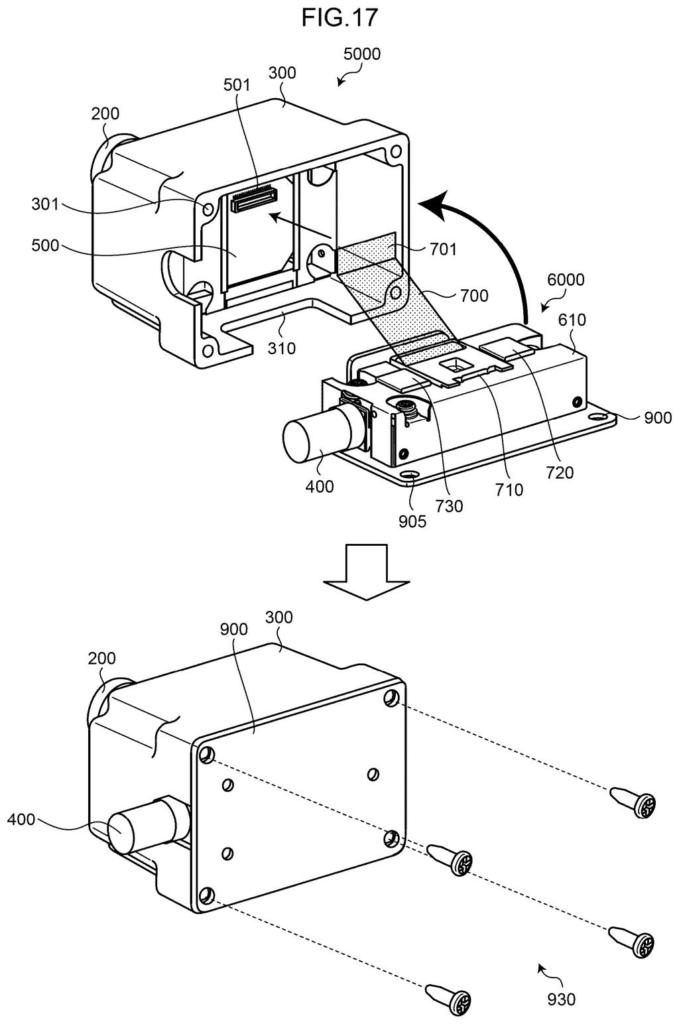
What Sony's metal-plate car camera actually does
Imagine your car's camera has two jobs: capturing the road ahead and instantly sending that footage to your car's safety systems. In most cameras, the circuit doing the capturing and the circuit doing the transmitting sit close together inside one small housing. That's a problem, because the transmitter can flood the imager with electrical noise, degrading the picture.
Sony's patent splits those two jobs across two separate circuit boards and places a metal plate between them. The metal acts as a physical barrier that blocks electrical interference from traveling between the boards.
The design also integrates that metal plate into one of the camera's outer metal casings, so it does double duty: it's both a structural wall and a shield. The result is a cleaner image signal and a more compact package than you'd get by trying to shield each board separately.
How the metal plate sits between Sony's two circuit boards
The patent describes an in-vehicle camera built around three key layers: a first substrate (circuit board) dedicated to image processing, a second substrate dedicated to data transmission (sending video or sensor data to the car's network), and a metal plate sitting between them.
The core problem this solves is electromagnetic interference (EMI), which is electrical noise generated by one circuit that disrupts the operation of a nearby circuit. In a camera, the high-frequency signals used for data transmission can bleed into the image sensor's circuitry, introducing artifacts or reducing image quality.
Sony's key design move is making the metal plate a structural part of either the first or second metal storage case (the outer housing that encloses each board). That means the shield isn't an added component bolted in as an afterthought; it's formed from the wall of one of the enclosures itself.
The benefits of this approach include:
- Reduced EMI between the image-processing and data-transmission boards
- A more compact overall camera body, since no separate shielding layer is needed
- Better heat dissipation, since metal casings conduct heat away from the electronics
What this means for automotive camera reliability
Cars increasingly depend on cameras for safety features like automatic braking, lane-keeping, and parking assist. Those cameras need to work reliably in electrically noisy environments alongside radios, radar units, and high-voltage EV systems. A simple structural change that reduces internal interference can directly improve the consistency of the image data feeding those safety systems.
For Sony, which supplies image sensors and camera modules to major automakers, this kind of incremental engineering detail is exactly where long-term supplier relationships are won. It won't show up in a spec sheet, but a camera that delivers cleaner images with fewer interference-related failures is a meaningful advantage in a competitive market.
This is straightforward automotive electronics engineering, not a conceptual leap. The metal-plate shielding idea is well-established; what Sony is patenting is a specific integration of that shield into the structural casing of a two-board camera module. It matters mostly to camera module engineers and automotive procurement teams, not to consumers.
There are more where this came from
We read every patent application Big Tech publishes and send you the ones worth knowing. Plain English, free, every week.
The drawings
20 drawing sheets from US 2026/0219554 A1 · click any drawing to enlarge


Want this weekly breakdown for a company we don't cover? Patentlyze Pro →
Be the first to weigh in