
WhatsApp Patents Silent OTP Forwarding That Kills the Copy-Paste Step
Every time you copy a one-time password from your messages and paste it into an app, you're doing a job that a computer should do. WhatsApp apparently agrees — and has patented a way to make that handoff happen silently, without you touching anything.
What WhatsApp's auto-OTP handoff actually does
Imagine you're logging into your bank's app. It sends you a verification code via WhatsApp, you switch apps, squint at the six digits, switch back, and type them in before they expire. It's annoying, and it's a moment where mistakes happen.
WhatsApp's new patent describes a system where that copy-paste step simply disappears. When a business app needs to verify your identity, it quietly signals WhatsApp in the background. WhatsApp receives the one-time password (OTP) and passes it directly to the business app — no pop-ups, no clipboard, no manual input from you.
The key detail is that the handoff is cryptographically verified. The business app and WhatsApp exchange encrypted metadata upfront, so the OTP only flows to the app that actually requested it. You never see the code, and no other app can intercept it.
How the encrypted metadata links OTP to the right app
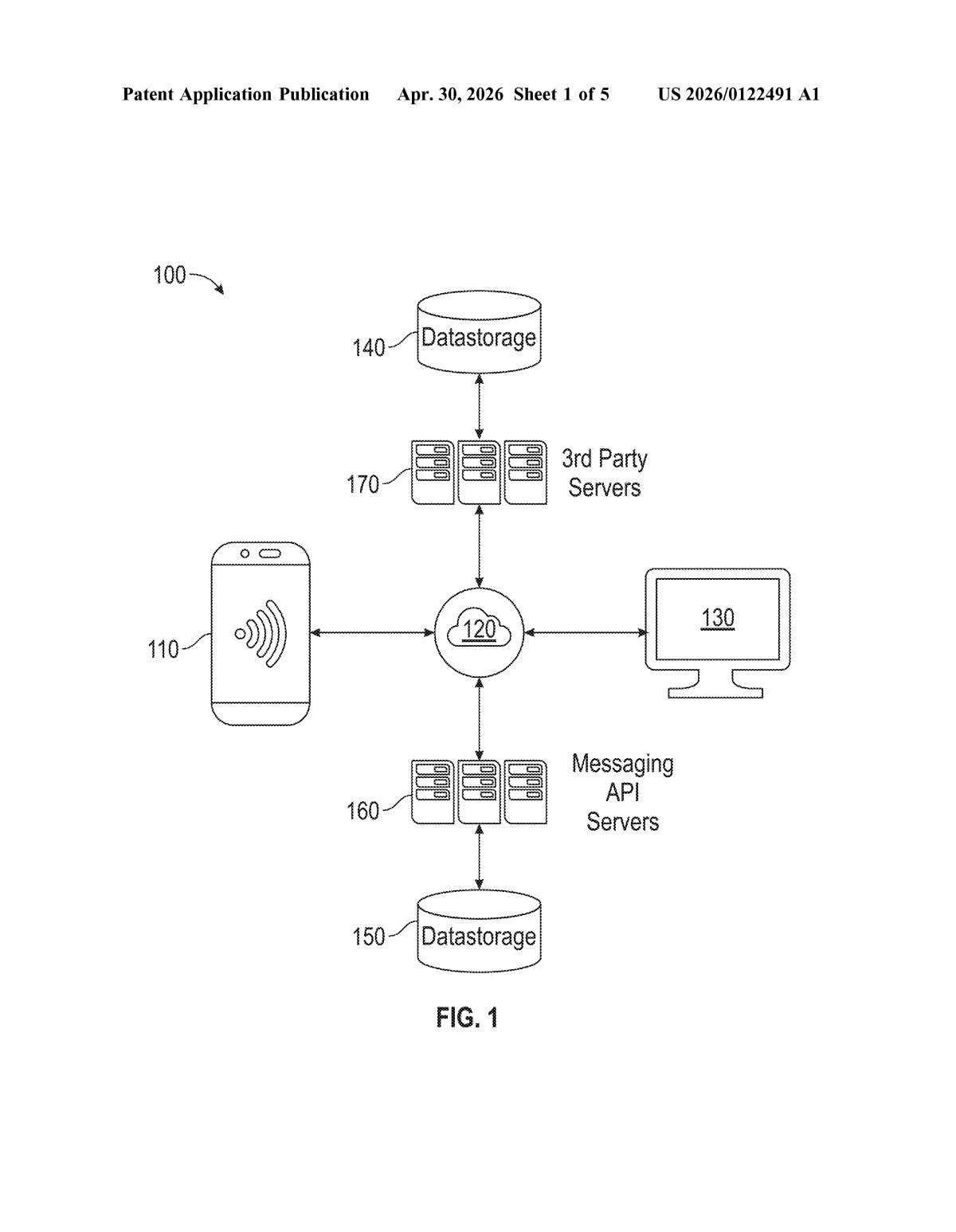
The patent describes a three-party setup: your mobile device, a first server (run by the business — think your bank or an e-commerce platform), and a second server (WhatsApp's messaging infrastructure).
Here's the flow the patent lays out:
- The business app contacts its own server to kick off the OTP request.
- That business server sends an encrypted message containing metadata (think of metadata here as a signed receipt — proof that this specific business app on this specific device made the request) to WhatsApp's servers.
- WhatsApp's server delivers the OTP along with that metadata to the WhatsApp app on your phone.
- The WhatsApp app reads the metadata, confirms it matches the waiting business app, and silently forwards the OTP — no user interaction required.
The encryption and metadata pairing are doing the security heavy lifting. Without them, a malicious app could theoretically position itself to catch any incoming OTP. The metadata binding (essentially a cryptographic handshake proving which app made the original request) closes that door. The patent emphasizes the transfer is described as "seamless, verified, secure and private" — all four words are doing real work here.
What this means for WhatsApp's business app ecosystem
For everyday users, this is a small but genuinely welcome quality-of-life upgrade — the kind of friction that seems minor until it's gone. But the strategic picture is bigger: WhatsApp is already the dominant messaging platform across much of the world outside the US, and businesses in those markets (India, Brazil, Europe, Southeast Asia) increasingly rely on WhatsApp as their primary customer communication channel.
By patenting a verified OTP relay system, WhatsApp is positioning itself as essential authentication infrastructure for the business app ecosystem — not just a messaging pipe, but a trusted identity layer. That's a meaningful expansion of what WhatsApp is to developers and enterprises, and it deepens Meta's lock-in for businesses already using the WhatsApp Business API.
This is a quietly important patent. Passwordless and frictionless authentication has been a holy grail for years, and most solutions require platform-level buy-in (Apple's passkeys, Google's Smart Lock). WhatsApp is carving out its own lane using its massive installed base as the trust anchor — and in markets where WhatsApp is the de facto SMS replacement, that's a genuinely powerful position to be in.
There are more where this came from
We read every patent application Big Tech publishes and send you the ones worth knowing. Plain English, free, every week.
Want this weekly breakdown for a company we don't cover? Patentlyze Pro →