
Samsung Patents an AI That Swaps Out Your Real Data Before Reading Your Messages
Samsung is patenting a clever sleight-of-hand: before your phone's AI model reads your messages or contacts, it quietly swaps your real private data for dummy placeholders — then swaps them back after the AI responds.
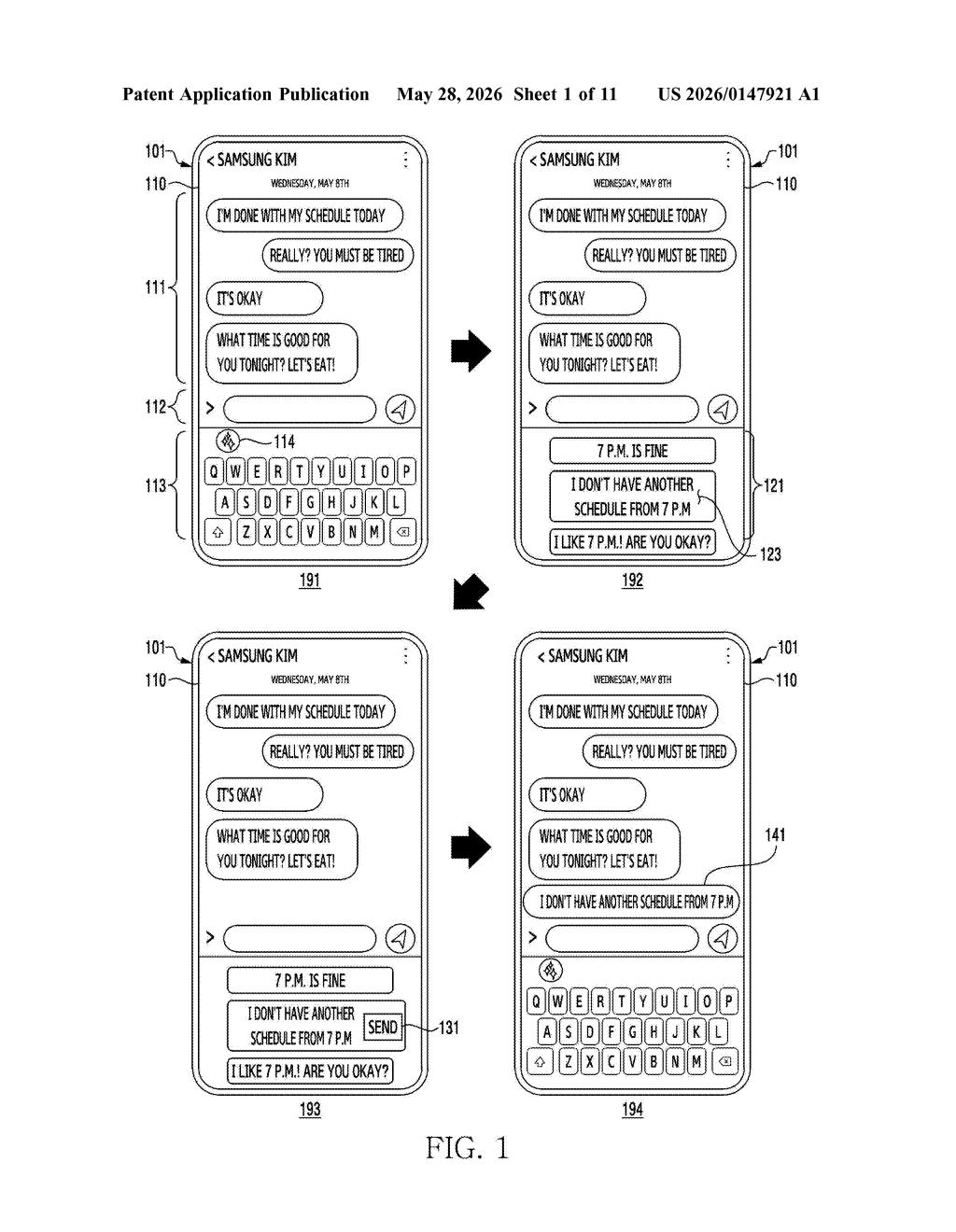
How Samsung keeps your contacts out of the AI's hands
Imagine asking your phone's AI assistant to draft a reply to a text message. To do that well, the AI needs context — who sent it, maybe their name, maybe other details from your contacts. But handing all of that directly to an AI model is a privacy risk, even if the model lives entirely on your device.
Samsung's approach is a kind of shell game. Before the AI sees anything, the phone replaces sensitive personal information — like a contact's name or phone number — with a generic keyword placeholder (think: "[PERSON_1]" instead of "Mom"). The AI drafts its response using only those placeholders. Then, after the AI is done, the phone quietly swaps the real information back in.
The result is a message that reads naturally to you, but your on-device model never actually processed your private data. It's a privacy firewall built right into the response-generation loop.
How the keyword-swap pipeline actually runs on-device
The system divides the phone's memory into two logical zones. The first storage area holds general, non-sensitive context — things the AI model is allowed to read directly. The second storage area holds privacy information: personal identifiers, contact details, or other sensitive data the model should never touch.
When an event triggers a response — say, an incoming message that needs a smart reply — the device builds a prompt that has already been sanitized. Any reference to data living in the second storage area gets replaced with a neutral keyword (a token or tag acting as a stand-in). That scrubbed prompt is what the trained on-device model actually receives and processes.
The model returns a first response — grammatically correct and contextually appropriate, but peppered with those placeholder keywords instead of real names or numbers. The device then performs a final substitution pass, swapping each keyword back for the actual private data from the second storage area, producing a second response that's fully personalized and ready to send.
- Model access is architecturally restricted to the first (public) memory zone
- Sensitive data never enters the model's input or output
- The substitution logic runs entirely on-device, with no server round-trip
What this means for on-device AI privacy on Galaxy phones
On-device AI is supposed to be the privacy-safe alternative to cloud AI — but "on-device" doesn't automatically mean the model can't mishandle your data. A local model that ingests your full contacts list, message history, or location tags still poses risks: model inversion attacks, logging, or future model updates with unexpected behavior. Samsung's architecture draws a hard line in memory, making privacy a structural guarantee rather than a policy promise.
For Galaxy users, this could be the backbone of a more trustworthy Galaxy AI messaging experience — one where the AI feels personal without actually knowing anything personal. It also positions Samsung to differentiate on privacy in a market where Apple's on-device AI story is a major selling point.
This is genuinely thoughtful privacy engineering, not just a checkbox feature. The keyword-substitution approach is simple enough to be fast and auditable, and it sidesteps the harder (and unsolved) problem of training models that are inherently privacy-safe. Whether Samsung ships this as a visible feature or quiet infrastructure, it's the right architecture for on-device AI that handles personal context.
There are more where this came from
We read every patent application Big Tech publishes and send you the ones worth knowing. Plain English, free, every week.
Want this weekly breakdown for a company we don't cover? Patentlyze Pro →