
Apple Patents a Video Call That Hides More of You When Room Tracking Breaks
Apple is patenting a video calling system where your physical room is actively tracked during a call — and if that tracking goes wrong, the system automatically dials back what the other person can see of you.
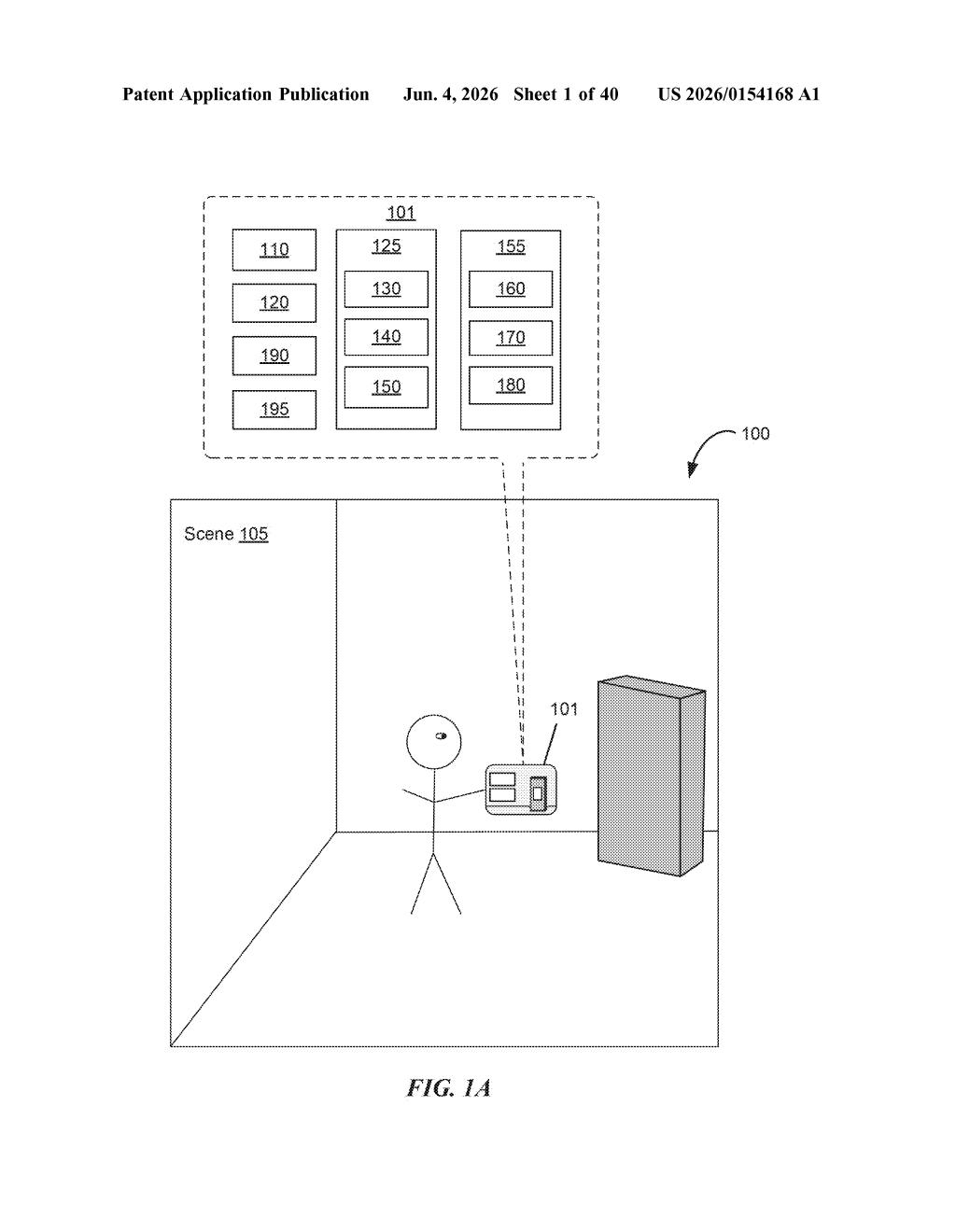
What Apple's environment-tracking video call patent actually does
Imagine you're on a video call where your position in the room actually matters — not just your face in a rectangle, but your movements in space, tracked in real time. That's the kind of call Apple is describing here: a spatially-aware video session where participants appear to move around in their real environments, visible to each other.
Now imagine the tracking glitches. Maybe you stepped into a dark corner, covered a sensor, or the system just lost its bearings. Instead of showing you or the other person something weird or broken, Apple's system would automatically limit your visual participation — essentially pulling back your presence in the call until things stabilize.
It's a graceful fallback. Rather than an AR call that looks fine until it suddenly looks terrible, this approach is designed to keep the experience coherent by detecting the problem and responding to it in real time.
How the system detects tracking errors and restricts visual output
The patent describes a real-time communication system — think a video call platform — that goes beyond standard video feeds. Both the caller and the remote participants are rendered with spatial awareness: a representation of each participant moves based on their detected movement in their respective physical environments. This is the kind of presence-aware experience you'd expect from a spatial computing headset like Apple Vision Pro.
The core innovation sits in the error-handling layer. The system continuously monitors the environment tracking of the physical space surrounding the user's device. If it detects one or more error conditions — situations where the tracking is unreliable or failing — it responds by limiting the user's visual participation in the session.
The patent doesn't spell out exactly what "limiting" looks like (a frozen avatar, a blurred feed, a fallback to standard video?), but the architecture is clear:
- Track the user's environment in real time during a call
- Render remote participants with spatially-aware movement
- Monitor for tracking failures or degraded conditions
- Restrict visual output automatically when tracking breaks down
This is fundamentally about making spatial video calls fail gracefully rather than unpredictably.
What this means for FaceTime and spatial computing calls
If Apple is building this kind of error-handling into a patents framework, it suggests that spatially-aware video calls are a real product direction — not just a Vision Pro demo feature. The specific attention to failure states is telling: you don't patent graceful degradation unless you're planning to ship a system that actually needs it.
For you as a user, this matters because spatial calls gone wrong could be disorienting or embarrassing — imagine your avatar glitching across a room while your colleague watches. A system that detects and contains those moments quietly would make the whole experience feel more polished and trustworthy.
This is a focused, practical patent — not a flashy concept, but the kind of defensive engineering work that makes a product actually shippable. The fact that Apple is thinking carefully about environment-tracking failure modes in video calls is a meaningful signal that spatial FaceTime or something like it is further along in development than we might assume. Worth tracking.
There are more where this came from
We read every patent application Big Tech publishes and send you the ones worth knowing. Plain English, free, every week.
Want this weekly breakdown for a company we don't cover? Patentlyze Pro →