
Google's New Patent Lets an AI Answer Questions About Whatever You're Watching in AR
Imagine asking a question mid-movie and getting an answer that actually accounts for where you are in the story — not just a generic web search. That's the core idea behind Google's new extended reality patent.
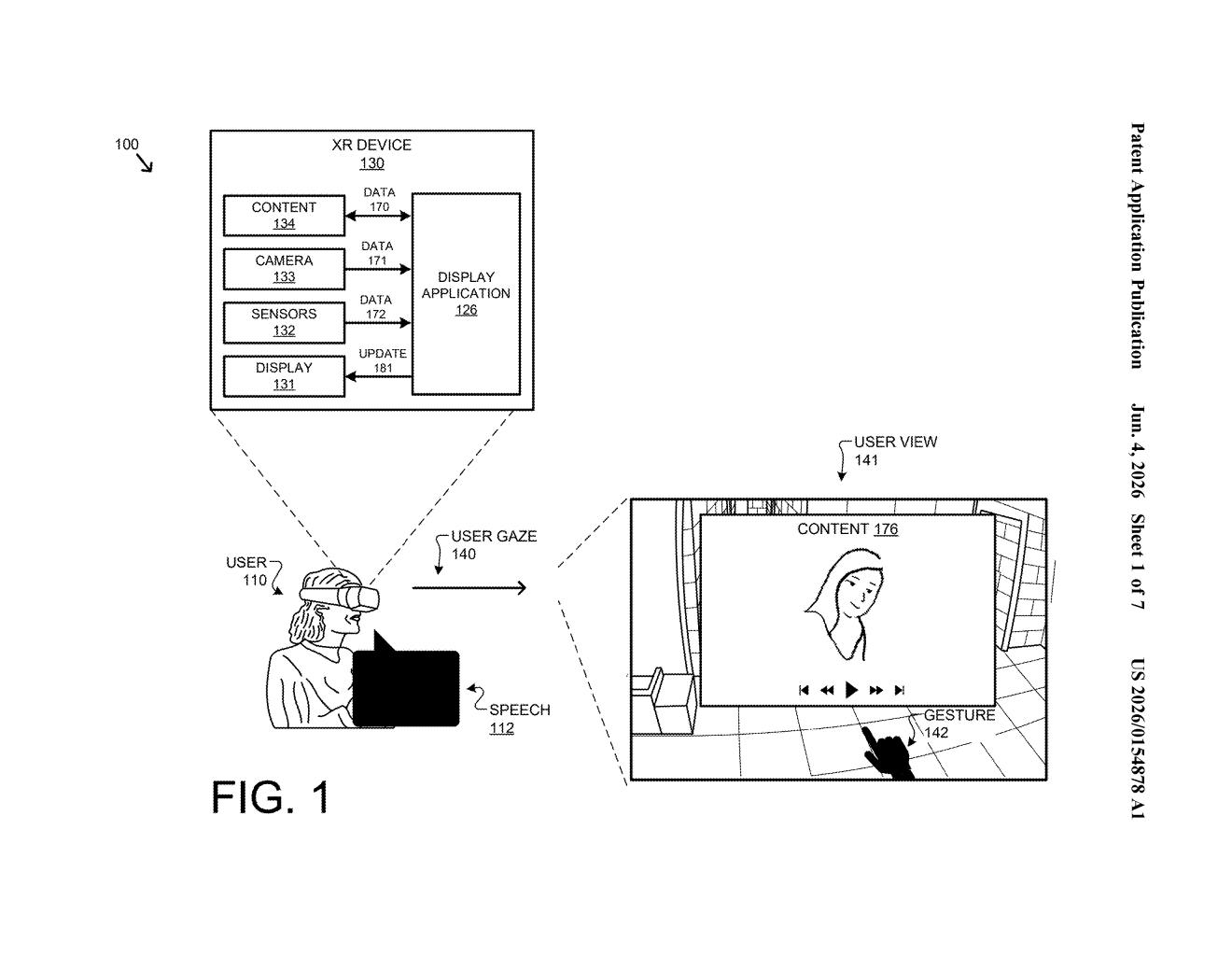
What Google's XR content companion actually does
Picture yourself wearing a pair of AR glasses, watching a documentary. A character mentions an obscure historical event and you think, wait, what was that? Instead of pausing, pulling out your phone, and Googling it, you just ask — and an AI assistant that already knows what you were just watching gives you a response tailored to that exact moment.
That's essentially what Google is patenting here. The system watches the state of whatever content you're viewing — think of it as the AI keeping a running tab on where you are in what you're experiencing — and when you ask something or tap something, it uses both your input and that content context to generate a relevant response.
It's a step beyond a generic voice assistant. The assistant isn't answering blind; it knows the scene, the moment, the content. For XR headsets and smart glasses, where interrupting your experience to switch apps is genuinely disruptive, this kind of context-aware help could make a real difference.
How the model ties your input to content state
The patent describes a system where a device — specifically framed around extended reality (XR) hardware like AR glasses or a mixed-reality headset — displays content to a user and simultaneously tracks the state of that content (essentially a snapshot of what's happening: the timestamp, scene, topic, or data currently on screen).
When a user provides an input — a voice query, a gesture, a tap — the system doesn't just process that input in isolation. It pairs the input with the captured content state and sends both to a model (an AI, almost certainly a large language model or multimodal equivalent) that uses the combination to generate contextually relevant second content: an answer, an overlay, a summary, a related piece of information.
The key technical claim is the tight coupling between:
- What the user sees at the moment of input
- What the user asks or does
- What the model returns in response
This is meaningfully different from a standard voice assistant call, where context is whatever the user explicitly provides. Here, the content state is automatically inferred and included in the model query, without the user having to describe what they're looking at. The second content is then displayed on the same device, presumably as an overlay or panel within the XR environment.
What this means for Google's AR glasses ambitions
For Google, this patent fits squarely into its Android XR strategy and the push to make AI assistants genuinely useful on wearable displays rather than just ported over from the phone. The clunky experience of asking a disembodied assistant a question and getting a generic answer is one of the biggest friction points in current AR hardware — this approach directly targets that.
For you as a user, the practical upshot is an assistant that doesn't require you to narrate your context every time you ask something. Whether you're watching a live sports game, reading an article through AR overlays, or navigating a tutorial, the system already knows where you are. That's a meaningful quality-of-life improvement — and it's the kind of capability that separates genuinely useful XR from glorified smartphone screens on your face.
This is a focused, practical patent that solves a real problem with AI assistants on XR devices: they're dumb about context unless you tell them everything. The context-state coupling is a sensible architectural move, and given Google's investment in Android XR and Gemini, this reads less like a speculative filing and more like a description of something already being built. Worth paying attention to.
There are more where this came from
We read every patent application Big Tech publishes and send you the ones worth knowing. Plain English, free, every week.
Want this weekly breakdown for a company we don't cover? Patentlyze Pro →