
Google Patents a Dual LCoS Light Engine for AR Eyewear Displays
One of the biggest dirty secrets of AR displays is how much light they waste. Google's new patent takes direct aim at that problem by splitting incoming light between two panels instead of discarding half of it.
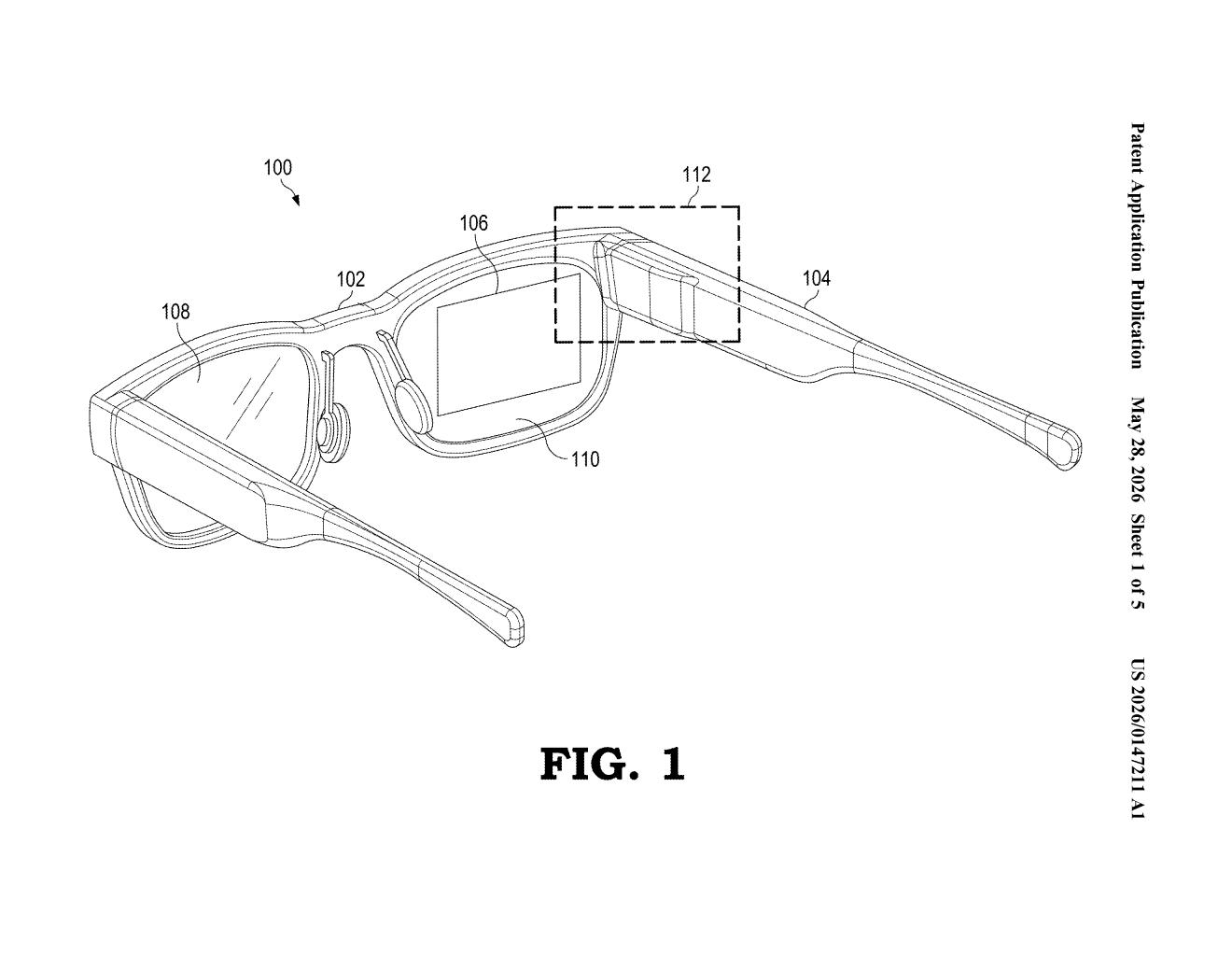
What Google's dual-panel AR light engine actually does
Imagine trying to fill a bucket with water, but your hose only accepts water flowing in one direction — the rest splashes onto the floor. That's roughly what happens inside most AR eyewear displays. The tiny projector chip at the heart of the system only works with light vibrating in one particular orientation, so a big chunk of what the LED produces never makes it to your eye.
Google's patent describes a fix: use two display chips arranged at right angles to each other. Each chip handles one orientation of light, so together they catch nearly all of it. Both chips then reflect their images toward the same spot in the waveguide — the thin piece of glass in the lens that guides the picture to your eye — and the images line up precisely.
The result is a brighter, more efficient display without needing a bigger, hotter battery. For a device you're supposed to wear on your face all day, that trade-off is basically everything.
How two orthogonal LCoS panels split and recombine light
At the core of this patent is a pair of Liquid Crystal on Silicon (LCoS) panels — reflective display chips where each pixel is a tiny mirror covered by a liquid crystal cell that can block or pass light. Standard LCoS chips are polarization-sensitive, meaning they only modulate light that's vibrating in one plane.
A standard LED emits unpolarized light (photons vibrating in every direction). Conventional single-chip AR light engines use a polarizing beam splitter to feed the chip only one polarization, which means roughly half the LED's output is thrown away as heat before any image is formed.
Google's design routes the two orthogonal polarizations to separate LCoS panels:
- The first panel handles the horizontally polarized portion of the LED's output.
- The second panel, mounted at 90 degrees to the first, handles the vertically polarized portion.
- Both panels reflect their modulated light toward the same incoupler (the entry point of the waveguide lens), with pixel arrays aligned so the two images overlap cleanly.
The waveguide then carries the combined image across the lens and delivers it to the wearer's eye. Because both polarizations are used productively, the system extracts significantly more usable light from the same LED, enabling either higher brightness or lower power draw — likely both.
What this means for the brightness of Google's AR glasses
Brightness has been a persistent weak point for waveguide-based AR displays — they're notoriously dim in daylight, which is one reason most consumer AR glasses have struggled to find an audience. A dual-polarization architecture that essentially doubles the optical throughput of the light engine without a bigger LED addresses one of the hardest constraints in the space.
For Google, this filing is a meaningful data point. The company has been quietly building out its AR hardware infrastructure since the Android XR announcement and its partnership with Samsung. A more efficient light engine makes all-day, lightweight smart glasses a more realistic product — and that's the category Google clearly wants to compete in.
This is genuinely useful optical engineering, not a patent-for-patents'-sake filing. Polarization waste is a real and well-known problem in LCoS-based AR displays, and Google's dual-panel approach is a clean, hardware-level solution. It won't ship tomorrow, but if Google is serious about AR eyewear, this kind of efficiency work has to happen first.
There are more where this came from
We read every patent application Big Tech publishes and send you the ones worth knowing. Plain English, free, every week.
Want this weekly breakdown for a company we don't cover? Patentlyze Pro →