
Google Patents an Overlapping Reflective Facet Waveguide for AR Displays
Getting light out of a tiny glass slab — evenly, brightly, and without dark bands — is one of the hardest unsolved problems in AR optics. Google thinks overlapping reflective facets are the answer.
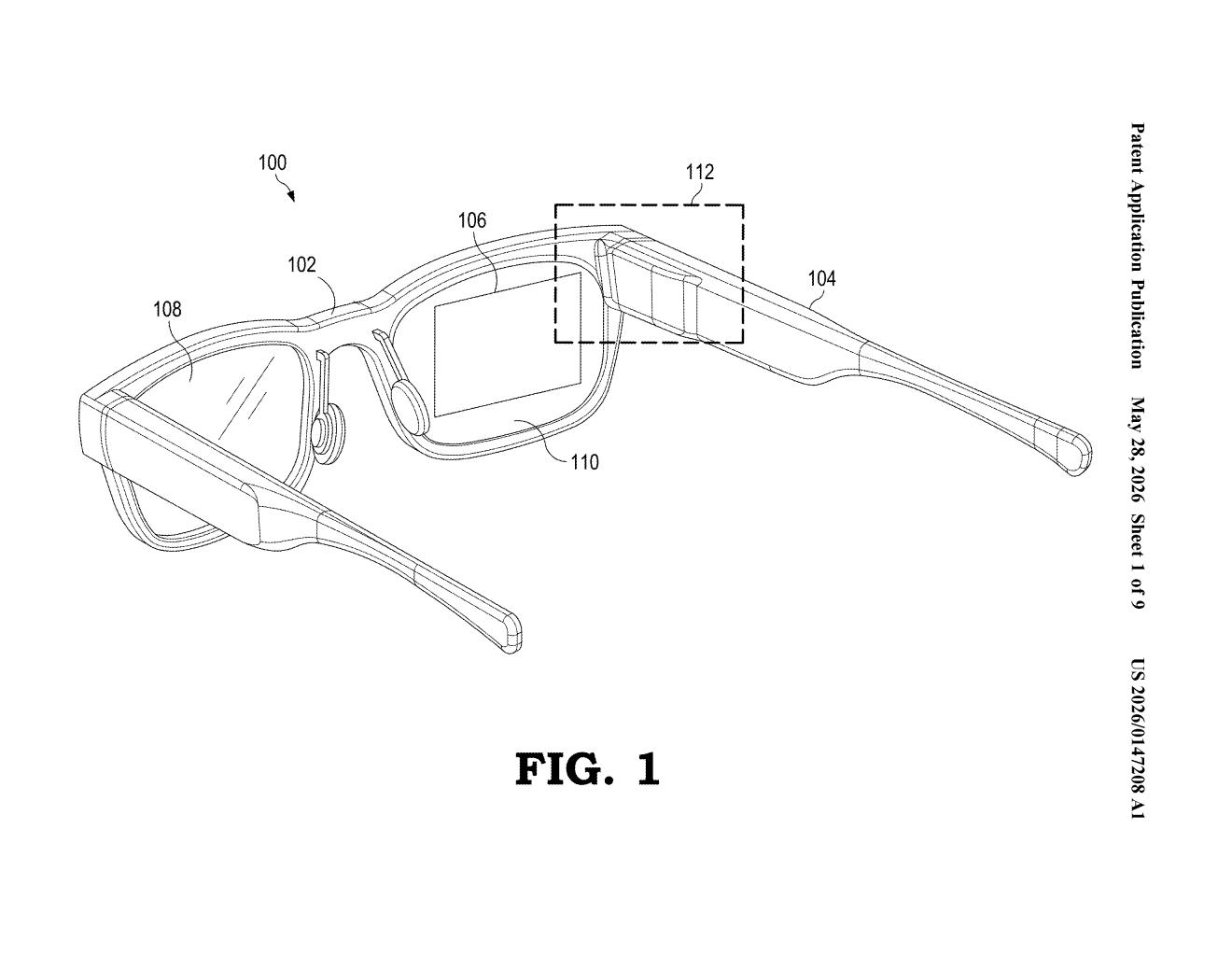
What Google's overlapping facet waveguide actually does
Imagine you're wearing a pair of AR glasses. The digital image you see is actually light that's been injected into a thin piece of glass — a waveguide — bounced around inside it, and then redirected toward your eye. The tricky part is getting that light to exit the glass smoothly and uniformly across your whole field of view, not just in bright patches or with distracting dark gaps.
Google's patent describes a new way to build the part of the waveguide responsible for pushing light out — called an outcoupler. Instead of arranging tiny reflective mirrors end-to-end with gaps between them, Google's design lets each mirror overlap slightly with the next one, like overlapping roof shingles. The gaps that do exist between the physical substrates are filled with a special adhesive that matches the glass's optical properties so light doesn't notice the seam.
The result, in theory, is a more continuous, gap-free exit path for light — which should mean a cleaner, more uniform image with fewer dark stripes or hot spots in whatever AR headset this ends up inside.
How the reflective facets stack and redirect light
At the core of this patent is a redesigned outcoupler — the optical element inside a waveguide that deflects trapped light outward toward the viewer's eye. Traditional outcouplers arrange reflective facets (tiny mirrored surfaces) sequentially, but the physical boundaries between the substrates that hold those facets create gaps, which can cause uneven brightness or image artifacts.
Google's approach uses overlapping reflective facets: the leading edge of one facet physically extends over the trailing edge of the next, similar to how shingles on a roof overlap. This is achieved by stacking multiple substrates — described in the claim as third and fourth substrates — where the facets on each substrate are offset and layered relative to one another.
- Reflective coating: Each facet is a planar face coated with a reflective material, precisely angled to redirect in-plane light toward the eye.
- Index-matched fill: The gaps between stacked substrates are filled with an adhesive or polymer whose refractive index (a measure of how light bends when entering a material) matches the substrate glass itself — making the gap optically invisible to the traveling light.
- First-direction arrangement: The full set of facets is arranged along a single axis, allowing progressive light extraction across the width or height of the display.
The index-matching fill is particularly important: without it, light hitting a gap would scatter or reflect unexpectedly, creating visible artifacts in the image.
What this means for Google's AR glasses ambitions
Waveguide uniformity is a known pain point across every AR headset on the market — including devices from Microsoft, Meta, and Magic Leap. Non-uniform brightness is one of the first things users notice and complain about. A waveguide architecture that closes the gaps between reflective facets at the substrate level, rather than relying purely on coating geometry, is a meaningful engineering step toward cleaner AR imagery.
For Google, this patent fits squarely into its ongoing work on AR hardware — most visibly the Android XR platform and its partnership with Samsung on a headset. Whether or not this exact design ships, it signals that Google's optics team is working on the fine-grained display uniformity problems that determine whether AR glasses feel like real products or expensive prototypes.
This is a solid, focused piece of optical engineering — not flashy, but exactly the kind of incremental waveguide improvement that separates mediocre AR displays from good ones. The index-matched gap fill combined with the overlapping facet geometry is a genuinely clever two-part solution to a problem that has plagued waveguide displays since the first generation. Worth paying attention to if you follow AR display hardware.
There are more where this came from
We read every patent application Big Tech publishes and send you the ones worth knowing. Plain English, free, every week.
Want this weekly breakdown for a company we don't cover? Patentlyze Pro →