
Google Patents AR Glasses That Stop Ghost Images Before They Reach Your Eyes
If you've ever seen a faint double image or halo in an AR headset, you've met stray light. Google's latest patent is specifically designed to kill it before it reaches your eyes.
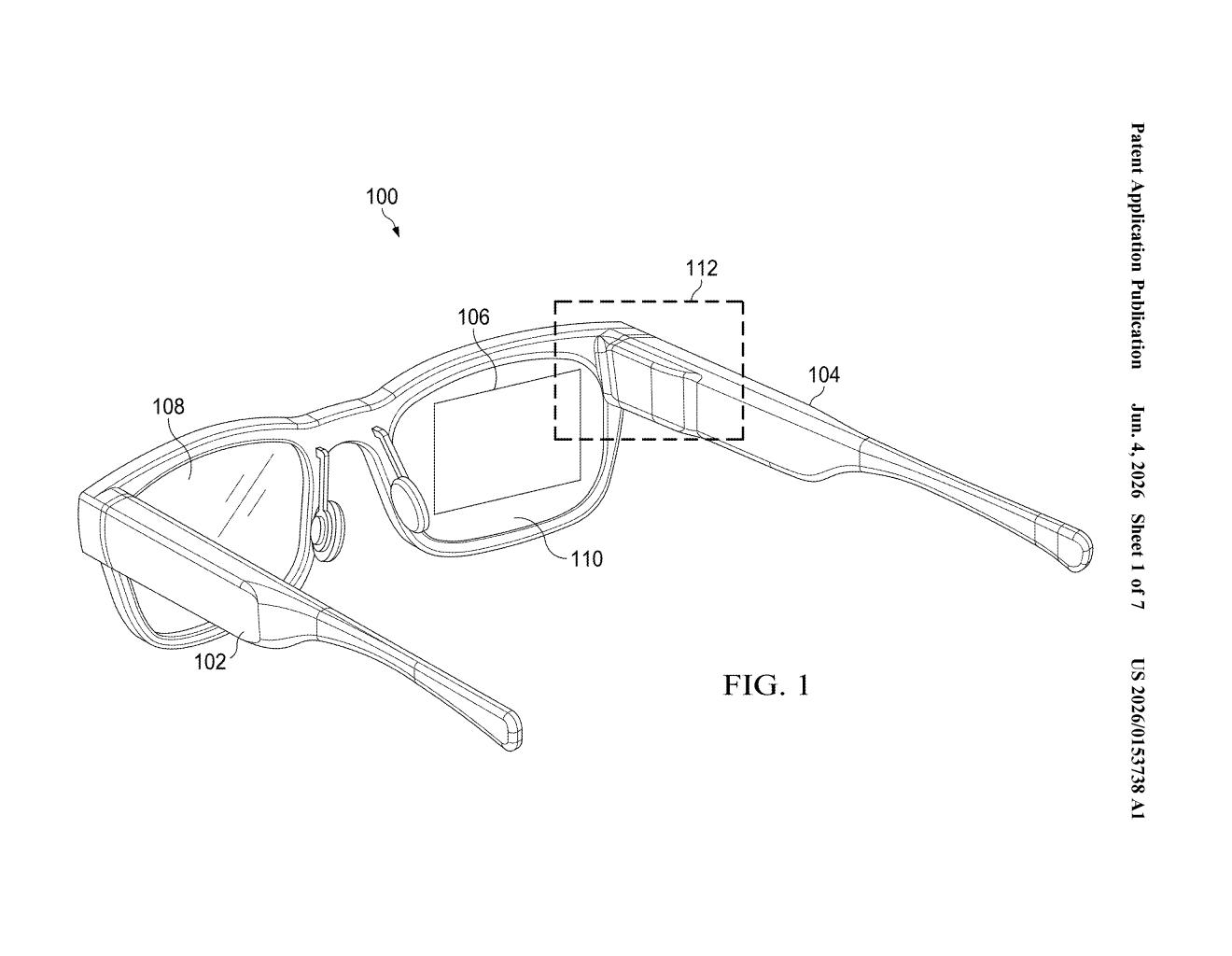
What Google's ghost-image fix actually does for AR glasses
Imagine you're wearing AR glasses that project navigation arrows or notifications onto a transparent lens in front of your eyes. The problem is that some of that projected light bounces around inside the optics and ends up somewhere it shouldn't — creating faint ghost images, halos, or smearing that float in your field of view. It's distracting and makes the display feel cheap.
Google's patent describes a projector system that attacks this problem at the source. Instead of letting that stray light escape and mess with your vision, the design uses specially coated optical components called dichroic prisms — which selectively reflect or pass specific colors of light — to either prevent the unwanted light from forming in the first place or redirect it so it never makes it out of the projector.
The key ingredient is a precise aperture (essentially a tiny window) in one of those coatings. By controlling exactly which light gets through and which gets bounced away, the system keeps your projected image clean and free of visual noise. The result is a crisper, more comfortable AR experience.
How the dichroic prism coatings trap stray light
The patent describes a projector built around a combiner — the optical assembly that merges multiple light sources (think red, green, and blue) into a single image beam. The combiner uses multiple dichroic prisms (optical elements that split or combine light by color using thin-film interference coatings) arranged in sequence.
Each internal surface of the combiner has a specialized coating that transmits light of one polarization or wavelength state while reflecting another. This is the core trick: light that's supposed to pass through does, and light that isn't gets reflected away. A critical addition is a first aperture — a precisely sized opening in one of those coatings — that controls the exact path of the intended beam and limits where stray reflections can go.
The system tackles the artifact problem two ways:
- Reduce stray light generation — the coatings and aperture geometry are tuned so fewer unwanted reflections occur in the first place
- Redirect stray light — any stray light that does form is steered into a dead end inside the projector housing, so it physically cannot exit and reach the user's eye
Multiple light sources (corresponding to different display channels or colors) feed into the combiner, and each source's state — whether defined by polarization, wavelength, or both — is managed independently by the coatings on each cross-surface.
What this means for wearable AR display quality
Visual artifacts are one of the most complained-about issues in current-generation AR and mixed-reality headsets. Ghost images, halos, and stray-light smearing aren't just cosmetic annoyances — they reduce the sense of immersion and can cause eye fatigue over extended wear. A display that looks clean and crisp is foundational to making wearable AR actually usable day-to-day.
Google has been building toward a consumer AR glasses product for years, and optical quality is a key battleground. By patenting a specific combiner architecture with artifact suppression baked into the hardware design — rather than corrected in software — the company is signaling that it's serious about the physical optics engineering required for a polished product.
This is solid, focused optical engineering rather than a flashy concept. Google is solving a real and well-documented problem with AR displays at the component level, which is exactly the kind of unglamorous work that separates prototype-quality hardware from something people actually want to wear. The breadth of the inventor list (11 people) suggests a serious, staffed effort rather than a speculative filing.
There are more where this came from
We read every patent application Big Tech publishes and send you the ones worth knowing. Plain English, free, every week.
Want this weekly breakdown for a company we don't cover? Patentlyze Pro →