
Google Patents a Way to Stop Quantum Bits from Accidentally Talking to Each Other
One of the nastiest problems in building a quantum computer isn't making qubits — it's stopping them from accidentally talking to each other at the wrong moment. Google's new patent describes a precise choreography for entangling operations that keeps those unwanted interactions from corrupting the very measurements meant to catch errors.
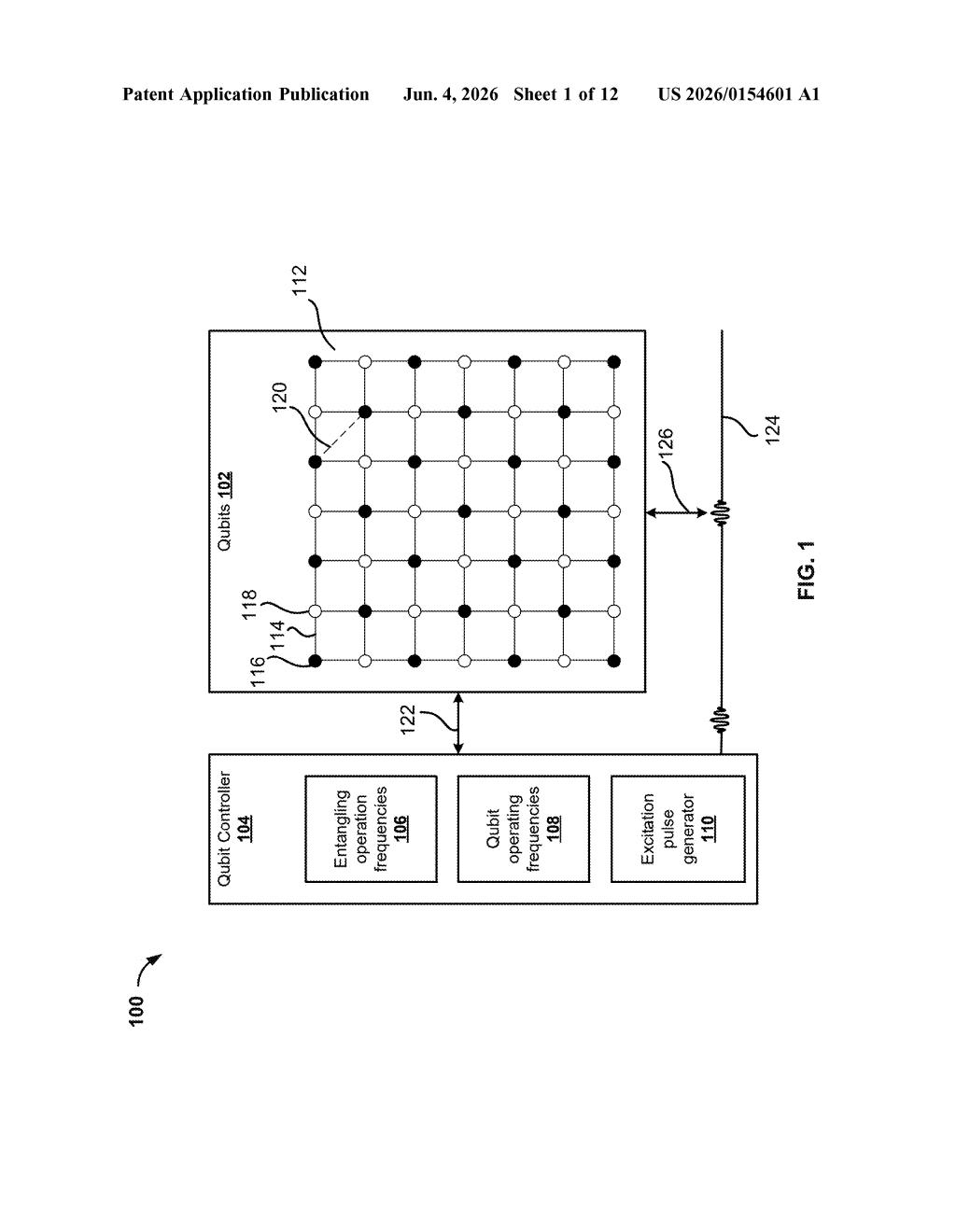
What Google's qubit sequencing trick actually does
Imagine a crowded room where everyone needs to whisper a secret to exactly one neighbor, but the room is so small that leaning toward one person means another person overhears you. That's roughly the problem Google is solving here — in a quantum chip, qubits are physically close together, and performing an operation on one qubit can unintentionally nudge nearby qubits in ways that introduce errors.
Google's patent describes a specific ordering of gate operations during a surface code error-correction cycle. Instead of running all entangling operations in a simple sequence, the method splits them into groups based on which direction each qubit pair sits relative to each other. By carefully alternating which pairs interact and when, you reduce the chance that one operation's side effects bleed into the next.
The goal is to make the measurement qubits — the ones whose job is to detect errors in neighboring data qubits — actually trustworthy. If the measuring process itself introduces noise, you've lost the thread. This patent is about keeping that measurement clean.
How the two-phase entangling sequence reduces parasitic noise
The patent covers a method for running a surface code error detection cycle — a foundational building block of fault-tolerant quantum computing. In a surface code layout, qubits sit on a 2D grid; some are data qubits (they hold the computation) and others are measurement qubits (they periodically check the data qubits for errors without reading them directly).
The key insight is that each measurement qubit is coupled to four neighboring data qubits, arranged in four compass directions. The patent claims a specific two-phase entangling strategy:
- Phase 1 (first entangling operation): The measurement qubit interacts with the data qubits to its north and south — the first and fourth directions (opposite each other along one axis).
- Phase 2 (second entangling operation): The measurement qubit then interacts with the data qubits to its east and west — a different type of entangling gate, perpendicular to the first axis.
The two operations use different gate types (not just different timing), and the diagonal adjacency constraints in the claim specify a geometry that deliberately minimizes parasitic ZZ coupling — an unwanted always-on interaction between nearby qubits in superconducting processors that can corrupt operations happening in parallel.
The cycle is wrapped in Hadamard gates applied to the measurement qubits at the start and end, which is standard for detecting both bit-flip and phase-flip errors in a surface code.
What this means for practical quantum error correction
Surface code error correction is widely considered the most practical route to fault-tolerant quantum computing, but it demands an enormous number of physical qubits operating with very low error rates. Every source of noise — including the parasitic interactions this patent targets — eats into that error budget. A cleaner entangling sequence means fewer logical errors per cycle, which translates directly into needing fewer physical qubits to protect each logical qubit.
For Google, which has been publicly racing toward fault-tolerant quantum computing with its Willow chip, this kind of low-level gate-scheduling optimization is exactly the engineering work that separates a demonstration from a deployable system. It won't make headlines the way a qubit count milestone does, but getting the sequencing right is the unglamorous work that actually moves the needle on error rates.
This is a genuinely important — if deeply unglamorous — patent. The inventors include John Martinis and Rami Barends, two of the most credentialed names in superconducting qubit research, which signals this isn't a defensive filing but real operational know-how. The specific claim about using two *different* entangling gate types (not just different timing) in a geometrically constrained sequence is the kind of detail that only emerges from hard experimental work on actual hardware.
There are more where this came from
We read every patent application Big Tech publishes and send you the ones worth knowing. Plain English, free, every week.
Want this weekly breakdown for a company we don't cover? Patentlyze Pro →