
Samsung Patents a Seal That Keeps Hot Air from Leaking in Washer-Dryers
A washer-dryer combo is only as efficient as its weakest gasket. Samsung's latest patent targets exactly that weak point, with a seal designed to lock hot air inside the machine and keep it from escaping where it shouldn't.
What Samsung's new dryer seal actually does
Imagine a tumble dryer that recycles its own hot air to save energy. That's what a heat-pump dryer does, but the system only works well if the air stays on the right path. If warm air leaks out through a bad seal, the machine wastes energy and takes longer to dry your clothes.
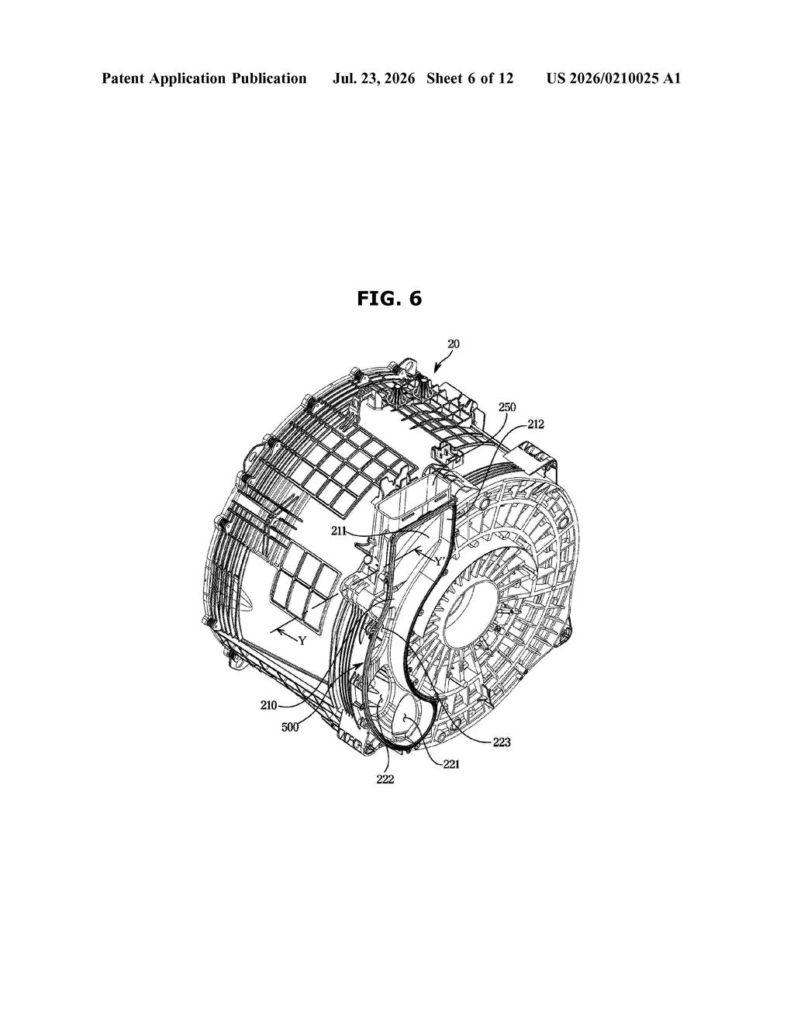
Samsung's patent describes a new seal design for the channel that carries exhaust air from the drum back to the drying unit. Instead of a single rubber gasket, the seal has three parts: a central body that grips a ridge on the tub, one lip that presses inward toward the airflow channel, and a second lip that presses outward away from it.
The idea is that both lips work together to block leaks from two directions at once, the way a good door weatherstrip covers both sides of the frame. It's a small mechanical detail, but in an appliance where airflow efficiency directly affects your electricity bill, getting the seal right matters.
How the three-part seal closes off the airflow channel
The patent covers a clothing processing apparatus (essentially a washing machine with a built-in dryer) that uses a heat pump to generate warm air. Heat-pump dryers are more energy-efficient than conventional resistance-heated dryers because they recycle heat rather than venting it outside.
The core problem the patent addresses is sealing the exhaust flow path, the internal channel that routes air from the drum through an exhaust port and back to the drying unit. That channel is formed by a recessed groove molded into the tub wall, covered by a removable plastic piece called the duct cover.
The seal that sits between the tub and the duct cover has three distinct sections:
- Sealing body: the main spine that clips onto a raised rib running along the edge of the recessed channel
- Inner sealing body: a lip that extends toward the inside of the airflow channel, blocking leaks from air pressure inside the duct
- Outer sealing body: a lip that extends outward, blocking leaks from condensation or pressure on the exterior side
The two-lip geometry means the seal resists leakage from both directions simultaneously, which is especially important in a heat-pump system where the air is being actively pushed through the circuit at varying pressures.
What this means for heat-pump laundry appliances
Heat-pump dryers are increasingly popular in Europe and gaining ground in North America because they can cut drying energy use by roughly 30 to 50 percent compared to conventional dryers. But that efficiency only holds if the internal airflow system is properly sealed. A leaking duct means the machine has to run longer, which erases the energy savings that made you buy it in the first place.
For Samsung, which sells combined washer-dryer units under its Bespoke AI and WD product lines, this kind of internal engineering detail is where real-world efficiency numbers are won or lost. A better seal doesn't show up on the spec sheet, but it shows up on your electricity bill.
This is a narrow, unglamorous engineering patent about a rubber gasket. It won't generate headlines, and it shouldn't. But it's exactly the kind of incremental internal work that separates appliances that actually hit their energy ratings from ones that don't. If you care about heat-pump laundry adoption, this is worth a quiet nod.
There are more where this came from
We read every patent application Big Tech publishes and send you the ones worth knowing. Plain English, free, every week.
The drawings
12 drawing sheets from US 2026/0210025 A1 · click any drawing to enlarge


Want this weekly breakdown for a company we don't cover? Patentlyze Pro →
Be the first to weigh in