
Samsung Patents a Wearable Exercise Device With a Swappable Motor Unit
Samsung is filing patents for a wearable exercise device where the motor — the part that creates resistance or assistance — can be physically unplugged and swapped out. That's a notably different approach from the sealed, all-in-one fitness wearables on the market today.
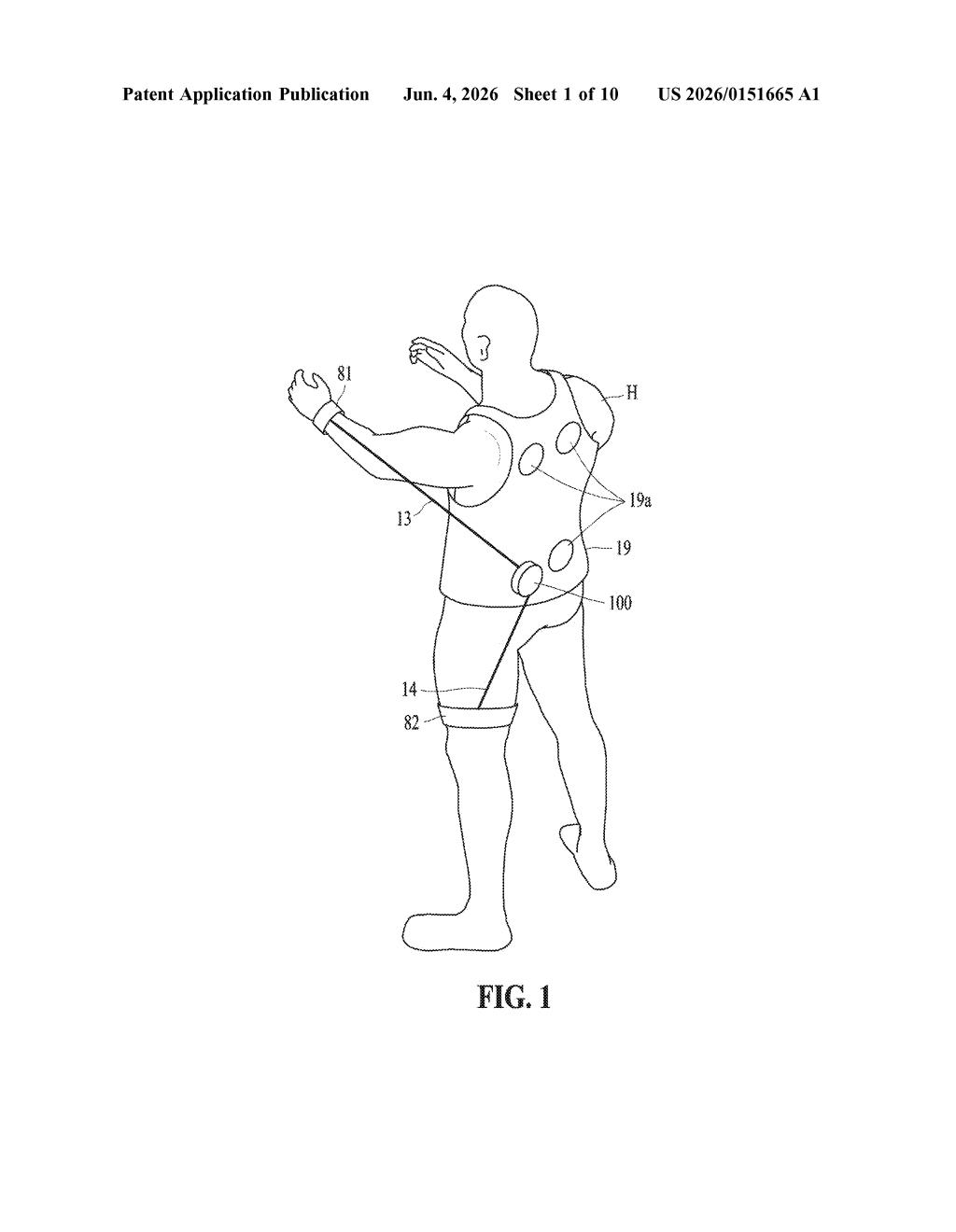
What Samsung's modular exercise wearable actually does
Imagine a powered knee brace or an arm-assist band that helps you work out — but instead of being a single sealed unit you either use or replace entirely, the motorized part just pops off.
Samsung's patent describes exactly that: a wearable you strap onto your body, with a motor module that detaches cleanly from the frame. The frame stays on the garment and handles the electrical connection, so when you pull the motor off, everything's still wired up and ready for a replacement unit.
This matters for practical reasons you'd care about: if the motor dies or you want a stronger one, you swap the module instead of buying a whole new device. The cable connected to the actuator is what actually creates tension or movement — like a mechanized resistance band built into something you wear.
How the snap-in actuator connects and rotates
The patent describes a wearable exercise apparatus built around a modular architecture. At its core, the device has four main parts working together:
- Wearing member and support frame: The base layer — a garment or brace worn on a body part — with a rigid frame embedded in it. This frame is the mechanical and electrical backbone.
- Detachable actuator: A motor module that clips onto the support frame both physically and electrically at the same time. Critically, the actuator can also rotate relative to the frame, meaning it can reorient itself to match the angle of the user's joint or movement.
- Cable: Connected to the actuator, this is what transmits the motor's force — pulling or releasing to create resistance or assistance during exercise.
- Controller and connection line: A control unit sits on the wearing member and connects to the support frame via a dedicated line. Because the actuator connects electrically through the frame, the controller can talk to any compatible motor module you slot in.
The key engineering insight is that the electrical and physical connection happen at the same interface — dock the motor, and it's already wired. The rotating capability means the actuator can align with natural body mechanics without the whole device needing to be repositioned.
What this means for Samsung's fitness hardware ambitions
Powered exoskeleton and assistive fitness hardware has always had a modularity problem: the motor is baked in, so wear, damage, or the desire for more power means replacing the whole unit. Samsung's approach treats the actuator like a battery pack — a field-replaceable component. That could meaningfully lower the cost of ownership and extend device lifespan for rehab, athletic training, or everyday assistance applications.
For Samsung specifically, this fits a broader pattern of hardware investment in health and wellness beyond smartwatches. A modular platform approach — where one wearable frame supports multiple motor configurations — is exactly the kind of ecosystem play you'd expect from a company trying to build a fitness hardware line, not just a one-off gadget.
This is a solid, practical patent — not a moonshot. The modular actuator concept solves a real problem in powered wearables, and the rotating-connection detail shows genuine mechanical thinking rather than just a broad claim. Whether Samsung ships anything like this soon is another question, but the architecture described is coherent and buildable.
There are more where this came from
We read every patent application Big Tech publishes and send you the ones worth knowing. Plain English, free, every week.
Want this weekly breakdown for a company we don't cover? Patentlyze Pro →