
Qualcomm Patents a Way for Connected Cars to Share Their Roadside Unit Links for Precise Positioning
Getting a car's precise location in a dense urban environment is harder than it sounds — GPS alone isn't enough. Qualcomm's new patent describes a smarter handshake between connected vehicles and the cellular network, using nearby roadside units as positioning anchors.
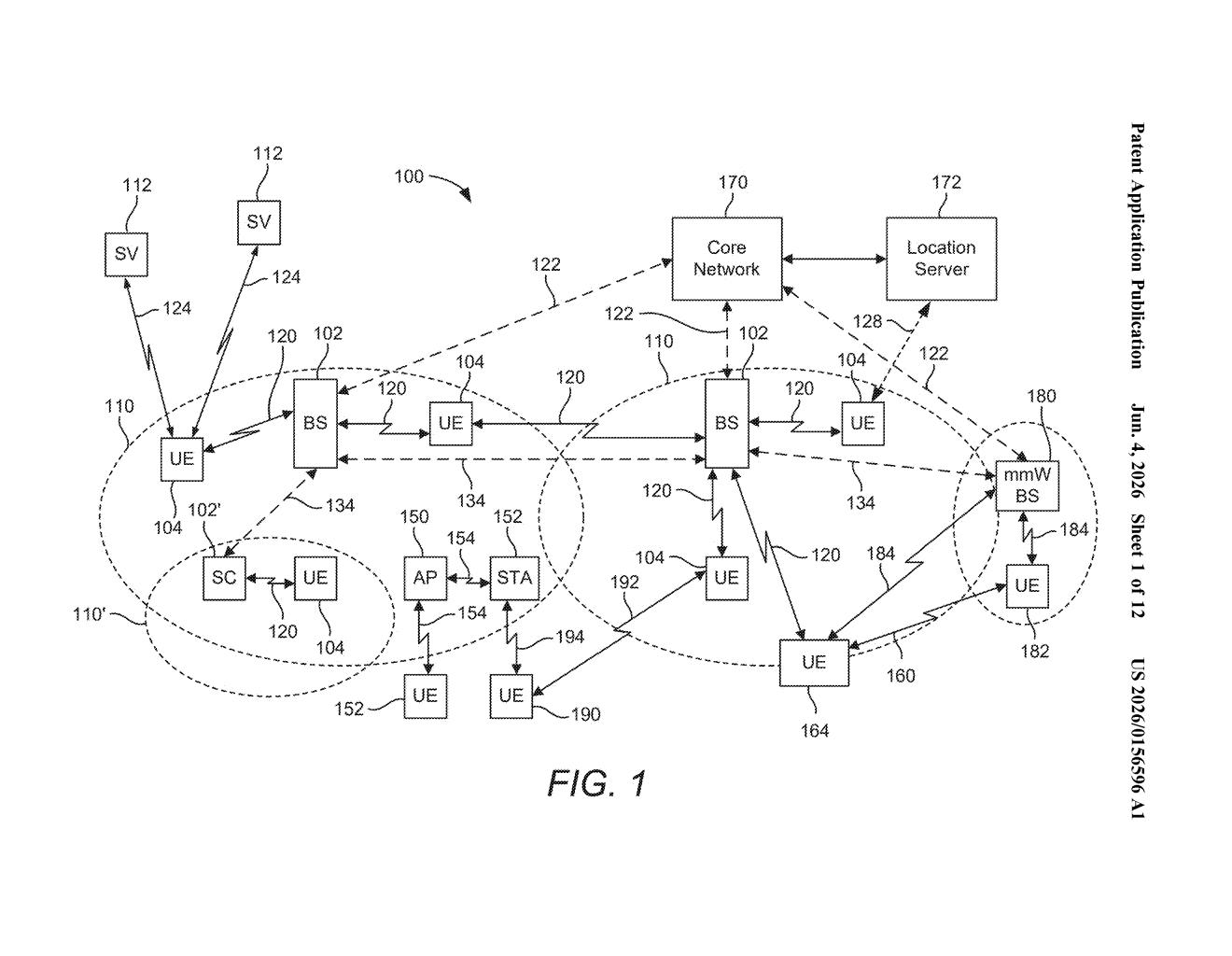
How Qualcomm wants cars to report their roadside unit connections
Imagine you're driving through a busy city intersection. Your phone knows roughly where you are via GPS, but GPS can be off by several meters — enough to matter for automated driving or emergency response systems. Cellular vehicle-to-everything (CV2X) technology tries to fix this by using the cellular network and physical roadside boxes (think: smart traffic infrastructure) to get a much tighter position fix.
Qualcomm's patent describes a process where your car's chip tells the network not just that it can do CV2X positioning, but also which roadside units it can currently see. The network then uses that specific information to send back a custom signal configuration tuned to your exact situation.
Instead of the network guessing what signals to use, your vehicle's hardware tells it what's nearby, and the network responds with a tailored plan. It's a smarter back-and-forth that could meaningfully improve how accurately the system knows where you are.
How the LMF tailors reference signals using RSU data
The patent centers on a two-step exchange between a User Equipment (UE) — typically a vehicle's cellular modem — and a Location Management Function (LMF), which is the part of a 5G network responsible for handling positioning requests.
Step one: the UE sends a capability message to the LMF. This message does two things at once: it declares that the device supports CV2X positioning (Cellular Vehicle-to-Everything, the standard for connected-car communication), and it includes RSU connectivity information — a report of which Roadside Units (fixed infrastructure nodes like smart traffic lights or dedicated V2X beacons) the vehicle can currently communicate with.
Step two: the LMF receives that RSU connectivity report and uses it to configure a reference signal specifically suited to that vehicle's environment. Reference signals (think: precisely timed radio pulses used for measuring distance and timing) are how the network computes position. By knowing which RSUs are in play, the LMF can pick the right signal parameters rather than sending a generic configuration.
The key insight is that RSU visibility varies enormously by location — a car in a tunnel sees different infrastructure than one at a highway interchange. Letting the UE report what it actually sees makes the positioning system context-aware rather than one-size-fits-all.
What this means for cellular V2X location accuracy
CV2X positioning is increasingly important as automakers and regulators push toward connected and autonomous vehicle infrastructure. If a vehicle can tell the network exactly which roadside nodes it has line-of-sight to, the network can configure far more accurate timing-based location measurements — potentially getting position accuracy down to sub-meter levels that GPS alone can't reliably achieve.
For Qualcomm, which supplies the modems and positioning chips in a large share of connected vehicles and smartphones, owning the protocol-level IP for how UEs report RSU connectivity is a strategically valuable position. This patent sits squarely in the 5G NR positioning stack, where cellular standards bodies (3GPP) are actively defining how V2X location should work — making early filings like this one relevant to future licensing conversations.
This is a standards-adjacent infrastructure patent, not a flashy consumer feature — but it's exactly the kind of low-level IP that matters when cellular V2X positioning gets baked into 5G specifications. Qualcomm is methodically staking out the signaling handshakes that future connected-car systems will depend on. Worth watching if you follow automotive cellular or 3GPP positioning work.
There are more where this came from
We read every patent application Big Tech publishes and send you the ones worth knowing. Plain English, free, every week.
Want this weekly breakdown for a company we don't cover? Patentlyze Pro →